
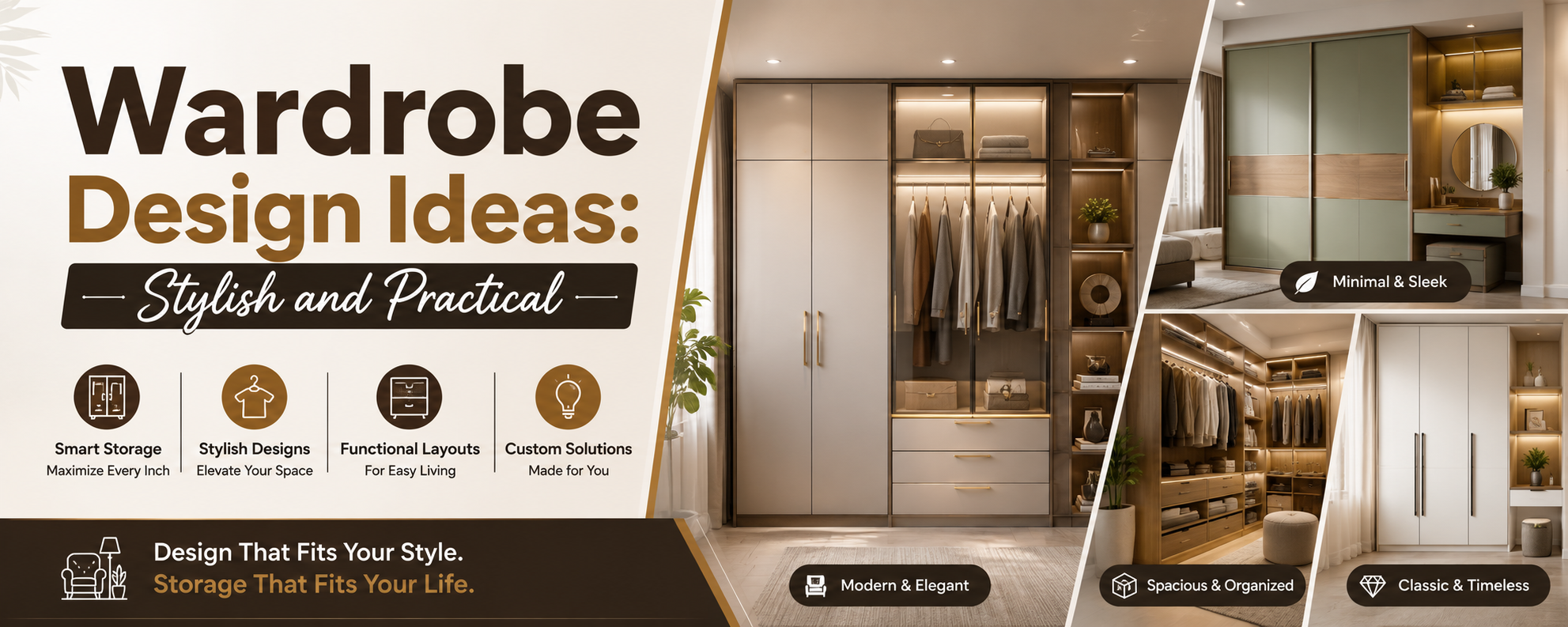

A wardrobe is more than just a place to store clothes. It is an important part of bedroom design that can influence the room’s appearance, organization, comfort, and functionality. With the right planning, a wardrobe can provide generous storage while making the bedroom look clean, spacious, and well-designed.
Modern homeowners have many options, from built-in wardrobes and sliding-door designs to walk-in storage and customized modular solutions. The best choice depends on the size of the bedroom, available wall space, storage requirements, interior style, and budget.
Exploring different Wardrobe Design Ideas before starting your interior work can help you create storage that looks attractive while meeting your everyday needs.
Why Wardrobe Design Matters
Poorly planned storage can make even a beautiful bedroom feel cluttered. Clothes, shoes, bags, accessories, and other personal belongings require organized spaces so that everything remains easy to access.
A well-designed wardrobe makes better use of available vertical and horizontal space. It can also be customized according to your lifestyle. For example, someone with a large clothing collection may need more hanging space, while another person may prioritize drawers, shelves, shoe storage, or accessory compartments.
Therefore, wardrobe planning should be considered an essential part of bedroom design rather than an afterthought.
1. Floor-to-Ceiling Wardrobe Design
One of the most practical Wardrobe Design Ideas for modern bedrooms is a floor-to-ceiling wardrobe. Instead of leaving unused space above the wardrobe, the entire height of the wall can be utilized for storage.
The lower and middle sections can accommodate frequently used clothing, while the upper cabinets can be used for seasonal clothes, luggage, blankets, and other items that are not needed every day.
This design can also create a clean, integrated appearance because the wardrobe becomes a natural part of the wall.
2. Sliding Door Wardrobe
Sliding wardrobes are an excellent choice for bedrooms where floor space is limited. Unlike conventional hinged doors, sliding doors move along a track and do not require additional clearance in front of the wardrobe.
This makes them particularly useful for compact bedrooms where every inch of space matters.
Sliding doors can also be customized with different finishes, including laminate, wood textures, glass, mirrors, and contemporary panels.
3. Hinged Door Wardrobe
Hinged wardrobes remain a classic choice because they provide easy access to the entire storage area. Each door can open independently, allowing homeowners to see and reach different sections conveniently.
This type of wardrobe can work particularly well in medium and large bedrooms where there is enough space for the doors to open comfortably.
Hinged wardrobes can also include customized internal arrangements such as drawers, shelves, hanging sections, and accessory organizers.
4. Mirror-Finish Wardrobe
A wardrobe with integrated mirrors can serve both storage and functional purposes. Instead of installing a separate dressing mirror, the wardrobe doors can incorporate full-length mirrors.
Mirrored surfaces can also create a visual impression of greater depth in smaller bedrooms by reflecting light and surrounding elements.
For homeowners who prefer a practical yet stylish bedroom, a mirror-finish wardrobe can be an effective design solution.
5. Minimalist Wardrobe Design
Minimalist interiors focus on clean lines, simple finishes, and limited visual clutter. A minimalist wardrobe can feature plain panels, concealed handles, neutral shades, and a streamlined appearance.
The objective is not simply to make the wardrobe look simple but to integrate it naturally with the overall bedroom design.
This approach works especially well with contemporary and modern interiors where simplicity is a major design element.
6. Walk-In Wardrobe
For larger bedrooms or homes with dedicated dressing areas, a walk-in wardrobe can provide an enhanced storage experience.
A walk-in wardrobe can include separate sections for clothes, footwear, accessories, bags, and other belongings. Shelves, drawers, hanging rails, and dedicated compartments can be arranged according to individual requirements.
Good lighting is particularly important in a walk-in wardrobe. A combination of general lighting and focused illumination can make it easier to find and organize belongings.
7. Corner Wardrobe Design
Corners are often underutilized in bedroom layouts. A customized corner wardrobe can transform this unused area into valuable storage.
Corner wardrobes can be designed with L-shaped configurations or customized modules depending on the room’s dimensions. They are useful when conventional straight wardrobes cannot provide sufficient storage.
However, corner layouts should be carefully planned to ensure that doors, drawers, and nearby furniture do not interfere with each other.
8. Open Wardrobe Design
Open wardrobes are suitable for homeowners who prefer easy visibility and quick access to their belongings. Instead of fully enclosed cabinets, the design uses open shelves, hanging rails, and exposed compartments.
This can create a modern dressing-room appearance, but it requires regular organization because everything remains visible.
Open wardrobes work best for people who enjoy keeping their clothing and accessories neatly arranged.
9. Wardrobe with Study Area
For bedrooms that need to accommodate multiple functions, combining a wardrobe with a compact study desk can be an excellent solution.
A customized unit can connect the wardrobe and study area into one continuous design. This approach is particularly useful in children’s bedrooms, teenagers’ rooms, guest rooms, or homes where a separate office is not available.
The study section can include drawers, shelves, electrical points, and task lighting for improved functionality.
10. Customized Wardrobe Storage
Every homeowner has different storage requirements, so customization can make a significant difference.
Instead of choosing a standard internal layout, consider dividing the wardrobe into dedicated sections for different belongings. Long garments may require taller hanging spaces, while folded clothing can be stored on shelves or in drawers.
Accessories such as watches, jewellery, belts, ties, handbags, and shoes can also have dedicated compartments.
A customized interior arrangement can make the wardrobe easier to use and reduce unnecessary clutter.
Choosing the Right Wardrobe Material
Material selection affects the wardrobe’s durability, appearance, maintenance, and overall cost. Common options include engineered wood-based boards, laminates, veneers, glass, mirrors, and other interior-grade finishes.
The right material should be selected according to the room’s environment, expected usage, design style, and budget.
For areas exposed to moisture, material selection should receive additional attention. Proper edge finishing and installation quality are also important for long-term performance.
Choosing Wardrobe Colors and Finishes
he wardrobe should complement the bedroom rather than appear disconnected from it.
Light shades can create an airy and spacious appearance, while darker finishes can add depth and sophistication. Wood textures can bring warmth, while neutral tones provide a timeless look.
Glossy finishes can reflect light, whereas matte finishes generally provide a softer and understated appearance.
When choosing colors, consider the flooring, wall color, bed, curtains, lighting, and other major elements in the room.
Important Things to Consider Before Wardrobe Installation
Before finalizing your wardrobe, measure the available wall carefully and consider the placement of doors, windows, switches, electrical outlets, beds, and other furniture.
The wardrobe’s depth should allow comfortable storage without making the room unnecessarily cramped. Internal shelves and drawers should also be positioned according to the items they will hold.
Ventilation and moisture protection should be considered where necessary, particularly in locations where humidity may affect stored belongings.
Most importantly, do not focus only on exterior appearance. A beautiful wardrobe is useful only when its internal storage is practical.
How to Make a Small Bedroom Look Spacious
For compact bedrooms, choose designs that maximize vertical storage without occupying excessive floor space. Sliding doors, integrated mirrors, light-colored finishes, and simple panel designs can help create a cleaner visual appearance.
Keeping the wardrobe visually coordinated with the wall can also reduce the feeling of bulkiness.
The goal should be to create sufficient storage while maintaining comfortable movement around the room.
Conclusion
The right wardrobe can completely improve the functionality and appearance of a bedroom. From floor-to-ceiling units and sliding wardrobes to walk-in storage and customized study combinations, there are numerous Wardrobe Design Ideas for different room sizes and lifestyles.
The best wardrobe is not necessarily the largest or most expensive option. It is the one that uses available space intelligently, provides the right type of storage, complements the interior design, and remains convenient to use every day.