
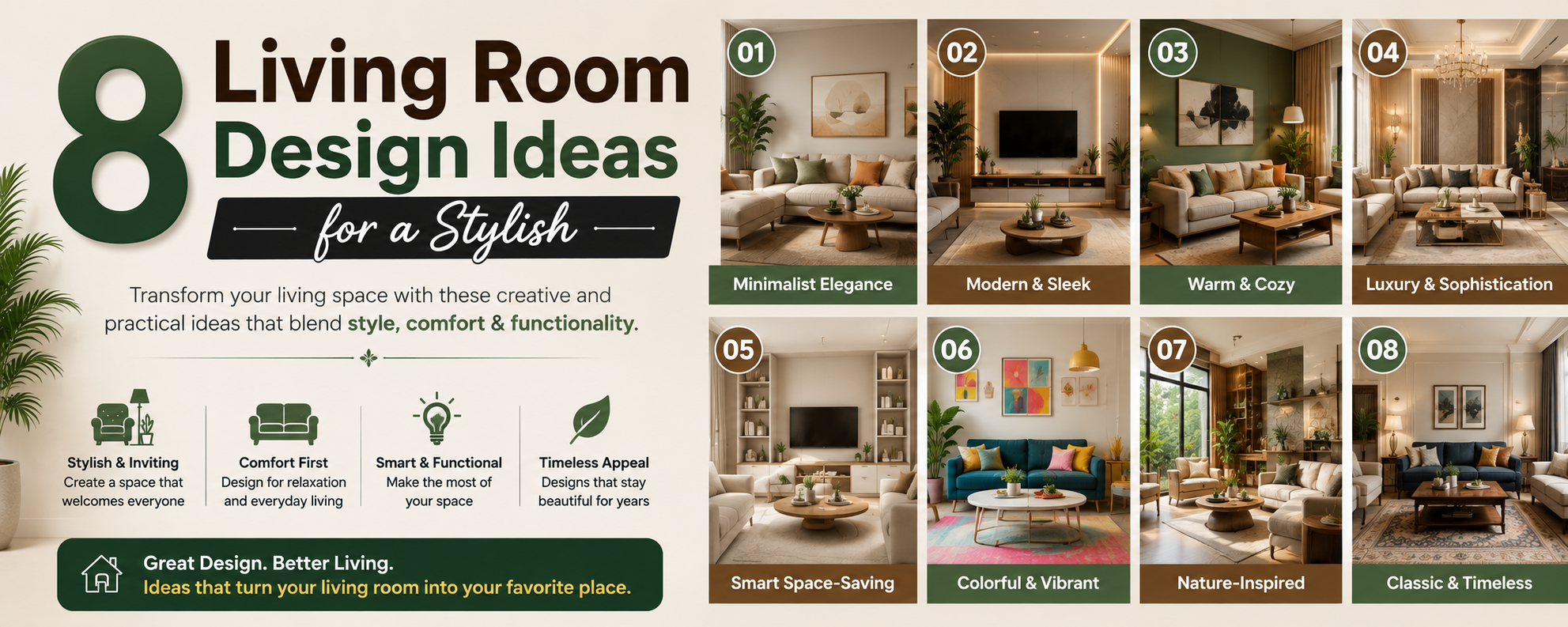

The living room is one of the most important spaces in any home. It is where family members relax, guests are welcomed, and everyday conversations take place. A well-designed living room should therefore look attractive while also being comfortable and practical. The right combination of furniture, colors, lighting, storage, and décor can completely transform the appearance of your space.
If you are planning to renovate your existing living room or designing a new home, exploring different Living Room Design Ideas can help you create a space that reflects your lifestyle and personality. From minimalist interiors to warm and luxurious designs, there are many possibilities to consider.
Here are eight practical and stylish Living Room Design Ideas that can help you create a beautiful living space.
1. Choose a Comfortable and Well-Planned Sofa Layout
The sofa is usually the main element of a living room, so its placement can significantly influence the overall design. Instead of choosing furniture simply because it looks attractive, consider the size and shape of the room.
For smaller living rooms, a compact three-seater sofa combined with a comfortable accent chair can provide enough seating without making the space feel crowded. In larger rooms, an L-shaped sofa or a combination of multiple seating options can create a balanced arrangement.
Keep enough space between furniture pieces for easy movement. A well-planned layout makes the room feel more open and allows people to interact comfortably.
2. Create an Elegant Accent Wall
An accent wall is an effective way to add personality to your living room without redesigning every wall. You can use textured paint, wallpaper, wooden panels, stone finishes, or decorative wall mouldings to create an attractive focal point.
The television wall is often a natural choice for an accent wall. Wooden panels combined with subtle lighting can create a warm and sophisticated appearance. If you prefer a contemporary look, neutral-colored textured walls can provide a stylish background without becoming overwhelming.
The key is to choose a design that complements your furniture and overall interior theme.
3. Use Layered Lighting for a Warm Ambience
Lighting can completely change the mood of a living room. Relying only on a central ceiling light may make the space look flat. Instead, consider using multiple layers of lighting.
Ambient lighting can provide general illumination, while pendant lights, wall sconces, floor lamps, and recessed lights can add additional depth. LED strip lighting around a false ceiling, television unit, or shelves can also highlight architectural features.
During the daytime, maximize natural light by keeping windows open and avoiding heavy curtains. A combination of natural and artificial lighting can make your living room feel brighter and more welcoming.
4. Add Smart and Stylish Storage
Good storage is essential for maintaining a clean and organized living room. However, storage solutions do not need to look bulky or purely functional.
Built-in cabinets, floating shelves, TV units with concealed storage, and multifunctional furniture can provide useful storage while maintaining a modern appearance. You can use closed cabinets for items that you want to keep hidden and open shelves to display books, plants, artwork, and decorative objects.
For compact homes, furniture with built-in storage can be particularly useful. A storage ottoman or a stylish coffee table with drawers can provide additional functionality without taking up unnecessary space.
5. Bring Nature Indoors with Plants
Indoor plants are a simple way to make a living room feel fresh and lively. They can introduce natural colors and soften the appearance of modern furniture and hard surfaces.
Large plants can be placed in empty corners, while smaller plants can be displayed on shelves, side tables, or window areas. If you have limited time for plant maintenance, choose low-maintenance varieties suitable for indoor conditions.
Natural materials such as wood, jute, cotton, and rattan can also complement greenery and create a warm, nature-inspired atmosphere.
6. Experiment with Colors and Textures
Color plays an important role in defining the character of a living room. Neutral shades such as beige, cream, white, grey, and earthy tones can create a calm and timeless environment. You can then introduce stronger colors through cushions, rugs, artwork, curtains, or accent furniture.
Texture is equally important. A combination of smooth furniture, soft upholstery, wooden surfaces, textured walls, and patterned fabrics can prevent a neutral room from appearing boring.
When selecting colors, consider the amount of natural light available in the room. Lighter shades can make smaller spaces appear more open, while deeper colors can add warmth and visual depth to larger rooms.
7. Design a Functional Entertainment Area
The television and entertainment unit often become a major focal point in contemporary living rooms. Instead of simply mounting a television on the wall, you can design an entertainment area that combines functionality with aesthetics.
A custom TV unit can include concealed cabinets, open display shelves, decorative panels, and integrated lighting. Make sure the design provides sufficient space for electronic devices while keeping cables organized and hidden.
Avoid making the entertainment wall excessively complicated. A clean design with balanced proportions can create a more sophisticated appearance and prevent the living room from feeling visually cluttered.
8. Personalize the Space with Décor
The final touch to any living room is personalization. Décor allows you to express your taste and make the room feel like your own.
Consider adding artwork, family photographs, decorative mirrors, cushions, rugs, sculptures, books, or handcrafted accessories. A large mirror can also make a compact living room appear more spacious while reflecting natural or artificial light.
However, avoid filling every available surface with decorations. Select a few meaningful or visually appealing pieces and give them enough space to stand out. A carefully curated living room usually feels more elegant than one filled with too many accessories.
How to Choose the Right Living Room Design
he best Living Room Design Ideas are not necessarily the most expensive or complicated ones. Your design should first respond to the size of your room, your family’s lifestyle, storage requirements, and personal preferences.
Before purchasing furniture or selecting finishes, measure the available space and prepare a basic layout. Think about how people will move through the room and where different activities will take place. Consider factors such as natural lighting, ventilation, maintenance, and future requirements.
A professional interior designer can also help combine functionality and aesthetics while making the most effective use of the available space.
Conclusion
A beautiful living room is created through thoughtful planning rather than simply adding expensive furniture or decorations. From choosing the right sofa arrangement and accent wall to improving lighting, storage, colors, and décor, every element contributes to the overall experience of the space.
These Living Room Design Ideas can help you create an interior that is stylish, comfortable, organized, and suitable for everyday living. Whether you prefer a minimalist, contemporary, traditional, or luxurious style, the most successful design is one that reflects your personality while making your home comfortable for everyone.