
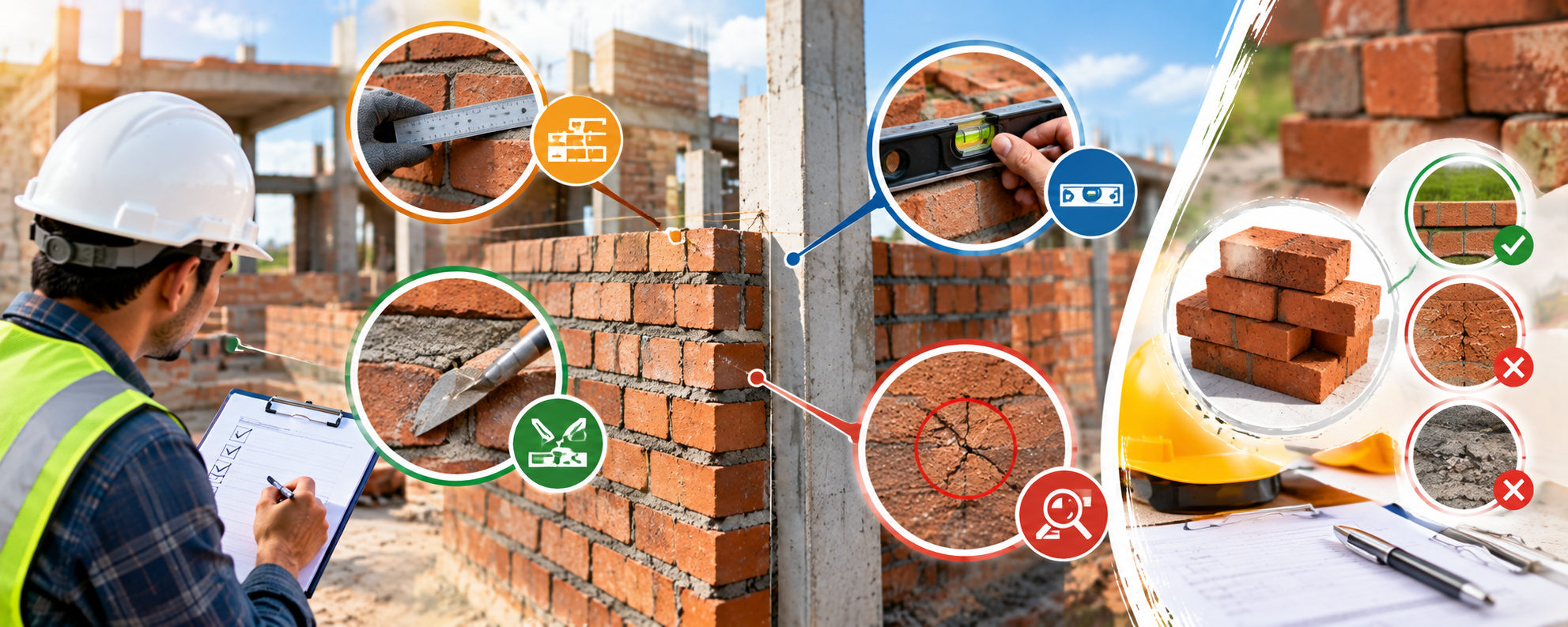

Brickwork is one of the most important stages of house construction because it forms walls, partitions and other major parts of a building. Good-quality brickwork provides strength, stability, proper alignment and a suitable surface for plastering. However, small mistakes during brick masonry can later result in cracks, dampness, uneven walls and unnecessary repair costs. For this reason, homeowners should understand the basic methods of brickwork quality inspection and regularly check the work during construction.
Check the Quality of Bricks Before Masonry
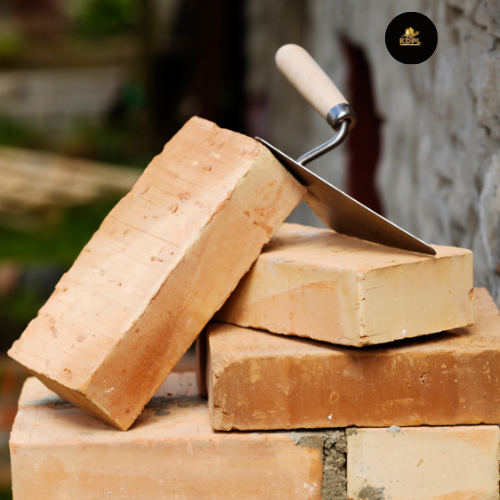
The first inspection should begin with the bricks themselves. Good-quality bricks should have a consistent shape and size, sharp edges and a relatively uniform colour. They should not show excessive cracks, deep chips or visible signs of improper burning. When two good-quality bricks are tapped together, they generally produce a clear ringing sound rather than a dull sound.
Bricks should also be properly stored at the construction site. They should not be unnecessarily exposed to contamination, mud or other materials. Before laying, bricks are commonly wetted or adequately soaked depending on the type of brick and site practice. This helps prevent the bricks from rapidly absorbing water from the mortar.
Inspect Mortar Quality and Mixing
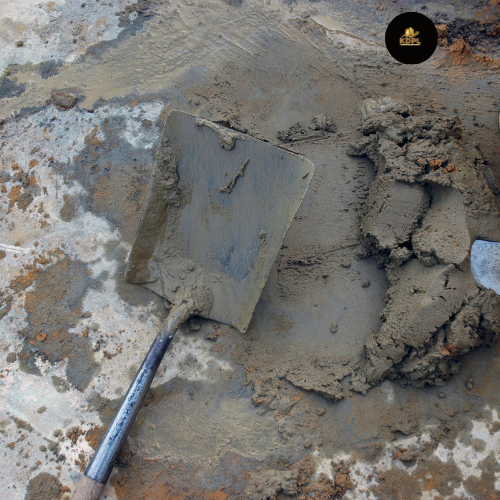
Mortar acts as the bonding material between individual bricks, so its quality directly affects masonry performance. Check whether cement, sand and water are being mixed according to the project specification provided by the engineer or contractor. The mortar should have a workable consistency and should not be excessively dry or watery.
Using mortar that has already started setting should be avoided. Freshly prepared mortar should be used within the appropriate working period. Homeowners should also make sure that excessive water is not being added simply to make the mortar easier to spread.
Check Wall Alignment and Level
One of the easiest ways to identify poor brickwork is to look at the wall alignment. Walls should remain straight and properly positioned according to the approved drawings. Masons normally use a plumb bob, spirit level, string line or other measuring equipment to maintain vertical and horizontal alignment.
Check the wall at different stages instead of waiting until the entire wall is completed. If a wall starts leaning or becomes uneven, correcting the problem later can be more difficult and expensive. Door and window openings should also be constructed at the correct locations and dimensions.
Examine Brick Joints Carefully
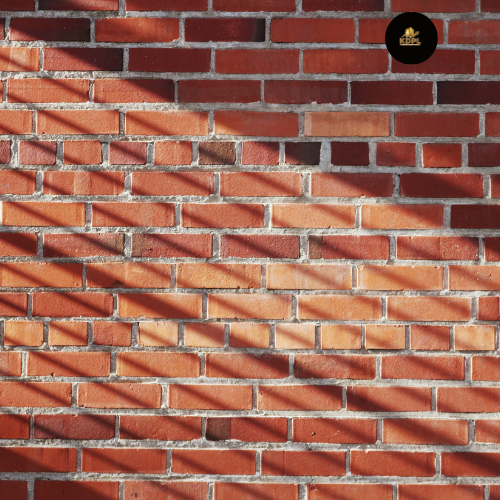
The joints between bricks should generally be properly filled with mortar. Large gaps, hollow joints or inconsistent joint thickness can reduce the quality of masonry and may create pathways for moisture.
The bricks should be properly bonded according to the specified masonry pattern. Vertical joints in successive courses should not unnecessarily line up when the selected bond requires staggered joints. Proper bonding helps the masonry act as a unified wall rather than a collection of individual bricks.
Look for Hollow or Loose Bricks
During inspection, pay attention to bricks that appear loose, poorly embedded or inadequately bonded with mortar. A brick that has not been properly seated can become a weak point in the wall.
Freshly completed masonry should also be protected from activities that could disturb the bricks before the mortar gains sufficient strength. Any visibly loose or damaged section should be brought to the contractor’s attention immediately rather than covered with plaster.
Check Openings, Corners and Junctions

Corners and wall junctions require particular attention because several masonry elements meet in these locations. Check whether corners are vertical and properly bonded. Door and window openings should maintain the dimensions shown in the architectural and structural drawings.
Where brick walls meet RCC columns, beams or other structural elements, the construction should follow the engineer’s specified detailing. Homeowners should avoid accepting modifications at these junctions based only on visual appearance; structural detailing should be confirmed by the responsible professional.
Observe Curing and Protection
Brick masonry requires appropriate curing so that the mortar can develop its intended properties. The contractor should follow the curing procedure and duration specified for the project and materials being used.
The completed walls should also be protected from unnecessary impact, excessive drying and other site activities that could damage the masonry. Proper curing and protection can help reduce shrinkage-related problems and improve the overall durability of the wall.
Final Inspection Before Plastering
Before plastering begins, inspect the complete brickwork carefully. Look for cracks, uneven surfaces, open joints, poor bonding, incorrect openings and alignment problems. Check concealed areas before they become difficult to access.
Taking photographs during different construction stages can also help homeowners maintain a record of the work. If a significant defect is noticed, it is better to consult the site engineer or structural professional and correct it before plastering rather than hiding the problem under the finishing layer.
For homeowners who want a house constructed according to their requirements, working with an experienced construction partner such as Kanakdhara Developer Private can help maintain better coordination between planning, materials, workmanship and site supervision. Proper inspection at every stage remains important regardless of who manages the project.
Frequently Asked Questions
How can I identify good-quality bricks?
Good bricks generally have a consistent shape, sharp edges, uniform appearance and no major cracks or defects. Their quality should also comply with the project specifications and applicable standards.
How do I check whether a brick wall is straight?
A spirit level, plumb bob, string line and other appropriate measuring tools can be used to check vertical and horizontal alignment. The site engineer or mason should perform these checks throughout construction.
Why are mortar joints important in brickwork?
Mortar joints connect individual bricks and help distribute loads through the masonry. Poorly filled or inconsistent joints can contribute to weak areas and moisture-related problems.
Should brickwork be inspected before plastering?
Yes. Brickwork should be inspected before plastering because defects such as open joints, poor alignment or loose bricks are easier to identify and correct before the surface is covered.