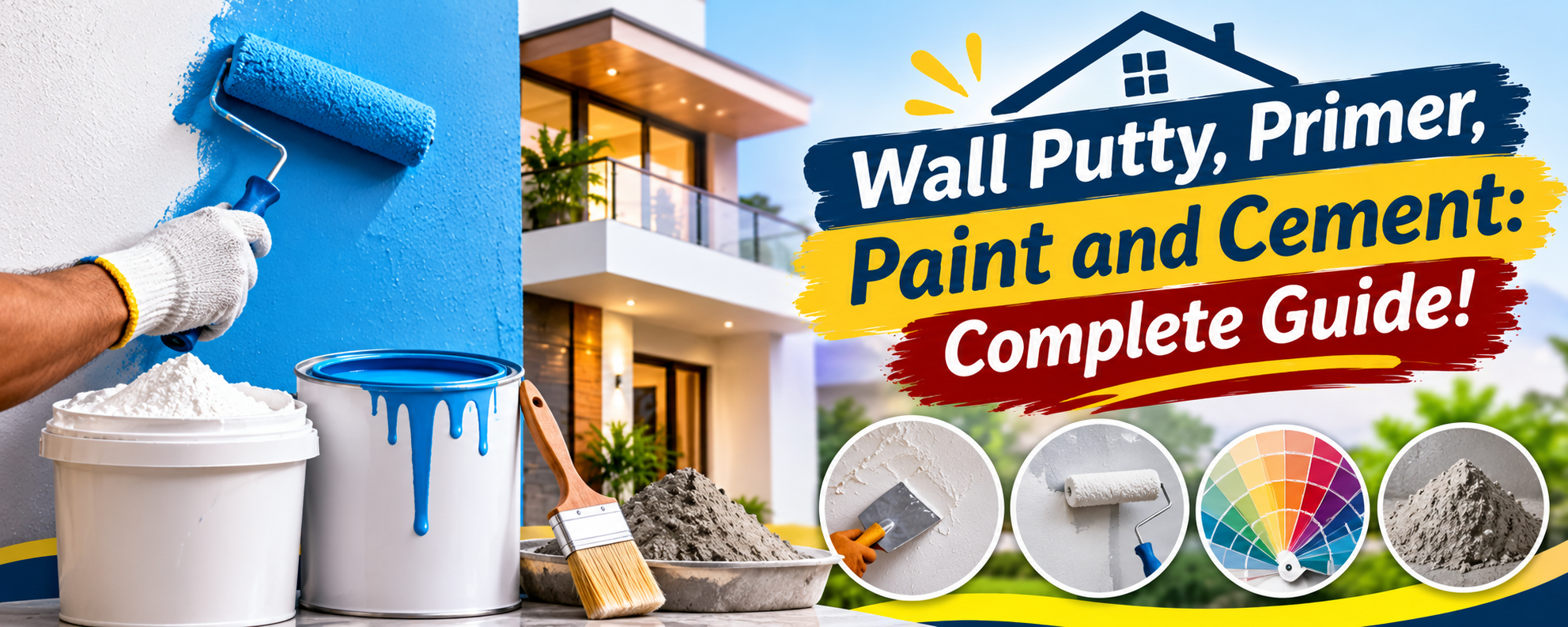

During home construction and interior finishing, homeowners often hear terms such as wall putty, primer, white cement, OPC cement, PPC cement, normal cement and POP. Although these materials may sometimes appear similar, they perform very different jobs.
For example, cement is primarily used for construction and repair work, putty prepares surfaces for painting, primer improves paint adhesion, and POP creates smooth decorative finishes. Choosing the wrong material or using one as a replacement for another can result in peeling paint, cracks, dampness and unnecessary expenses.
This guide explains what each material does, where it should be used, why it is required and which alternatives are suitable.
1. Wall Putty: Creating a Smooth Surface Before Painting
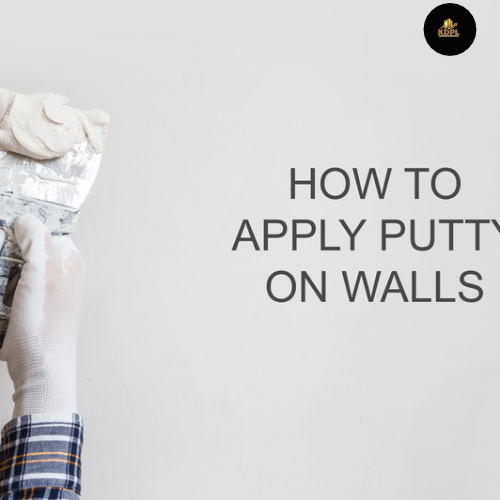
Wall putty is a finishing material applied over properly prepared plastered walls to create a smooth and uniform surface. It helps cover minor surface imperfections, small pores and unevenness before primer and paint are applied.
Where is it used?
Living room and bedroom walls.
Interior plastered surfaces.
Ceilings and selected prepared surfaces.
Renovation projects where old paint or plaster needs surface correction.
Cement-based wall putty is commonly used on suitable cement plaster and concrete surfaces. Polymer-based and ready-mixed putties are also available for specific applications.
Why is it important?
Without proper surface preparation, paint may highlight small defects, uneven patches and plaster marks. Putty creates a better base for a uniform finish.
Can it be replaced?
For minor imperfections, compatible ready-mix fillers or finishing compounds can be alternatives. However, ordinary cement or POP should not automatically replace wall putty because their properties and applications differ.
2. White Cement: Decorative Finishing and Repair
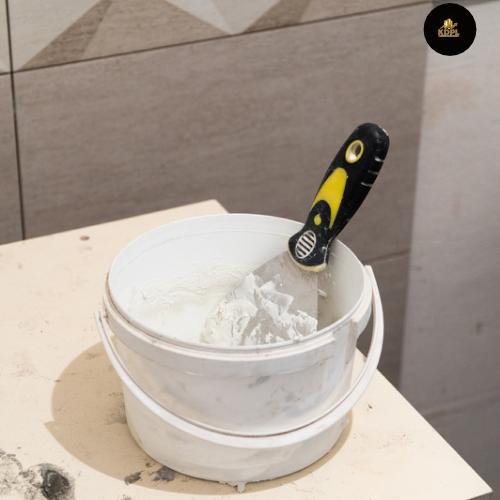
White cement is manufactured using selected raw materials that produce a light-coloured cement. It is commonly used where a clean, white appearance is required.
Where is it used?
Decorative cement-based finishes.
Selected tile-joint and repair applications, when the product is designed for them.
White architectural detailing.
Certain surface filling and finishing products.
White cement is also used as an ingredient in some wall putties and decorative materials.
Why choose it?
Its light colour makes it suitable for decorative work where ordinary grey cement would affect the final appearance.
Can it be replaced?
For ordinary structural or masonry work, suitable grey cement may be used according to the design and specification. For decorative white finishes, white cement or a purpose-made finishing product is generally more appropriate.
White cement is not a substitute for waterproofing chemicals or a dedicated damp-proof system.
3. OPC Cement: Strength and Early Hardening
OPC stands for Ordinary Portland Cement. It is widely used in construction, particularly where early strength development and specified structural performance are required.
Common grades include OPC 33, OPC 43 and OPC 53, subject to applicable standards and availability.
Where is it used?
Reinforced cement concrete work, when specified.
Columns, beams and slabs.
Concrete foundations.
Certain masonry and plastering applications according to the project specification.
Why is it used?
OPC is valued for its strength development characteristics. The correct grade and mix design should be selected according to structural requirements rather than simply choosing the highest grade.
Can it be replaced?
Yes, PPC or another approved cement type may be suitable for many applications, but the replacement must be checked against the structural design, project specifications, relevant standards and engineer’s recommendation.
4. PPC Cement: A Practical Choice for Many Residential Projects
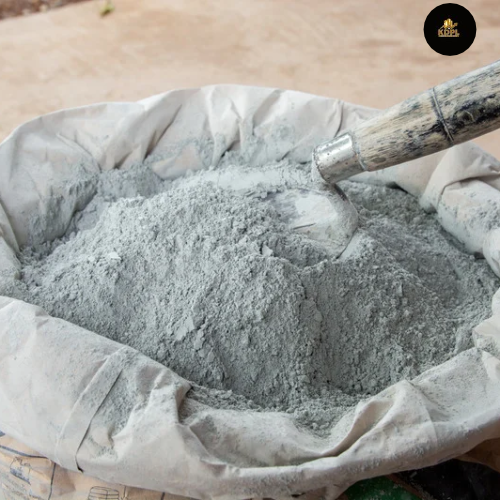
PPC stands for Portland Pozzolana Cement. It contains Portland cement clinker combined with pozzolanic material, such as fly ash or calcined clay, according to the applicable specification.
Where is it used?
Residential concrete work where specified.
Masonry and plastering.
Foundations and general building construction.
Certain mass-concrete applications.
Why is it popular?
PPC can offer good long-term strength development, improved durability and lower heat generation compared with some OPC applications. However, early strength development and curing requirements can differ.
Can it replace OPC?
PPC can be used in many residential construction applications when permitted by the design and relevant specifications. However, it should not be substituted without checking concrete design, strength requirements and construction schedules.
5. Normal Grey Cement: Everyday Construction and Repair
In everyday conversation, people often call ordinary grey cement “normal cement”. This usually refers to a general-purpose cement product, commonly OPC or PPC.
It is used for mortar, plastering, masonry and concrete depending on the cement type and mix design.
Where is it used?
Brick and block masonry mortar.
Internal and external plastering.
Floor screeds.
Concrete work according to design.
Selected repair applications.
The important point is that cement alone is not a complete construction material. Sand quality, aggregate grading, water quantity, mix proportion, curing and workmanship all affect performance.
Can it be replaced?
For some finishing applications, gypsum plaster, ready-mix plaster or specialised repair mortar can be used. However, these are not direct replacements for cement in structural concrete.
6. POP: Smooth Ceilings and Decorative Designs
POP stands for Plaster of Paris. It is a gypsum-based material that sets relatively quickly and is commonly used for interior decorative work.
Where is it used?
False ceilings.
Ceiling borders and cornices.
Decorative mouldings.
Interior wall detailing.
Selected dry-area surface finishing.
Why is it used?
POP allows decorative shapes and smooth finishes to be created relatively easily. It is popular for modern ceiling designs, indirect lighting details and decorative panels.
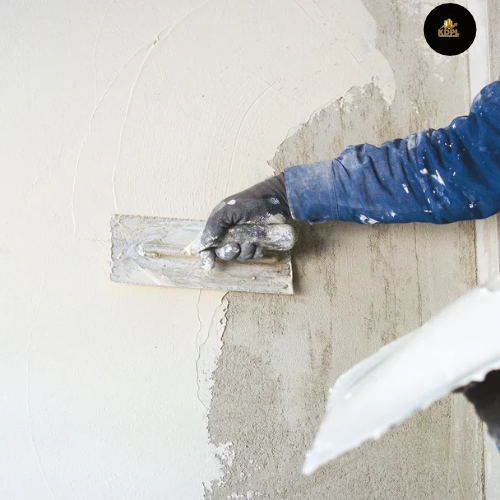
Can it be replaced?
Yes. Gypsum boards, cement boards and prefabricated ceiling systems are alternatives depending on the location and design. Cement-based plaster may also be used for suitable wall surfaces.
POP is generally unsuitable for areas with persistent moisture unless a specifically designed system is used. Bathrooms and exposed exterior areas need moisture-appropriate materials.
7. Primer: The Important Base Before Paint
Primer is a preparatory coating applied before the final paint. It improves adhesion, helps create a more uniform surface and can reduce uneven absorption.
Where is it used?
Interior walls after putty and surface preparation.
Exterior walls using suitable exterior primer.
Wood and metal surfaces with their respective specialised primers.
Why is it important?
Without the correct primer, paint may show uneven patches, poor adhesion or inconsistent finish. Primer also helps the paint system perform as intended.
Can it be replaced?
Some specialised paints are marketed as primer-plus-topcoat systems, but their suitability depends on the substrate and manufacturer’s instructions. Ordinary wall paint should not automatically be used as a primer.
8. Paint: Protection and the Final Appearance

Paint is the visible finishing layer of a wall. It adds colour, improves appearance and, depending on the formulation, provides washability, stain resistance and weather protection.
Common types include:
Distemper: An economical option for selected interior surfaces.
Interior emulsion: Suitable for living rooms, bedrooms and other interior walls.
Exterior emulsion: Designed for outdoor weather exposure.
Enamel paint: Used on suitable wood and metal surfaces.
Texture paint: Creates decorative patterns and surface effects.
Can one paint replace another?
Not always. Exterior paint should be selected for outdoor exposure, while interior paint is formulated for indoor conditions. Wood and metal require suitable coating systems. Choose the product according to its intended substrate and environment.
Which Material Should You Choose for Each Location?
| Location or work | Suitable material |
|---|---|
| RCC columns, beams and slabs | OPC/PPC as specified by structural design |
| Brickwork mortar | Suitable OPC/PPC cement-based mortar |
| General cement plaster | Suitable grey cement-based plaster |
| Smooth interior wall finish | Wall putty |
| Interior wall preparation | Suitable interior primer |
| Final interior finish | Interior emulsion |
| Exterior wall finish | Exterior primer and exterior paint |
| Decorative white finish | White cement-based product |
| False ceiling | POP or gypsum board system |
| Moisture-prone ceiling | Suitable moisture-resistant ceiling system |
Best Practices to Avoid Finishing Problems
Always buy materials suitable for the actual surface and location. Check the manufacturer’s technical information, recommended thickness, water ratio, drying time and application conditions. Do not mix different brands or chemical products unless compatibility is confirmed.
Use clean water, suitable tools and trained applicators. Allow plaster and putty to dry as required before applying primer and paint. Maintain proper curing for cement-based work, and protect fresh finishes from rain and excessive moisture.
Most importantly, identify and repair leakage before starting decorative finishing. Even the best putty and paint cannot permanently solve a damp wall caused by a leaking pipe or terrace.
Conclusion
Wall putty, primer, paint, white cement, OPC, PPC, grey cement and POP each serve a different purpose in residential construction. Cement is used for construction and cement-based finishes, putty prepares walls, primer improves the paint system, paint provides the final protective and decorative layer, and POP creates interior decorative features.
Choosing suitable alternatives can help control cost, but materials should never be substituted without considering their properties and intended use. Correct selection, preparation, application and curing are the foundations of a durable home finish.
Frequently Asked Questions
1. What is the difference between wall putty and white cement?
Wall putty is a finishing product designed to prepare surfaces for painting. White cement is a cementitious material used for decorative and selected repair applications. Some putties contain white cement, but the two are not identical.
2. Can white cement be used instead of wall putty?
It may be used in certain suitable finishing applications, but ordinary white cement is not a direct replacement for formulated wall putty. Putty generally provides a more controlled surface-finishing application.
3. Which is better for house construction: OPC or PPC?
Both have useful applications. OPC may be selected where specified early strength is required, while PPC offers advantages such as long-term strength development and lower heat generation in suitable applications. Follow the structural design.
4. Can PPC cement be used for plastering?
Yes. PPC is commonly used for plastering when the product meets the relevant requirements and the mix, application and curing are appropriate.
5. What is the difference between POP and wall putty?
POP is gypsum-based and commonly used for decorative ceilings and interior detailing. Wall putty is a surface-finishing material used to prepare walls before painting.
6. Is primer necessary before painting?
A suitable primer is generally recommended because it improves adhesion and helps create a uniform base. Follow the paint manufacturer’s recommended coating system.
7. Can POP be used in bathrooms?
Ordinary POP is generally unsuitable for persistently damp areas. Select a moisture-appropriate ceiling or wall system for bathrooms and other wet locations.
8. Can interior paint be used on exterior walls?
It is not recommended as a substitute for exterior paint. Exterior coatings are designed to withstand outdoor weather, sunlight and moisture exposure.
9. Can putty be applied directly over damp walls?
No. First identify and repair the moisture source. Allow the wall to reach the condition required by the selected product before applying putty and paint.
10. Which is the best material for a smooth and premium wall finish?
A properly prepared plaster surface, suitable wall putty, compatible primer and quality interior emulsion can provide a smooth, premium finish. Good workmanship is essential.