
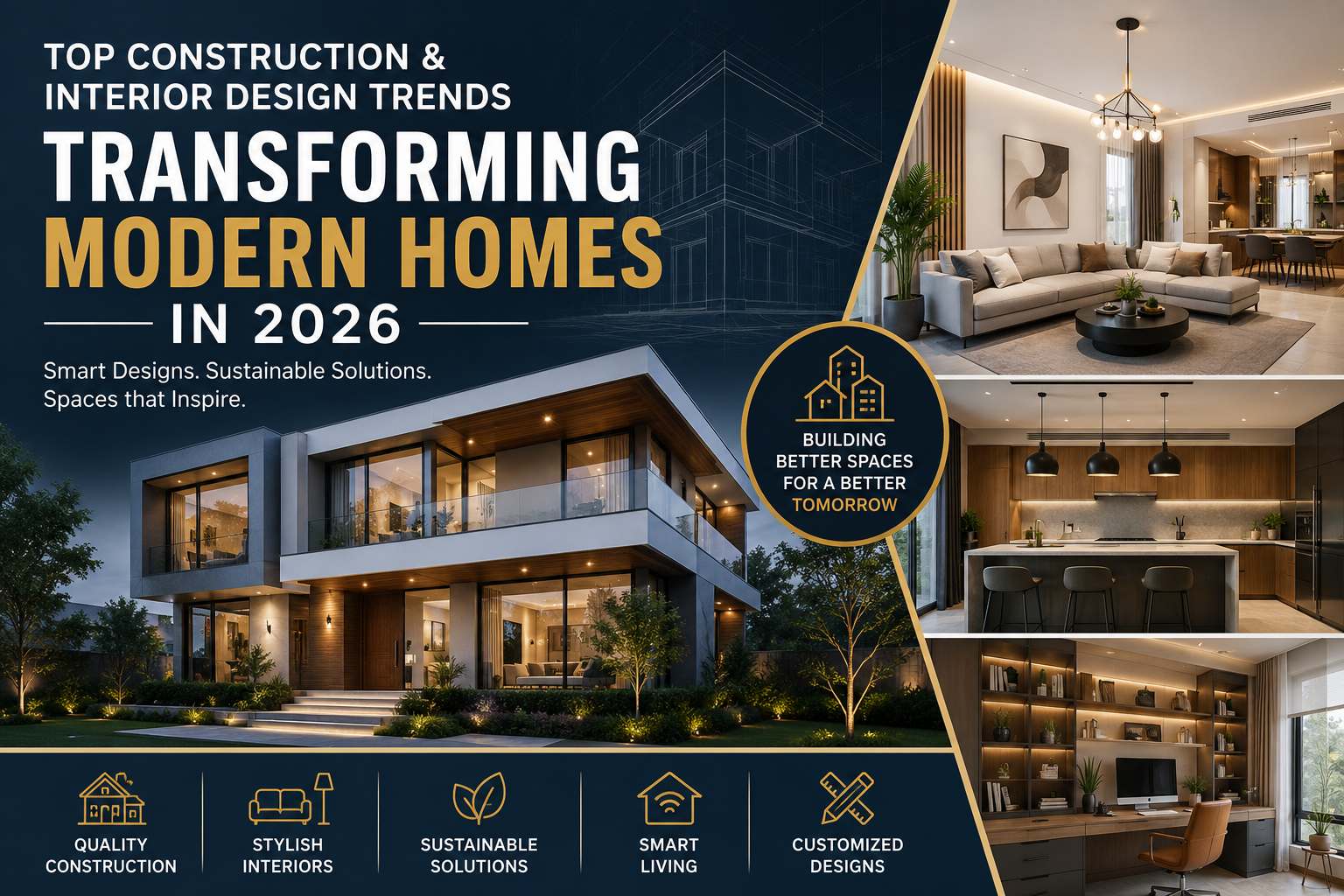

Top Construction & Interior Design Trends That Are Transforming Modern Homes in 2026
1. The New Era of Construction and Interior Design
The construction and interior industry is entering an exciting phase where functionality, sustainability, and aesthetics work together to create smarter living spaces. Homeowners today are no longer satisfied with buildings that simply provide shelter. They seek environments that reflect their personalities, improve daily comfort, and enhance long-term value. This shift has encouraged architects, builders, and interior designers to collaborate more closely from the earliest planning stages. Instead of treating construction and interior design as separate services, professionals now develop integrated solutions that optimize space, lighting, energy efficiency, and visual appeal simultaneously. Modern projects are designed with future adaptability in mind, ensuring homes remain relevant as family needs evolve. Whether constructing a new residence or renovating an existing property, combining innovative construction techniques with thoughtful interior planning delivers exceptional results that stand the test of time.
2. Smart Planning Creates Strong Foundations
Every successful construction project begins with detailed planning. A carefully prepared blueprint minimizes costly errors, improves resource allocation, and ensures the project progresses smoothly from excavation to final decoration. Professional construction companies assess soil conditions, climate, structural requirements, and local regulations before breaking ground. Interior designers also contribute during this phase by recommending optimal room layouts, electrical points, plumbing routes, and furniture positioning. This early collaboration prevents unnecessary modifications later in the project. Smart planning also includes budgeting, timeline management, material selection, and sustainability goals. When homeowners invest time in comprehensive planning, they gain greater control over expenses while achieving a home that perfectly balances practicality with elegance.
3. Sustainable Construction Is Shaping the Future
Environmental responsibility has become a major priority across the construction industry. Modern builders increasingly use eco-friendly materials, recycled products, energy-efficient insulation, and water-saving systems to reduce environmental impact. Sustainable construction extends beyond materials; it also involves designing buildings that maximize natural ventilation, daylight, and thermal efficiency. These strategies lower electricity consumption while creating healthier indoor environments. Green roofs, rainwater harvesting systems, solar-ready infrastructure, and low-emission paints are becoming common features in residential and commercial developments. Clients appreciate that sustainable construction not only protects natural resources but also reduces maintenance costs and increases property value over time. Investing in environmentally conscious building practices benefits homeowners, communities, and future generations alike.
4. Interior Design That Blends Beauty with Functionality
Beautiful interiors are meaningful only when they also improve everyday living. Contemporary interior design focuses on creating spaces that support work, relaxation, entertainment, and family interactions without compromising visual harmony. Designers carefully balance colors, textures, lighting, furniture, and decorative elements to create cohesive environments. Open floor plans remain popular because they encourage natural movement and social interaction while maximizing available space. Built-in storage solutions help reduce clutter, making interiors appear larger and more organized. Functional kitchens, comfortable bedrooms, luxurious bathrooms, and welcoming living areas all contribute to a better quality of life. Every design decision serves both aesthetic and practical purposes, resulting in interiors that remain stylish for years.
5. Technology Is Revolutionizing Construction Projects
Technology has dramatically improved how construction and interior projects are planned and executed. Building Information Modeling (BIM), 3D visualization, drone surveys, and digital project management tools allow professionals to detect potential issues before construction begins. Clients can now explore realistic virtual models of their future homes, enabling informed design decisions without relying solely on traditional blueprints. Smart home technology has also become a central component of modern interiors. Automated lighting, climate control, security systems, voice assistants, and energy monitoring devices enhance convenience while improving efficiency. These technological innovations reduce construction delays, increase accuracy, and provide homeowners with intelligent living spaces that adapt to their daily routines.
6. Customized Interiors Reflect Personal Lifestyles

Modern homeowners value personalization more than ever before. Rather than following standardized layouts and generic decorations, they seek customized solutions tailored to their individual lifestyles. Interior designers achieve this by understanding each client’s habits, preferences, and long-term goals. Families with children may prioritize durable materials and flexible play areas, while professionals working remotely require ergonomic home offices with excellent lighting and sound control. Luxury residences often incorporate bespoke furniture, custom cabinetry, artistic lighting fixtures, and handcrafted finishes. Personalized interiors create emotional connections between occupants and their living spaces, making homes feel genuinely unique. This client-centered approach ensures every design decision contributes to comfort, functionality, and personal satisfaction.
7. Quality Materials Ensure Long-Term Performance
Material selection significantly influences the durability, appearance, and maintenance requirements of any construction or interior project. Experienced professionals recommend high-quality materials that perform well under local environmental conditions while complementing the overall design theme. Premium flooring, engineered wood, natural stone, weather-resistant paints, moisture-resistant cabinetry, and energy-efficient windows provide lasting value despite higher initial investments. Selecting durable materials reduces future repair costs and extends the lifespan of structural and decorative elements. Interior finishes should also be easy to maintain without sacrificing elegance. Homeowners who prioritize quality over short-term savings often enjoy better performance, increased property value, and greater peace of mind throughout the life of their investment.
8. Renovation Services Bring New Life to Existing Spaces
Not every dream home requires new construction. Professional renovation services offer cost-effective opportunities to modernize aging properties while preserving their original character. Structural upgrades, improved insulation, updated plumbing, electrical replacements, and redesigned interiors can dramatically enhance both functionality and visual appeal. Kitchens and bathrooms often deliver the highest return on investment when renovated thoughtfully. Removing unnecessary walls, increasing natural light, installing modern flooring, and refreshing finishes can completely transform outdated spaces into contemporary living environments. Renovation projects also allow homeowners to incorporate energy-efficient technologies and sustainable materials without rebuilding from scratch. Skilled contractors ensure renovations comply with current safety standards while minimizing disruptions during construction.
9. Choosing the Right Construction and Interior Partner
Selecting a reliable construction and interior company is one of the most important decisions for any building project. Homeowners should evaluate experience, technical expertise, completed portfolios, client testimonials, licensing, and communication practices before signing contracts. Transparent pricing, realistic timelines, quality assurance processes, and after-service support demonstrate professionalism and reliability. An experienced team understands how to coordinate architects, engineers, contractors, suppliers, and interior specialists efficiently. Regular project updates keep clients informed and reduce uncertainty throughout the construction journey. Strong partnerships built on trust, transparency, and shared goals contribute significantly to successful project outcomes and long-lasting client satisfaction.
10. Building Spaces That Inspire Future Generations
Construction and interior design influence far more than the appearance of a building—they shape how people live, work, and connect with one another. Well-designed spaces encourage productivity, promote well-being, and create lasting memories for families and businesses alike. As the industry continues embracing innovation, sustainability, and personalized design, future projects will become even more efficient, adaptable, and environmentally responsible. Investing in professional construction and interior services ensures every aspect of a property is carefully considered, from structural integrity to finishing details. Whether building a dream home, renovating an office, or designing a commercial facility, expert guidance transforms ideas into inspiring spaces that combine beauty, durability, and exceptional functionality for years to come.