
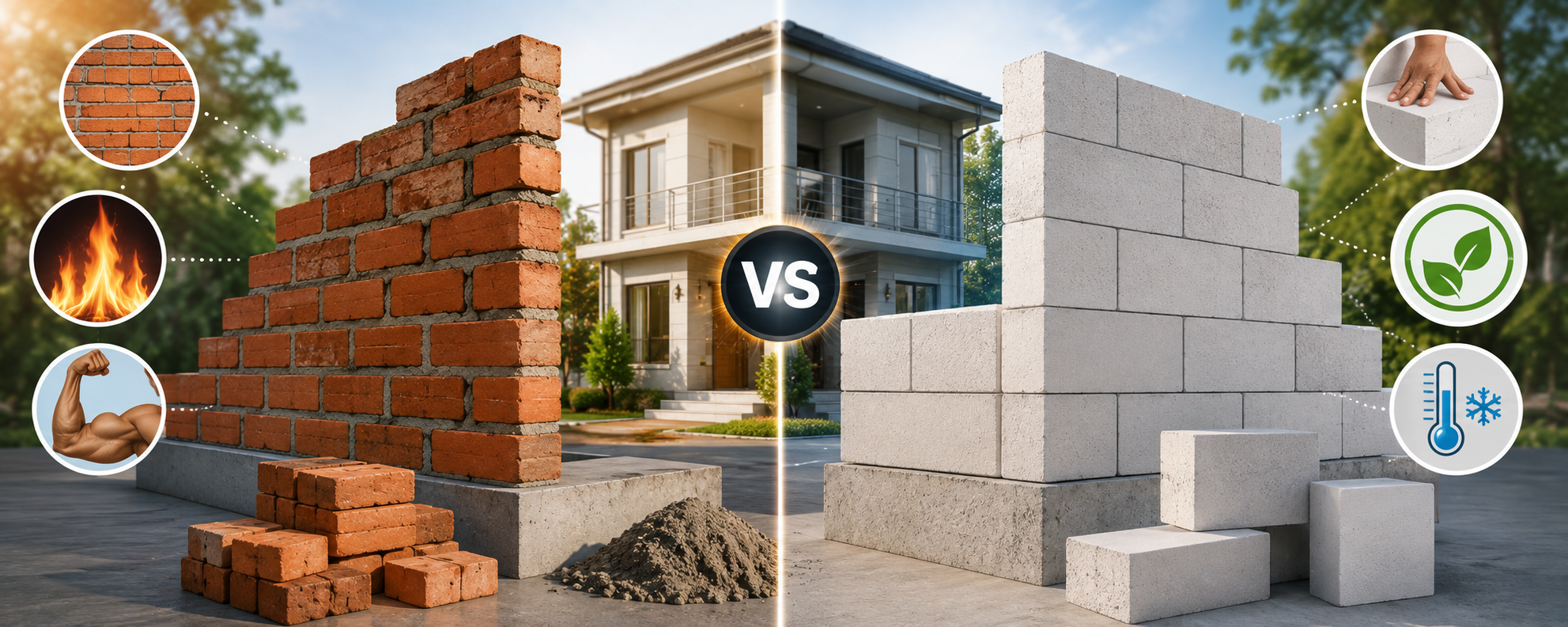

Red Brick vs AAC Block: Which Is Better for Your Home?
Choosing the right wall construction material is one of the most important decisions when building a house. While homeowners often focus on architectural design and interior finishes, the material used for walls directly affects the strength, durability, thermal comfort, construction speed, and long-term maintenance of the building. Two of the most common choices today are traditional red bricks and modern Autoclaved Aerated Concrete (AAC) blocks.
At Kanakdhara Developer Private Limited, we help homeowners make informed construction decisions based on engineering principles, local conditions, and long-term value rather than short-term cost. Both materials have their advantages, but selecting the right one depends on your project requirements, budget, and future expectations.
Let’s compare Red Brick vs AAC Block to understand which is the better choice for your dream home.
Understanding Red Bricks
Red bricks have been used in residential construction for centuries. Made from natural clay and fired in kilns, they are known for their durability and familiarity among builders. Most contractors and masons have extensive experience working with red bricks, making them a trusted option for conventional house construction.
Their solid structure provides excellent compressive strength, making them suitable for load-bearing applications in traditional construction. However, their manufacturing process consumes fertile topsoil and requires significant energy during firing, making them less environmentally friendly.
What Are AAC Blocks?
AAC (Autoclaved Aerated Concrete) blocks are lightweight precast building materials manufactured using cement, lime, fly ash, gypsum, aluminum powder, and water. They are cured under high-pressure steam, creating millions of tiny air pockets inside the blocks.
These air pockets make AAC blocks significantly lighter than traditional bricks while offering excellent thermal insulation, sound insulation, and fire resistance. Over the past decade, AAC blocks have become increasingly popular in modern residential and commercial construction.
Strength and Structural Performance
Many homeowners believe heavier materials automatically mean stronger construction, but this is not always true. The structural strength of a house primarily depends on the RCC framework, including foundations, columns, beams, and slabs—not just the wall material.
Red bricks offer high compressive strength and are well-suited for conventional masonry. AAC blocks, although lighter, provide sufficient strength for non-load-bearing walls in RCC-framed buildings, which are now the standard for most modern homes.
Construction Speed
AAC blocks are much larger than standard red bricks. Because fewer units are required to build a wall, construction progresses much faster. Larger block sizes also reduce the amount of mortar required and improve wall alignment.
Red brick construction generally takes more time due to the higher number of bricks and joints involved. For homeowners aiming to complete construction quickly, AAC blocks offer a clear advantage.
Thermal Comfort and Energy Efficiency
One of the biggest advantages of AAC blocks is their excellent thermal insulation. Their lightweight cellular structure reduces heat transfer, helping keep indoor spaces cooler during summer and warmer in winter.
Red bricks absorb and transfer more heat, which may increase indoor temperatures in hot climates. Homes built with AAC blocks often require less air conditioning, leading to lower electricity bills over time.
Sound and Fire Resistance
AAC blocks provide better sound insulation than traditional red bricks because of their porous internal structure. This makes them an excellent choice for homes located near busy roads or commercial areas.
They also offer outstanding fire resistance, providing additional safety during emergencies. While red bricks are also fire-resistant, AAC blocks generally perform better under prolonged exposure to high temperatures.
Cost Considerations
Many homeowners compare only the purchase price of materials. Although AAC blocks may appear slightly more expensive per unit, they often reduce overall construction costs by lowering mortar consumption, plaster thickness, labour time, and transportation expenses due to their lightweight nature.
Red bricks may have a lower unit price in some regions, but the total project cost can increase because of higher labour requirements and additional finishing materials.
Environmental Impact
Environmental sustainability is becoming an important factor in modern construction. Traditional brick manufacturing consumes natural clay and contributes to carbon emissions during kiln firing.
AAC blocks are manufactured using industrial by-products such as fly ash and require fewer natural resources. Their lightweight nature also reduces transportation fuel consumption, making them a more eco-friendly building material.
A Unique Perspective: Think Beyond Material Cost
Many homeowners choose wall materials based solely on the initial purchase price. However, the real value lies in the lifetime cost of ownership. A wall material that improves thermal insulation, reduces maintenance, speeds up construction, and lowers electricity bills can deliver significant savings over the next 20 to 30 years.
Instead of asking, “Which material is cheaper today?”, ask, “Which material will provide better comfort, durability, and lower maintenance for my family over the life of the house?” This long-term perspective often leads to better construction decisions and greater overall value.
Conclusion
The best choice ultimately depends on your home’s design, budget, climate, and long-term goals. Consulting experienced construction professionals before making this decision can help you maximize value while avoiding costly mistakes.
If you’re planning to build your dream home, Kanakdhara Developer Private Limited provides expert guidance on material selection, architectural planning, structural engineering, and complete house construction solutions to ensure your home is built with the right materials for lasting strength, comfort, and performance.