

ne of the biggest disappointments for homeowners is discovering damp patches, peeling paint, or mold growth soon after moving into a newly constructed house. Many people assume dampness is a problem that develops only in old buildings, but the truth is that moisture-related issues often begin during the construction stage itself. Poor planning, inadequate waterproofing, low-quality materials, and improper workmanship are some of the most common reasons why even a brand-new home can suffer from dampness.
At Kanakdhara Developer Private Limited, we believe that preventing dampness should begin long before the finishing work starts. A moisture-free home is not only more comfortable to live in but also lasts longer, requires less maintenance, and retains its value over time. By incorporating the right construction practices from the beginning, homeowners can avoid expensive repairs and enjoy a healthier indoor environment.
This guide explains the practical steps to prevent dampness during new house construction and why investing in moisture protection is one of the smartest decisions you can make.
Why Dampness Occurs in New Homes
Dampness develops when water enters the building through walls, roofs, floors, or foundations. Rainwater seepage, rising groundwater, leaking pipes, condensation, and poor drainage are the most common sources of moisture. Even small construction defects can create pathways that allow water to penetrate concrete and masonry over time.
Once moisture enters the structure, it gradually damages plaster, paint, flooring, wooden furniture, electrical fittings, and reinforcement steel. If ignored, it may also encourage mold growth, unpleasant odors, and unhealthy indoor air quality.
Start with Proper Site Planning
The first step in preventing dampness begins before excavation. The building site should have proper grading so that rainwater naturally flows away from the foundation instead of collecting around the structure.
Plots with poor drainage or low-lying areas require additional planning, including stormwater drainage systems and proper foundation protection. Good site planning significantly reduces the chances of future moisture problems.
Install an Effective Damp Proof Course (DPC)
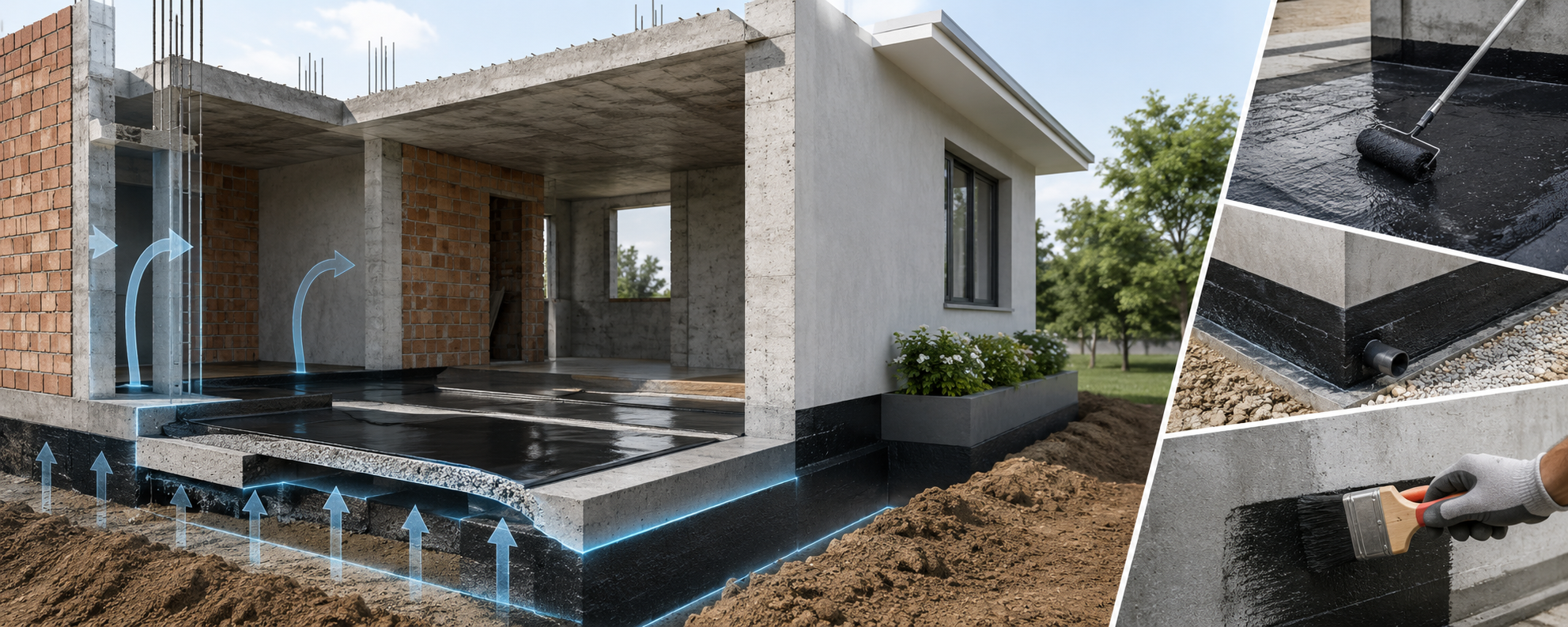
A Damp Proof Course is one of the most important moisture barriers in residential construction. It is installed at the plinth level to prevent groundwater from rising through walls by capillary action.
Without an effective DPC, moisture can gradually travel upward, causing damp walls, peeling paint, and salt deposits even if the roof is perfectly waterproofed. Using quality damp-proof materials during construction provides long-term protection against rising dampness.
Waterproof the Foundation and Basement
The foundation is constantly exposed to soil moisture and groundwater. Proper waterproofing of foundation walls and basement structures prevents water from entering the building from below ground level.
External waterproof membranes, waterproof concrete admixtures, drainage layers, and protective coatings should be incorporated during construction rather than added later as repairs.
Pay Special Attention to Terrace Waterproofing
The terrace receives direct exposure to rain throughout the year. Poor roof waterproofing is one of the leading causes of ceiling leakage and damp walls.
High-quality waterproof membranes, proper roof slopes, sealed expansion joints, and well-designed rainwater drainage systems prevent water accumulation and protect the roof slab from long-term deterioration.
Use Quality Construction Materials
Low-quality construction materials often absorb more moisture and deteriorate faster. Premium cement, properly graded aggregates, quality bricks or AAC blocks, waterproof admixtures, and certified waterproofing products improve the building’s resistance to water penetration.
Using trusted construction materials may slightly increase initial costs but significantly reduces maintenance expenses throughout the building’s life.
Ensure Proper Plumbing Installation
Hidden plumbing leaks are another major cause of dampness in new houses. Water supply and drainage pipelines should be pressure-tested before walls and floors are finished.
Bathrooms, kitchens, balconies, and utility areas should receive waterproof treatment before tile installation. Early testing helps identify defects before they become expensive repairs.
Provide Good Ventilation
Not all dampness comes from outside. Everyday activities such as cooking, bathing, and washing generate moisture inside the home. Without proper ventilation, this moisture condenses on walls and ceilings, encouraging mold growth.
Well-positioned windows, ventilators, exhaust fans, and natural airflow reduce indoor humidity and help maintain a healthy living environment.
Inspect Construction Quality at Every Stage
Many moisture problems originate from poor workmanship rather than poor materials. Cracks in concrete, poorly sealed construction joints, damaged waterproof membranes, and inadequate curing can all become future leakage points.
Regular site inspections by experienced architects or engineers ensure that waterproofing systems are installed correctly and construction quality remains consistent throughout the project.
A Unique Perspective: Moisture Protection Is an Investment in Indoor Health
Most homeowners associate dampness with cosmetic problems such as peeling paint or stained walls. However, the hidden impact is often much greater. Persistent moisture encourages mold and fungal growth that can reduce indoor air quality and affect the health of family members, especially children and elderly people.
A dry home also protects furniture, wardrobes, electronics, flooring, and decorative finishes from moisture damage. By investing in dampness prevention during construction, homeowners create not only a stronger building but also a healthier and more comfortable living environment for years to come.
Why Choose Kanakdhara Developer Private Limited?
At Kanakdhara Developer Private Limited, we understand that a durable home begins with careful planning and quality construction practices. Our experienced architects, structural engineers, and construction professionals integrate moisture protection into every stage of the project—from site planning and foundation waterproofing to terrace treatment, plumbing inspection, and drainage design.
We use premium waterproofing materials, prepare detailed BOQs, conduct systematic quality inspections, and ensure every construction stage follows modern engineering standards. Our commitment to transparency and quality helps homeowners avoid common moisture-related problems while improving the long-term performance and value of their homes.
Conclusion
Preventing dampness during construction is far easier and more economical than repairing water damage after the building is complete. Proper site planning, quality waterproofing, effective drainage, premium construction materials, careful plumbing installation, and regular quality inspections all work together to create a dry, durable, and healthy home.
If you are planning to build your dream house, Kanakdhara Developer Private Limited offers complete architectural design, structural engineering, waterproofing solutions, and end-to-end construction services. Our expert team ensures every home is built with long-lasting protection against dampness, giving homeowners confidence, comfort, and peace of mind for decades to come.