
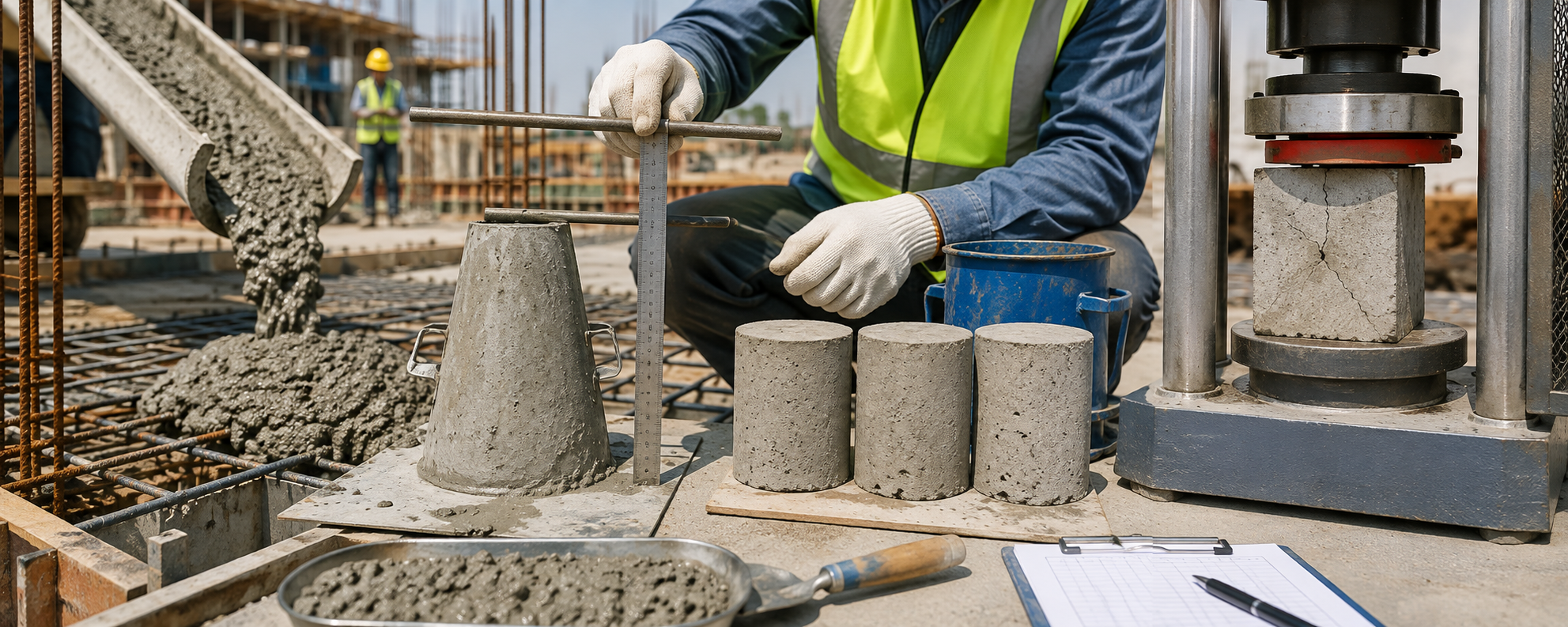

How to Check Concrete Quality at a Construction Site
Concrete is one of the most important materials in any building because it forms the backbone of foundations, columns, beams, slabs and other structural elements. Even if the structural design is excellent, poor-quality concrete or improper construction practices can affect the strength, durability and service life of a building.
For homeowners, developers and site supervisors, understanding how to check concrete quality at a construction site can help identify common problems before they become expensive repairs. Here are the important checks that should be carried out during concrete work.
1. Check the Concrete Mix and Materials
Concrete quality begins with its raw materials. Cement should be fresh, properly stored and free from excessive lumps caused by moisture. Aggregates should be clean and free from excessive dust, clay and organic matter.
The water used for concrete should also be reasonably clean. Most importantly, the concrete mix should follow the proportions specified in the structural design or approved mix design. Adding extra cement, sand or water at the site without engineering approval can disturb the intended strength and workability.

2. Avoid Excess Water in Concrete
One of the most common mistakes at construction sites is adding too much water to make concrete easier to pour.
Although extra water can improve workability, it increases the water-cement ratio and can reduce concrete strength and durability. Excess water can also increase shrinkage and the risk of cracking.
If concrete appears too stiff, the solution should not simply be adding water. The mix should be adjusted using an appropriate method specified by the engineer or concrete supplier.
3. Perform a Slump Test
The slump test is a simple site test used to assess the consistency and workability of fresh concrete.
A representative sample of fresh concrete is placed into a standard slump cone in layers, compacted appropriately and then the cone is lifted vertically. The change in height of the concrete indicates the slump.
The required slump depends on the type of structural work and placement method. Therefore, a specific slump value should not be considered universally acceptable. The result should be compared with the project specification or approved mix requirements.
4. Check Concrete During Transportation and Pouring
Concrete should be transported and placed within the appropriate time and handled in a way that avoids segregation.
During pouring, concrete should be properly compacted using suitable vibration techniques. Poor compaction can leave honeycombing and voids, particularly around reinforcement and congested sections.
At the same time, excessive vibration should also be avoided because it can contribute to segregation in certain mixes.
5. Inspect for Honeycombing and Segregation
After removing formwork, inspect the concrete surface for visible defects.
Honeycombing appears as areas containing exposed aggregate and voids. It can result from inadequate compaction, poor workability, leakage from formwork or improper placement.
Segregation occurs when the components of concrete separate rather than remaining uniformly distributed. Significant defects should not simply be covered with plaster. Their cause and structural significance should be assessed by a qualified engineer before repairs are carried out.
6. Conduct Cube Tests for Strength
Visual inspection alone cannot confirm the compressive strength of concrete. For structural concrete, compressive strength testing of concrete cube specimens is an important quality-control procedure.
Samples are taken from fresh concrete and cast into standard moulds. After curing for specified periods, the cubes are tested in a compression testing machine.
The test results provide evidence of whether the concrete is achieving the specified strength. Testing procedures and acceptance criteria should follow the applicable project specifications and relevant Indian Standards.
7. Ensure Proper Curing
Good concrete does not end with proper mixing and pouring. Curing is equally important.
Concrete needs adequate moisture and suitable conditions for cement hydration and strength development. Inadequate curing can increase the risk of surface cracking, reduced durability and poor long-term performance.
The curing method and duration should be appropriate for the concrete, weather conditions and structural element, and should follow the applicable specifications.
8. Check Reinforcement and Formwork Before Pouring
Before concrete is poured, the reinforcement should be inspected against the structural drawings. Check bar diameter, spacing, laps, anchorage, cover and placement.
Formwork should be properly aligned, adequately supported and sufficiently tight to prevent cement paste leakage. The entire area should be clean and free from debris before pouring begins.
These checks are important because even high-quality concrete cannot compensate for incorrectly placed reinforcement or poorly prepared formwork.
Why Professional Quality Control Matters
Concrete quality depends on much more than simply looking at the finished surface. Material quality, mix proportions, water control, workability, placement, compaction, curing and laboratory testing all contribute to the final performance of concrete.
At Kanakdhara Developer Private Limited, we believe that quality construction begins with systematic checks at every stage rather than trying to correct problems after completion. Proper supervision and adherence to engineering specifications help create structures that are safer, more durable and better suited for long-term use.
Final Thoughts
Learning how to check concrete quality at a construction site is valuable for anyone involved in construction. Basic observations such as checking materials, controlling water, monitoring slump, inspecting placement and ensuring curing can identify many common issues. However, strength cannot be reliably judged by appearance alone.
For structural work, site quality control should be supported by appropriate testing, documentation and professional engineering supervision. A small investment in quality checks during construction can prevent much larger structural and financial problems in the future.