
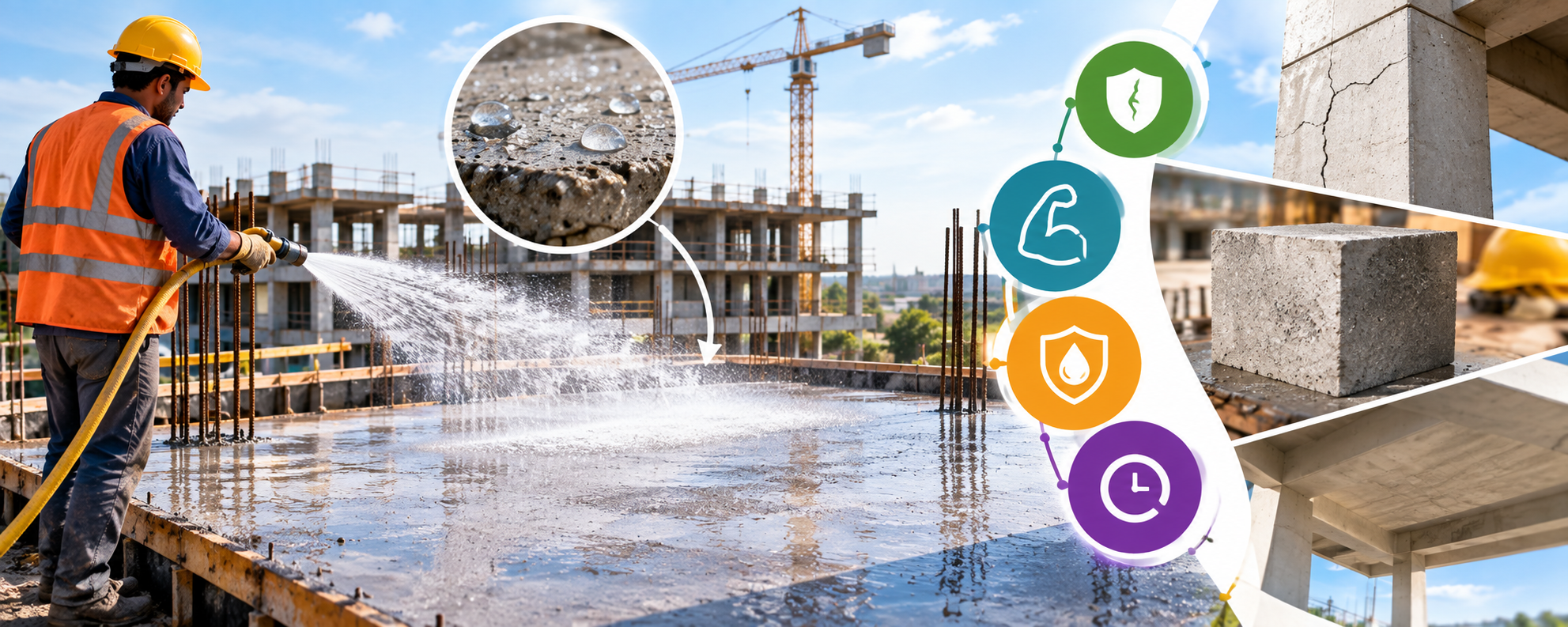

Why Proper Curing Is Critical for RCC Construction
Reinforced Cement Concrete, commonly called RCC, is one of the most important construction materials used in residential and commercial buildings. Foundations, columns, beams, slabs, staircases and many other structural elements depend on properly prepared and properly cured concrete. While homeowners often pay close attention to cement quality, steel reinforcement and concrete grade, curing is sometimes treated as a routine activity that can be shortened when the construction schedule becomes tight.
That approach can create problems. Proper curing is an essential part of concrete construction because cement needs water and suitable conditions to continue hydrating after concrete has been placed. If concrete loses moisture too quickly, the hydration process can be affected, potentially reducing strength development and increasing the risk of cracking and durability problems.
Curing is therefore not simply about keeping a slab wet. It is a planned construction activity that should begin at the appropriate stage and continue for an adequate period according to the concrete, environmental conditions and project requirements.
What Is Curing in Concrete Construction?
Curing is the process of maintaining adequate moisture and suitable temperature conditions in freshly placed concrete so that cement hydration can continue and the concrete can develop its intended properties.
When cement reacts with water, hydration products form and gradually bind the concrete constituents together. This process continues beyond the day the concrete is poured. Maintaining appropriate moisture helps support this development.
If newly placed concrete dries too quickly, particularly under hot, dry or windy conditions, the surface can lose moisture rapidly. This can contribute to shrinkage-related cracking and may interfere with the development of the intended concrete properties.
For RCC construction, proper curing is especially important because structural elements such as slabs, beams and columns are expected to perform reliably over many years.
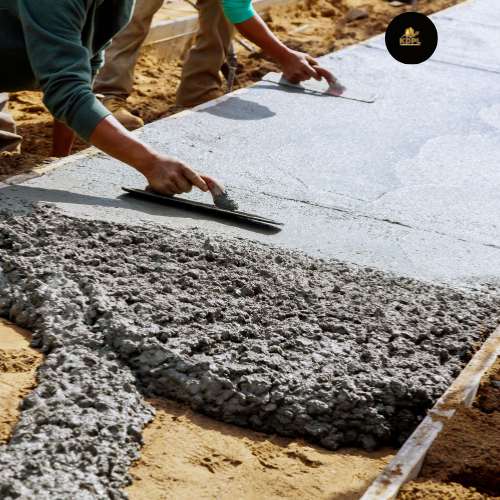
Why RCC Requires Proper Curing
RCC combines concrete with steel reinforcement to create structural elements capable of carrying loads. The concrete provides compressive strength and protects the reinforcement, while steel primarily contributes tensile capacity.
For the concrete component to achieve its intended performance, it needs appropriate placement, compaction and curing.
Poor curing can result in inadequate strength development, surface defects, increased permeability and cracking. These problems may become more noticeable as the building ages and is exposed to moisture, temperature changes and other environmental conditions.
Proper curing therefore contributes to both the immediate performance and long-term durability of RCC members.
Curing Helps Concrete Develop Strength
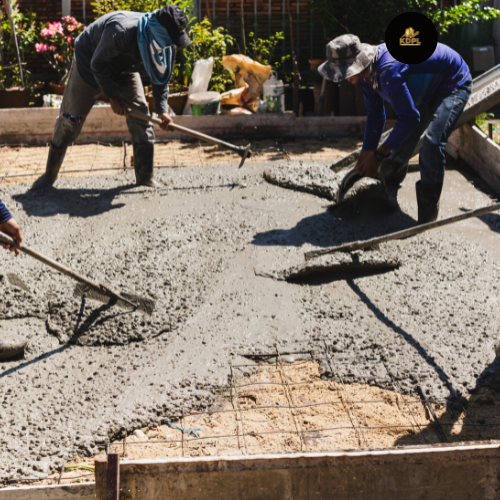
One of the most important purposes of curing is supporting strength development.
Concrete does not reach its specified strength immediately after pouring. Strength develops progressively as cement hydrates. Maintaining suitable moisture conditions helps this process continue.
This is why testing concrete at specified ages is important. A concrete grade such as M20 or M25 refers to characteristic compressive strength requirements at 28 days under the applicable standards and testing conditions. Achieving the intended performance depends on the complete concrete production and curing process.
A contractor cannot compensate for inadequate curing simply by claiming that a higher cement quantity was used.
Curing Helps Reduce Early Cracking
Fresh concrete can lose moisture rapidly when exposed to hot temperatures, dry air or strong winds. Rapid moisture loss can cause shrinkage and increase the likelihood of surface cracking.
Not every crack in concrete is caused by poor curing, and curing alone cannot prevent every type of cracking. Structural movement, thermal effects, settlement, reinforcement details, concrete mix characteristics and construction practices can also contribute.
Nevertheless, appropriate curing is an important part of controlling early-age moisture loss and supporting better concrete performance.
Curing Improves Durability
A properly cured concrete structure can have a more developed and less permeable cementitious matrix than inadequately cured concrete.
Lower permeability can help reduce the movement of water and potentially harmful substances through the concrete. This is particularly important for RCC because reinforcement needs protection from environmental exposure.
If water and aggressive substances can penetrate concrete more easily, the reinforcement may eventually become vulnerable to corrosion under suitable conditions.
Good curing is therefore connected not only with strength but also with the long-term durability of the structure.

When Should Curing Begin?

Curing should begin after the concrete has been placed and finished sufficiently for the selected curing method to be applied without damaging the surface.
The exact timing depends on the concrete mixture, weather, surface condition and curing method. Starting too late can allow excessive moisture loss during the early period when the concrete is still developing.
In hot weather, early moisture loss can be particularly significant. Construction teams should therefore plan curing as part of the concrete placement process rather than deciding afterward how to handle it.
Common Methods of Curing
Different curing methods can be used depending on the structural element, site conditions and project requirements.
Water curing is commonly used in building construction. It can involve ponding, spraying, wet coverings or other methods that maintain moisture on the concrete surface.
For horizontal surfaces such as slabs, ponding or continuous wet coverings can be practical where site conditions allow. For vertical elements such as columns and walls, wet coverings or controlled water application may be used.
Membrane-forming curing compounds can also be used in suitable applications. These materials form a film that reduces moisture loss. Their use should follow the manufacturer’s instructions and project requirements because later finishes or bonding requirements may affect their suitability.
The construction team should select an appropriate curing method rather than simply applying water in an uncontrolled manner.
Curing RCC in Hot Weather
Hot weather requires additional attention because high temperatures can accelerate moisture loss and affect concrete handling.
Fresh concrete may lose water quickly under direct sunlight, dry winds or low humidity. Construction teams should therefore plan placement times, protect exposed surfaces and use appropriate curing procedures.
Simply pouring more water onto a slab after it has already dried significantly is not an ideal substitute for proper early-age moisture management.
Where conditions are challenging, the responsible construction professional should determine the appropriate measures based on the concrete specification and site conditions.
Why Homeowners Should Monitor Curing
Homeowners do not need to become concrete specialists to monitor basic construction practices. They can ask the site supervisor how curing is being carried out, when it started, what method is being used and how long it is planned to continue.
Photographs or site records can also help maintain accountability during important structural stages.
However, homeowners should avoid independently changing curing procedures without consulting the construction team because the appropriate method depends on the concrete and site conditions.
Curing Is Only One Part of RCC Quality
Proper curing is critical, but it cannot correct poor-quality concrete, incorrect reinforcement, inadequate structural design or poor workmanship.
RCC quality depends on a complete chain of activities. Structural design must be appropriate, reinforcement must be correctly placed, concrete materials must meet the required specifications, batching and mixing must be controlled, concrete must be properly placed and compacted, and curing must be carried out correctly.
A failure at any stage can affect the final result.
Frequently Asked Questions
What is curing in RCC construction?
Curing is the process of maintaining suitable moisture and temperature conditions in freshly placed concrete so that cement hydration can continue and the concrete can develop its intended strength and durability.
Why is curing important for RCC?
Curing supports strength development, helps control early moisture loss and cracking, and contributes to the durability and permeability characteristics of concrete.
Can concrete become strong without curing?
Concrete may still harden without adequate curing, but inadequate moisture conditions can prevent it from developing its intended properties effectively and can increase the risk of cracking and durability problems.
How many days should RCC be cured?
The required curing period depends on the concrete materials, mixture, weather, exposure conditions and applicable project specifications. The construction team should follow the specified curing procedure rather than using a fixed duration for every situation.