


When we think about construction projects, we usually imagine cement, bricks, steel, and heavy machines. But there is one more factor that plays a very big role in the success of any project, and that is manpower. Simple Steps to Estimate Manpower for Construction Projects.
Manpower means the workforce or the number of people working at the site. If you hire fewer workers, the project will be delayed. If you hire too many, you will spend extra money and face confusion at the site. This is why estimating manpower properly is one of the most important steps in project planning.
What Does Manpower Mean in Construction?
In the construction industry, manpower refers to all the people involved in completing the project. It includes skilled workers such as masons, electricians, plumbers, and carpenters. It also includes semi-skilled workers like helpers and machine operators, along with unskilled laborers who do basic tasks such as carrying material, cleaning, and support work. Apart from workers, supervisory staff such as site engineers, foremen, and project managers are also considered manpower. A construction project can only move smoothly when the right balance of all these people is maintained.
Why Should You Estimate Manpower?
Manpower estimation is not just about numbers; it directly affects the time, cost, and quality of a project. When you plan manpower properly, you can finish work on time and avoid unnecessary delays. It also helps in controlling cost because you are not paying extra labor charges. Skilled manpower ensures better quality in construction and reduces mistakes that can otherwise lead to rework. At the same time, planned manpower reduces the physical burden on workers, which improves safety and prevents accidents. With proper planning, there is no overcrowding or shortage at the site, and the workflow remains smooth.
Factors That Affect Manpower Requirement
The number of workers required in a project depends on several factors. The type of project plays an important role. A small residential house will need far fewer people compared to a hospital, school, or shopping mall. The size and complexity of the project also matter because high-rise buildings, bridges, and industrial facilities demand more workers and specialized skills. The construction method used is another factor. Traditional methods require more manual labor, while modern machines can complete the same task with fewer workers. The project timeline also affects manpower needs because if you want faster completion, you must hire more people. The skill level of workers matters as well because highly skilled labor can complete work faster, which reduces the total number of workers required. Lastly, the availability of equipment like cranes, concrete pumps, and mixers reduces the dependence on manual labor.
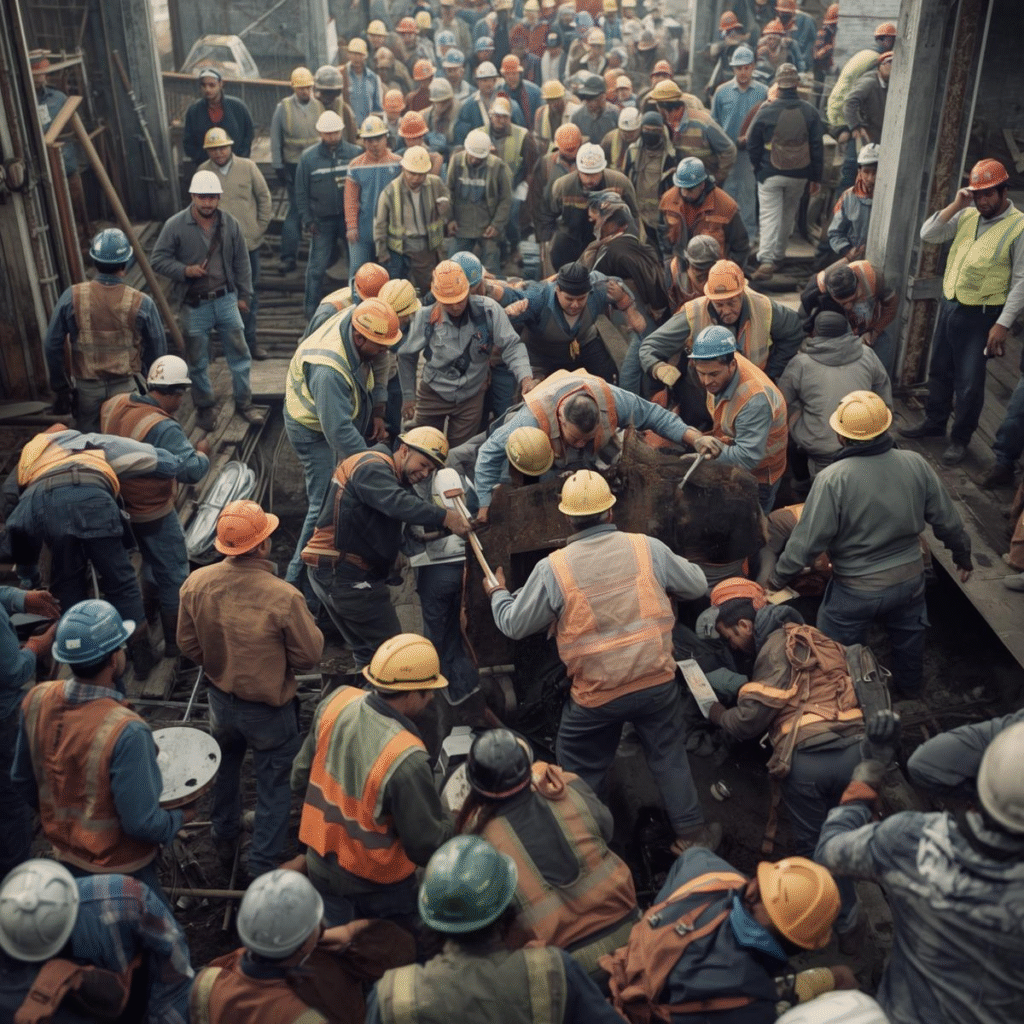
Simple Steps to Estimate Manpower for Construction Projects
Estimating manpower becomes easy when you follow a step-by-step approach. The first step is to break the work into stages. A construction project usually includes activities such as site preparation, foundation work, structural work like columns, beams, and slabs, followed by brickwork, plastering, flooring, tiling, electrical and plumbing work, and finally painting and finishing.
Once you divide the project into stages, the second step is to measure the quantity of work in each stage. For example, you need to calculate how many cubic meters of concrete are required, how many square meters of plastering needs to be done, or how many doors and windows must be installed.
The third step is to use productivity standards, which means knowing how much work one worker can complete in one day. For instance, a mason can do around 1.25 cubic meters of brickwork per day, a painter can paint 8 to 10 square meters per day, and a carpenter can install 2 to 3 doors per day. These numbers help in making accurate calculations.
The fourth step is to divide the total work by the productivity rate. For example, if 100 cubic meters of brickwork is required and one mason can do 1.25 cubic meters per day, then you need 80 mason-days. If the target is to complete the work in 20 days, you will require four masons daily.
The fifth and final step is to adjust according to time and budget. If you want to finish the project quickly, you must increase the number of workers. If you want to save cost, you can extend the timeline and reduce manpower.
Example: Manpower for a Small House
Let us consider an example of a two-bedroom house. Suppose the brickwork required is 80 cubic meters, and one mason can complete 1.25 cubic meters per day. This means the total requirement is 64 mason-days. If you want to finish this work in 16 days, you will need four masons working daily. Generally, every mason also needs one helper, so you will require four helpers as well. The same method can be applied for plastering, flooring, painting, and other activities to get the total manpower requirement for the entire house.
Manpower for Bigger Projects
For larger projects like hospitals, schools, and commercial complexes, manpower planning becomes more detailed and professional. In such cases, companies often use software like MS Project or Primavera to calculate manpower. They prepare a Work Breakdown Structure, which divides the project into small, manageable tasks. A manpower histogram is also prepared, which shows the number of workers needed at different stages of construction. This ensures that workers are mobilized in phases, and there is no extra cost of having idle manpower at the site.
Standard Ratios in Manpower Planning
In practical construction, some standard ratios are often followed to simplify manpower estimation. For example, usually one mason works with one helper, one carpenter with one helper, one bar bender with one helper, and one electrician with one helper. For supervision, one site supervisor is generally responsible for 10 to 15 workers. These ratios make manpower planning easy and realistic.
Challenges in Estimating Manpower
Even with careful planning, there can be challenges in manpower estimation. Workers may not attend regularly, and skilled labor may not always be available when needed. Weather conditions like rain or extreme heat often reduce productivity. Sometimes last-minute changes in design or scope increase workload, which demands more manpower suddenly. To handle these situations, planners usually keep 10 to 15 percent extra manpower as a safety margin.

Tips for Smarter Manpower Planning
To make manpower planning more accurate, it is always useful to look at data from previous projects. Planners should also keep some extra manpower during peak stages of construction. There should be a balance between skilled and unskilled workers to avoid dependency on one group. It is important to avoid overcrowding because having too many workers at the same place does not always mean faster work; sometimes it reduces efficiency. The smart use of machines can also save labor costs and reduce manpower needs. Hiring workers through reliable contractors ensures better discipline, attendance, and performance.
Technology in Manpower Planning
Technology is changing the way manpower is planned in modern construction. Many companies are now using AI-based tools that can predict the exact number of workers required for each stage. Building Information Modeling, or BIM, creates a 3D model of the project and forecasts manpower requirements accurately. Mobile applications are also being used to track daily attendance and productivity of workers. These technological solutions save time, reduce errors, and cut unnecessary costs.
Conclusion
Manpower estimation is one of the most important parts of construction management. The right number of workers ensures that the project is completed on time, within budget, and with good quality. To estimate correctly, the project must be divided into stages, the quantity of work measured, productivity rates applied, and calculations adjusted based on the project timeline and budget. It is always wise to keep a small buffer for emergencies. Ultimately, manpower planning is not just about counting workers, but about smartly managing people, time, and resources for the best results.