
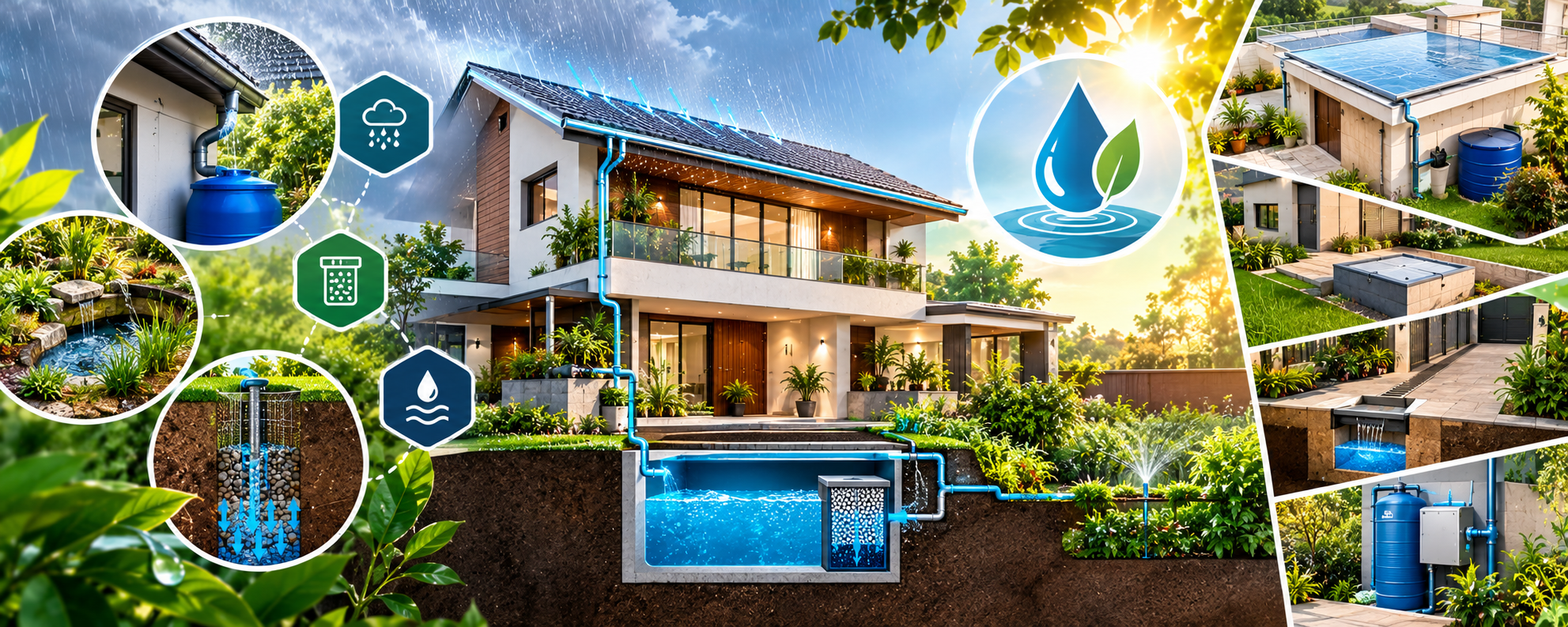

Every monsoon, rainwater flows across rooftops, terraces, balconies and driveways before disappearing into street drains. For homeowners, this water is a valuable resource that can be collected and used instead of being wasted. With the right design, an independent house can capture rainwater for gardening, cleaning, washing outdoor areas and, where treatment is appropriate, other household uses.
Rainwater harvesting is not simply about placing a tank beneath a pipe. A well-planned system considers the roof area, local rainfall, water demand, available space, soil conditions and the route through which rainwater will flow. The design should also prevent leaves, dust and other contaminants from entering the storage or groundwater recharge system.
For independent houses in cities such as Lucknow, where seasonal rainfall can provide opportunities for water collection, architects can integrate harvesting systems into both modern and traditional home designs. Here are ten practical designs to consider while constructing a new house or upgrading an existing property.
1. Rooftop Rainwater Collection with an Underground Storage Tank

An underground rainwater storage tank is a practical choice for homeowners who want to collect a substantial amount of rainwater without occupying valuable terrace or garden space. Rainwater flows from the roof through downpipes, passes through a suitable filter and enters the underground tank.
The stored water can be used for gardening, washing vehicles, cleaning outdoor areas and other suitable non-drinking purposes. With appropriate treatment and testing, it may be suitable for additional uses, depending on local requirements and water quality.
This design is especially useful for independent houses with limited outdoor space. However, the tank requires proper structural design, waterproofing, an accessible inspection cover and a safe overflow route. It must also be kept separate from the drinking-water supply unless an appropriately designed treatment and plumbing system is provided.
2. Rainwater Harvesting with a Recharge Pit
A recharge pit allows collected rainwater to percolate into the ground instead of storing all of it in a tank. It typically consists of a properly designed pit containing suitable filter media, such as graded gravel and coarse sand, depending on the local design.
Roof runoff passes through a screen and filtration arrangement before entering the pit. The water then infiltrates into the surrounding soil where ground conditions permit. This can support groundwater recharge and reduce the amount of rainwater discharged from the property.
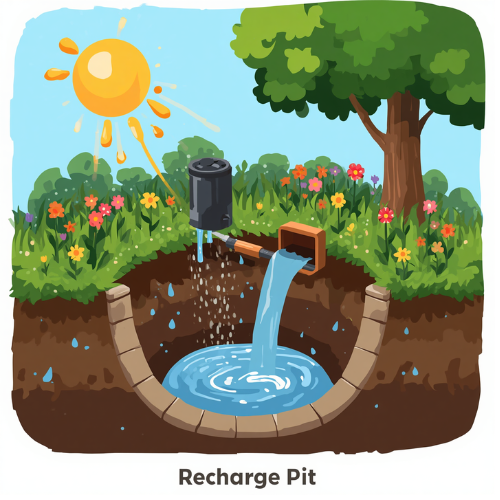
A recharge pit is suitable only when the soil and groundwater conditions allow infiltration. The pit should not be placed close to foundations, septic systems or other locations where recharge could create structural or sanitation risks. A site assessment is important before deciding its depth, dimensions and location.
3. Rainwater Harvesting through a Recharge Well

A recharge well can be considered where a conventional shallow recharge pit is unsuitable or where a professionally designed system is needed to direct filtered rainwater into a suitable underground formation.
In this arrangement, roof runoff passes through screening and filtration before reaching the recharge structure. Its design must reflect the local geology, groundwater conditions and applicable permissions. A recharge well should never be treated as a simple deep hole that allows untreated rooftop water to enter the ground.
This system may be appropriate for properties where groundwater recharge is technically feasible, but it requires specialist assessment and careful construction. The design should protect groundwater quality and avoid connecting contaminated surface runoff directly to underground water sources.
4. Rainwater Storage Tank Integrated with the Garden
For homeowners who enjoy gardening, a rainwater harvesting tank can be integrated into a landscaped area. The tank may be installed underground or positioned discreetly beside a garden wall, with suitable screening to maintain the appearance of the property.
Rainwater collected from the roof is filtered and stored for watering plants, washing garden tools and cleaning outdoor spaces. A tap or pump can make the water convenient to use, while a level indicator helps homeowners understand how much water is available.

This design works well when the garden has regular water demand during the rainy season and afterwards. The tank capacity should be based on the roof’s collection potential and actual garden requirements rather than selected arbitrarily. Overflow should be directed safely to an approved drainage or recharge arrangement.
5. Rainwater Collection from a Car Parking Canopy

A covered car parking area can do more than protect vehicles from sunlight and rain. Its roof can also collect rainwater and channel it into a storage tank or recharge system.
For modern independent houses, a metal, polycarbonate or other suitable canopy can be designed with gutters and downpipes. These should direct runoff through a filter before it reaches the chosen collection system. If the canopy is large enough, it can contribute additional catchment area beyond the main house roof.
The canopy must be designed for local wind loads, rainfall intensity and structural safety. Materials should be suitable for outdoor exposure, and the collected water should be kept separate from runoff that may contain oil or vehicle contaminants. Where contamination is possible, the collection route and intended use need careful consideration.
6. Rainwater Harvesting with a Decorative Courtyard
Traditional Indian houses often feature a central courtyard, or aangan, which brings daylight and ventilation into the home. A modern courtyard can also be designed to manage rainwater, provided drainage and waterproofing are considered from the beginning.
A courtyard may include a gently sloping paved surface that directs rainwater towards a concealed drain, a collection tank or a planted rain garden. A landscaped section can absorb some runoff where the soil and site conditions are suitable.

This approach combines practical water management with architectural design. The courtyard remains visually appealing while helping control rainwater on the property. However, it should not allow water to accumulate against walls or flow into indoor spaces. Proper floor levels, drainage outlets and waterproofing details are essential.
7. Rain Garden for Natural Rainwater Management

A rain garden is a shallow landscaped depression designed to temporarily collect runoff and allow it to infiltrate into suitable soil. Unlike a conventional storage tank, it manages water through landscape design and controlled infiltration.
In an independent house, a rain garden may be placed near a garden edge or another suitable open area. Rainwater from selected roof downpipes or paved surfaces can be directed towards it after appropriate screening. Plants suited to local rainfall and soil conditions help create an attractive landscape feature.
A rain garden can reduce surface runoff and add greenery to the property. It is not appropriate for every site, especially where the soil drains poorly, the groundwater level is high or infiltration could affect foundations. Its location, depth, planting and overflow arrangement should be selected according to local conditions.
8. Rainwater Harvesting with a First-Flush System
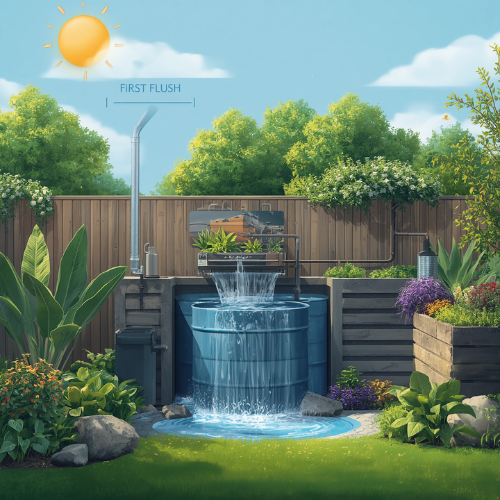
The first rain after a dry period can wash dust, leaves, bird droppings and other contaminants from the roof. A first-flush arrangement diverts an initial portion of runoff before the remaining water reaches the storage tank or recharge system.
This design is especially valuable in homes with exposed terraces, nearby trees or dusty surroundings. It usually works alongside a leaf screen, downpipe filter and suitable storage or recharge system rather than replacing them.
The amount of water diverted depends on roof conditions, local pollution and the system design. The first-flush device should be easy to inspect, drain and clean. A system that is never maintained may stop functioning correctly, so accessibility should be included in the original architectural plan.
9. Rainwater Harvesting with a Modular Storage Tank
Modular tanks can be useful where a homeowner wants a storage system that can be installed in sections or adapted to a particular site. Depending on the product and design, tanks may be placed underground or in a suitable above-ground location.
Roof runoff passes through a filter before entering the tank. Stored water can then be used for non-drinking purposes, subject to water quality and the intended application. Some systems can be connected to pumps or controlled distribution lines for easier use.
The main advantage is flexibility, but the tank must be selected according to its intended use, available space, durability and maintenance needs. Underground installation requires suitable excavation, structural support and groundwater considerations. Above-ground tanks need a stable base and protection from damage and excessive heat.
10. Combined Rainwater Harvesting and Groundwater Recharge System
For many independent houses, a combined system offers greater flexibility than relying on either storage or recharge alone. In this design, filtered roof runoff first fills a storage tank. Once the tank reaches its designed capacity, excess water is directed to a suitable recharge structure or an approved overflow route.
This arrangement allows the household to use collected water when needed while managing additional runoff during heavy rainfall. It can be especially useful for new houses where the architect can coordinate roof drains, tank location, filter chambers and recharge structures from the beginning.
The system must include suitable overflow capacity and must not cause waterlogging near foundations or neighbouring properties. The storage tank, filters and recharge components should be accessible for inspection and cleaning. Recharge should be included only where site conditions and local requirements permit it.
How to Choose the Right Rainwater Harvesting Design
The most suitable design depends on the size of the roof, the amount of rainfall received, household water demand, available open space and soil conditions. A home with a large terrace and regular garden use may benefit from a storage tank, while a property with suitable soil and limited demand for stored water may consider a recharge system.
For a new independent house, rainwater harvesting should be included in the architectural drawings. Plan downpipes, roof slopes, filter locations, tank access and overflow routes before construction begins. In an existing house, inspect the roof drainage and available space before deciding whether a tank, recharge pit or combined arrangement is feasible.
The collected water must be protected from contamination. Drinking-water use requires appropriate treatment and testing; simple roof filtration alone does not guarantee potability. Regular cleaning of gutters, filters and storage tanks is essential for reliable performance.
Conclusion
Rainwater harvesting can be designed in many ways, from underground tanks and recharge pits to rain gardens, courtyard drainage and car parking canopies. The best system is not necessarily the largest or most expensive; it is the one that matches the home’s roof area, rainfall, water needs and site conditions.
By planning collection, filtration, storage and overflow together, homeowners can make better use of monsoon rainfall, reduce avoidable runoff and support responsible water management. Early coordination between the architect, structural engineer and plumbing professional helps ensure that the system is practical, safe and durable.
Frequently Asked Questions
1. What is the best rainwater harvesting design for an independent house?
A rooftop collection system connected to a storage tank or suitable recharge structure is a common option. The best choice depends on roof area, soil conditions, household water demand and available space.
2. Can rainwater from my roof be used for household purposes?
Yes. Properly collected rainwater can often be used for gardening, outdoor cleaning and other suitable non-drinking purposes. Drinking-water use requires appropriate treatment and testing.
3. Is a rainwater harvesting pit suitable for every house?
No. A recharge pit depends on soil permeability, groundwater conditions, site layout and local requirements. Poorly located or unsuitable pits can cause waterlogging or other problems.
4. How much rainwater can a house collect from its roof?
The quantity depends on roof area, rainfall and collection efficiency. A larger roof generally captures more water, but actual usable volume is reduced by losses, first-flush diversion and overflow.
5. What is a first-flush system in rainwater harvesting?
A first-flush system diverts the initial roof runoff, which may contain accumulated dust and debris, before the remaining water enters the storage or recharge system.
6. Can rainwater harvesting be installed in an existing house?
Yes. Existing homes can often add filters, downpipes, storage tanks or recharge systems after assessing roof drainage, available space and ground conditions.
7. Does rainwater harvesting require regular maintenance?
Yes. Gutters, leaf screens, filters, first-flush devices, tanks and overflow outlets need periodic inspection and cleaning, particularly before and during the monsoon.
8. Can a rainwater harvesting system be combined with a terrace garden?
Yes. A storage tank can supply water for garden use, while a suitably designed rain garden can manage some runoff. Structural capacity, drainage and waterproofing must be considered.
9. Is rainwater harvesting compulsory for independent houses in India?
Requirements vary by state, city, plot size, building category and local building regulations. Homeowners should check the current rules of their municipal authority and relevant development agency before construction.
10. Should rainwater harvesting be planned before house construction?
Ideally, yes. Early planning makes it easier to position downpipes, filters, tanks, recharge structures and overflow routes without interfering with foundations, drainage or everyday use of the property.