
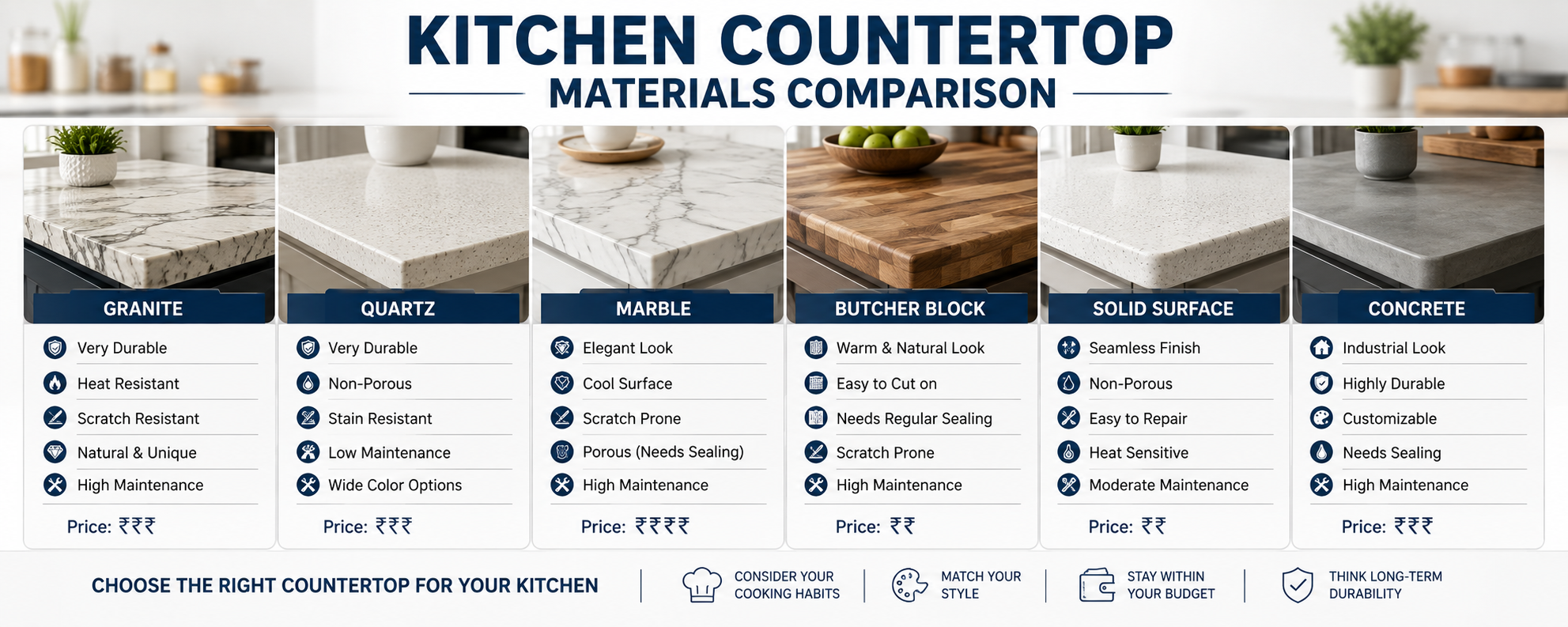

A kitchen countertop is more than just a work surface—it’s one of the most used and visible features of your kitchen. From meal preparation and cooking to serving food and daily cleaning, your countertop experiences constant wear and tear. That’s why choosing the right material is an important decision during kitchen design or renovation.
With so many options available today, comparing Kitchen Countertop Materials can help you find the perfect balance of durability, style, maintenance, and budget. Whether you’re building a new home or upgrading your existing kitchen, understanding the strengths and limitations of each material will help you make a smart investment.
Why Choosing the Right Countertop Matters
A countertop should not only look attractive but also withstand heat, moisture, stains, scratches, and everyday use. The ideal material depends on your cooking habits, design preferences, and maintenance expectations.
Before making a decision, consider factors such as durability, cleaning requirements, cost, and how well the material complements your kitchen cabinets and flooring.
Granite Countertops
Granite is one of the most popular countertop materials because of its natural beauty and exceptional strength. Every slab has unique patterns, giving your kitchen a premium appearance.
Advantages
- Highly durable and long-lasting
- Excellent heat resistance
- Scratch-resistant surface
- Adds value to the home
- Available in various natural colors
Considerations
Granite requires periodic sealing to prevent stains, and its installation should always be handled by professionals due to its weight.
Quartz Countertops
Quartz countertops are engineered using natural quartz minerals combined with resins. They have become a favorite choice for modern kitchens because they offer a sleek appearance with minimal maintenance.
Considerations
Quartz is generally more expensive than laminate or tile and should not be exposed to excessive direct heat for long periods.
Advantages
- Non-porous surface
- Resistant to stains and bacteria
- No sealing required
- Wide range of colors and patterns
- Easy to clean
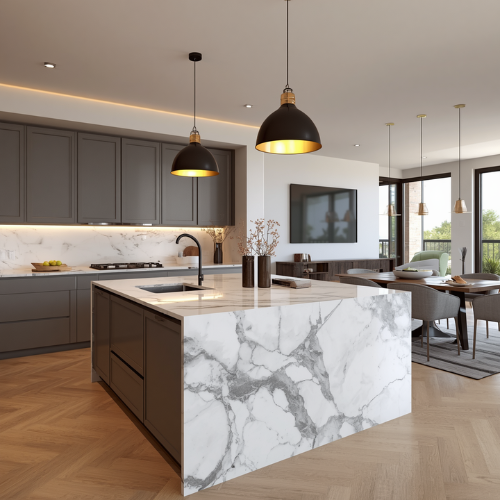
Marble Countertops
Marble is known for its timeless elegance and luxurious appeal. Its natural veining makes every countertop unique, making it a preferred choice for high-end kitchen designs.
Advantages
- Elegant appearance
- Naturally cool surface
- Ideal for baking enthusiasts
- Increases aesthetic value
Considerations
Marble is softer than granite and may develop scratches or stains if not maintained properly. Regular sealing is recommended.
Solid Surface Countertops
Solid surface materials are manufactured from acrylic or polyester resins. They offer a seamless look and are available in many colors and finishes.
Considerations
These countertops are less heat-resistant than natural stone and can be damaged by very hot cookware.
Advantages
- Smooth, seamless joints
- Easy to repair minor scratches
- Non-porous and hygienic
- Wide design flexibility
Laminate Countertops
Laminate remains one of the most affordable countertop options. Modern manufacturing techniques have significantly improved its appearance, allowing it to mimic stone, wood, or concrete finishes.
Advantages
- Budget-friendly
- Lightweight
- Easy to install
- Available in numerous colors and patterns
- Simple maintenance
Considerations
Laminate is less resistant to scratches, moisture, and heat compared to stone countertops.
Stainless Steel Countertops
Often seen in professional kitchens, stainless steel countertops are valued for their durability and hygienic properties.
Advantages
- Highly resistant to heat
- Hygienic and easy to sanitize
- Water-resistant
- Modern industrial appearance
Considerations
The surface may show fingerprints and scratches more easily than other materials.
How to Choose the Best Kitchen Countertop Material
The best countertop depends on your daily lifestyle and cooking needs.
If you cook frequently and require maximum durability, granite or quartz are excellent choices. If luxury and timeless beauty are your priorities, marble can enhance the overall appearance of your kitchen. Homeowners working within a limited budget may find laminate to be a practical solution, while solid surface countertops offer a balance between appearance and maintenance.
Think about how much time you’re willing to spend on maintenance before making your final decision.
Maintenance Tips for Long-Lasting Countertops
Regardless of the material you choose, proper care will help maintain its appearance and performance.
Follow these simple maintenance tips:
- Clean spills immediately to prevent staining.
- Use a cutting board instead of cutting directly on the surface.
- Place hot pots on trivets or heat-resistant pads.
- Avoid harsh chemical cleaners.
- Wipe the countertop regularly with a soft cloth and mild cleaner.
- Seal natural stone countertops whenever recommended by the manufacturer.
These small habits can significantly extend the life of your countertop.
Final Thoughts
Comparing different Kitchen Countertop Materials allows homeowners to make an informed choice based on durability, maintenance, appearance, and budget. There is no single material that is perfect for every kitchen—each option offers unique advantages.
Granite and quartz are excellent for long-term durability, marble delivers unmatched elegance, solid surface provides seamless design flexibility, laminate offers affordability, and stainless steel is ideal for modern, functional kitchens.
Before making your final decision, consider your cooking habits, family needs, and long-term maintenance requirements. Investing in the right countertop material will not only improve your kitchen’s functionality but also enhance the beauty and value of your home for years to come.