
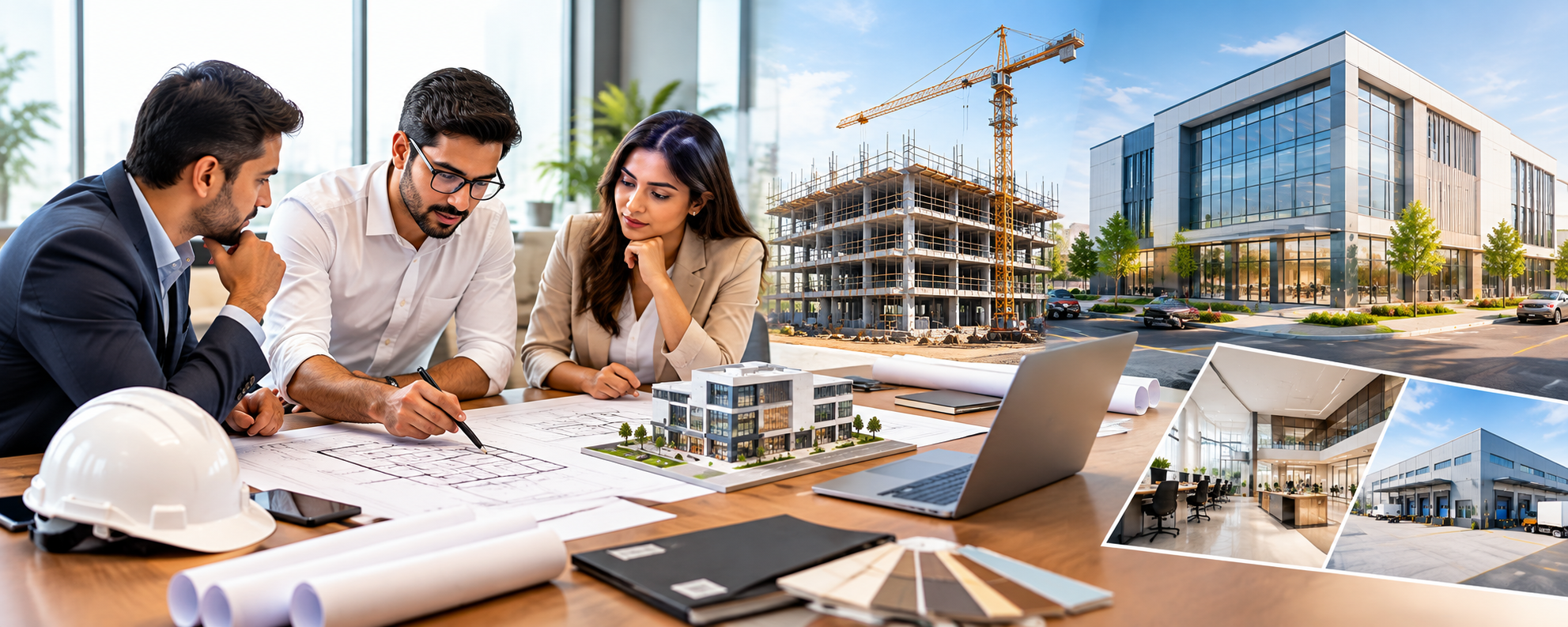

Selecting the right architect is one of the most important decisions for any commercial construction project. Whether you are planning an office building, showroom, hospital, restaurant, warehouse, factory, shopping complex, or educational institution, the architect you choose will influence the project’s functionality, appearance, cost, and long-term value. A skilled architect does much more than prepare drawings—they transform your business vision into a practical, efficient, and future-ready space.
Many commercial projects face delays, budget overruns, or design issues simply because the architect was selected based on the lowest fee rather than experience and expertise. Understanding how to choose the right architect helps ensure your project is completed on time, within budget, and according to your business requirements.
Clearly Define Your Project Requirements
Before approaching any architect, identify your project’s objectives. Consider the type of commercial building, plot size, estimated budget, number of floors, expected footfall, future expansion plans, parking requirements, and special infrastructure needs.
When your requirements are clearly defined, architects can provide solutions that match your business goals instead of offering generic designs.
Look for Relevant Commercial Experience
Commercial architecture requires specialized knowledge that differs from residential construction. An architect experienced in commercial projects understands space planning, building regulations, fire safety, accessibility standards, structural coordination, and utility planning.
Always review the architect’s previous work to ensure they have successfully completed projects similar to yours. Experience in designing offices, retail spaces, hospitals, industrial buildings, or hospitality projects demonstrates their ability to handle complex commercial requirements.
Review Their Portfolio Carefully
An architect’s portfolio provides valuable insight into their creativity and technical expertise. Look beyond attractive building elevations and evaluate how well their projects balance aesthetics with functionality.
Pay attention to layout efficiency, natural lighting, ventilation, façade design, parking arrangements, circulation planning, and overall usability. A strong portfolio reflects the architect’s ability to solve real-world design challenges while creating visually appealing commercial spaces.
Understand Their Design Process
Every architect follows a different workflow. Before making your decision, ask how they approach planning, conceptual design, client feedback, revisions, approvals, and construction coordination.
A transparent design process ensures smooth communication and reduces misunderstandings throughout the project. It also allows you to stay involved in important design decisions while maintaining project timelines.
Verify Technical Knowledge
Commercial buildings involve far more than architectural drawings. A capable architect should understand structural coordination, HVAC planning, plumbing, electrical layouts, fire protection systems, accessibility guidelines, and sustainable building practices.
Strong technical knowledge helps prevent costly construction errors and ensures that all building systems work together efficiently.
Evaluate Communication Skills
Successful projects depend on clear communication between the architect, client, consultants, and contractors. Choose an architect who listens carefully to your ideas, explains technical concepts in simple language, and responds promptly to questions.
Regular project updates and transparent discussions help maintain trust while ensuring that the final building reflects your expectations.
Consider Future Expansion
Business needs often change over time. Your architect should design a building that can accommodate future growth without requiring major structural modifications.
Flexible floor plans, expandable utility systems, additional parking provisions, and adaptable interior layouts help your commercial property remain useful for many years.
Focus on Budget Management
A good architect understands how to balance quality with cost. Instead of simply creating attractive designs, they should recommend construction methods, materials, and layouts that provide long-term value while staying within your budget.
Detailed planning, accurate drawings, and proper coordination reduce material wastage and minimize unexpected construction expenses.
Check Knowledge of Local Building Regulations
Commercial construction projects require compliance with local development regulations, zoning requirements, fire safety norms, accessibility standards, and environmental guidelines.
An architect familiar with local approval processes can prepare compliant drawings and help avoid delays caused by regulatory issues.
Ask About Construction Support
Architectural services often continue beyond the design stage. During construction, architects review progress, answer contractor queries, inspect workmanship, and ensure the building is being constructed according to approved drawings.
Choosing an architect who provides construction-stage support improves quality control and minimizes costly mistakes.
Discuss Sustainability and Energy Efficiency
Modern commercial buildings should be designed for long-term operational efficiency. Ask your architect about incorporating energy-saving features such as natural ventilation, daylight optimization, insulated building envelopes, rainwater harvesting, solar-ready roofs, and efficient HVAC systems.
Sustainable design reduces operating costs while creating healthier and more environmentally responsible commercial spaces.
Final Thoughts
Knowing How to Select an Architect for a Commercial Project is essential for achieving a successful construction outcome. The right architect combines creativity, technical knowledge, practical planning, and strong communication to deliver a commercial building that supports your business objectives.
Whether you are planning an office, showroom, restaurant, hospital, warehouse, or industrial facility, investing time in selecting an experienced architect will help you maximize your investment while avoiding unnecessary challenges. A well-designed commercial building is not only visually impressive but also functional, efficient, future-ready, and built to support your business growth for years to come.