
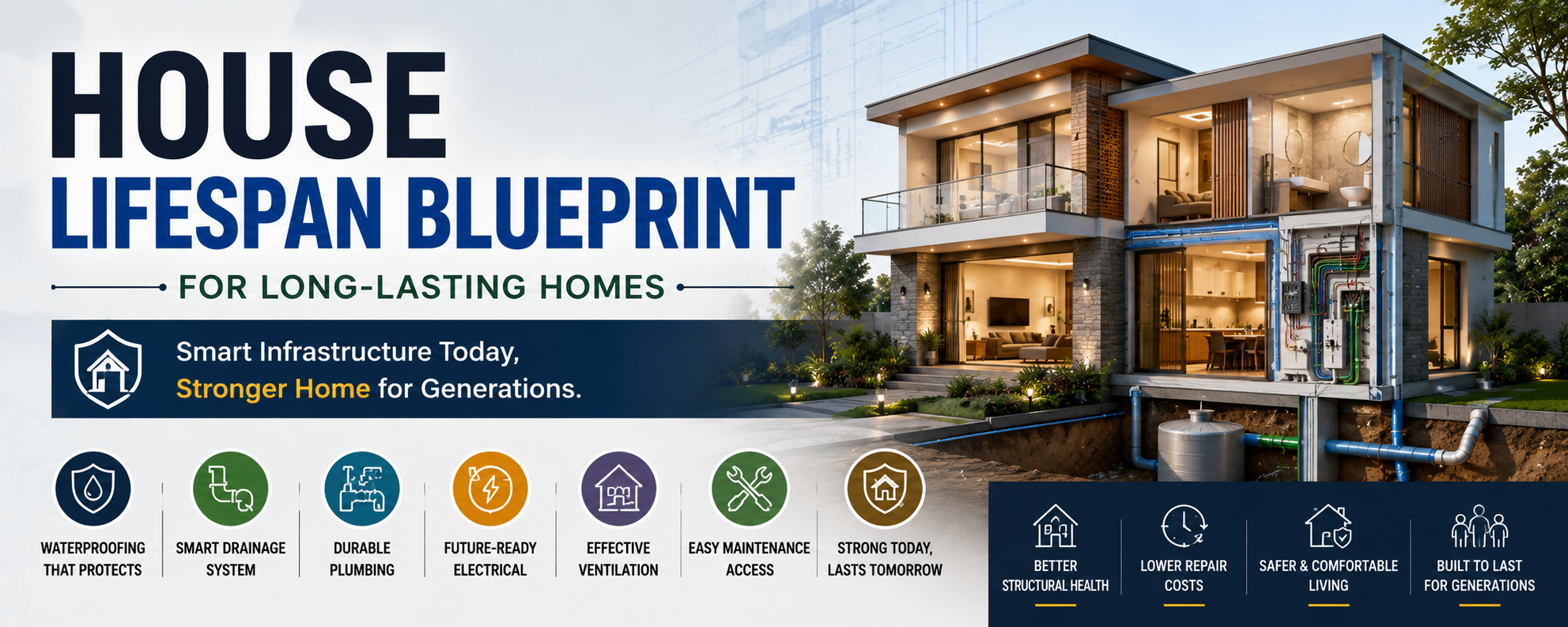

When people think about building a home, they often focus on visible features such as elegant interiors, modern elevations, premium flooring, and stylish kitchens. While these elements enhance a home’s appearance, they do very little to determine how long the house will actually last.
The true lifespan of a home depends on what lies beneath the surface—its infrastructure. From underground drainage and plumbing to waterproofing, ventilation, and electrical planning, these hidden systems quietly protect your home every day. A well-planned infrastructure not only reduces maintenance costs but also keeps your home safe, comfortable, and structurally sound for decades.
This House Lifespan Blueprint explains the essential infrastructure decisions that every homeowner should consider before construction begins.
1. Start with a Strong Underground Infrastructure
Everything begins below ground. Proper soil preparation, foundation drainage, and underground utility planning prevent settlement, water accumulation, and future structural damage. Investing in quality underground infrastructure creates a stable base that supports the entire building for generations.
2. Plan an Efficient Water Drainage System
Water is one of the biggest threats to any building. Poor drainage can weaken foundations, damage walls, and create dampness inside the home. Designing proper surface slopes, rainwater outlets, and underground drainage lines ensures that water flows away from the structure instead of collecting around it.
3. Make Plumbing Easy to Access
Hidden plumbing leaks often remain unnoticed until they cause major damage. Instead of burying every pipe inside walls, create accessible inspection points and service ducts wherever possible. Easy maintenance can save thousands in repair costs over the life of the house.
4. Design Electrical Systems for the Future
Technology changes rapidly. Today’s homes require more electrical capacity than ever before, and that demand will continue to grow. Installing additional conduits, spare electrical circuits, and organized distribution panels makes future upgrades simple without breaking finished walls.
5. Never Ignore Ventilation
Good ventilation protects both your family and your house. Proper airflow reduces moisture buildup, prevents mold growth, protects paint finishes, and increases indoor comfort. Cross ventilation, roof ventilation, and exhaust systems should be part of the original design—not an afterthought.
6. Waterproof Every Vulnerable Area
Many homeowners only waterproof bathrooms, but every home has multiple moisture-sensitive areas. Roofs, balconies, terraces, basements, and external walls all require proper waterproofing. Preventing water penetration is one of the most effective ways to extend a building’s lifespan.
7. Plan for Maintenance Before Construction Ends
A durable home is designed to be maintained. Inspection chambers, roof access, plumbing valves, electrical panels, and service areas should all remain easily accessible. Regular maintenance becomes faster, safer, and less expensive when infrastructure is planned intelligently.
8. Use Durable Utility Materials
Choosing long-lasting pipes, electrical conduits, valves, and fittings reduces replacement frequency. High-quality infrastructure materials may cost slightly more during construction but provide decades of reliable performance with minimal maintenance.
9. Protect Against Moisture and Termites
Moisture and termite attacks often begin silently before visible damage appears. Installing damp-proof courses, anti-termite treatment, proper landscaping, and moisture barriers during construction provides long-term protection for structural and wooden components.
10. Think Beyond Today
The best homes are designed for future generations. Consider possible solar panels, rainwater harvesting systems, electric vehicle charging, smart home automation, and additional water storage during initial planning. These small decisions make the house easier to upgrade without expensive structural modifications later.
Common Infrastructure Mistakes That Reduce House Lifespan
Many residential buildings experience avoidable problems because essential infrastructure planning is overlooked. Common mistakes include:
- Poor rainwater drainage
- Inadequate waterproofing
- Hidden plumbing without inspection access
- Insufficient electrical capacity
- Weak ventilation systems
- Low-quality utility materials
- Ignoring preventive maintenance
- Poor moisture management
Avoiding these mistakes significantly improves the long-term performance of your home.
A beautiful house is appreciated for its appearance, but a lasting house is remembered for its strength, reliability, and low maintenance. The House Lifespan Blueprint is not about using the most expensive materials—it is about making smart infrastructure decisions before construction begins.
Strong drainage, accessible plumbing, effective waterproofing, future-ready electrical systems, proper ventilation, and planned maintenance all work together to protect your investment for decades. These hidden decisions may never be visible once construction is complete, but they quietly determine whether your home lasts 30 years or remains strong for generations.
When you build with long-term infrastructure in mind, you’re not just constructing a house—you are creating a home that will continue to provide safety, comfort, and value for your family well into the future.