
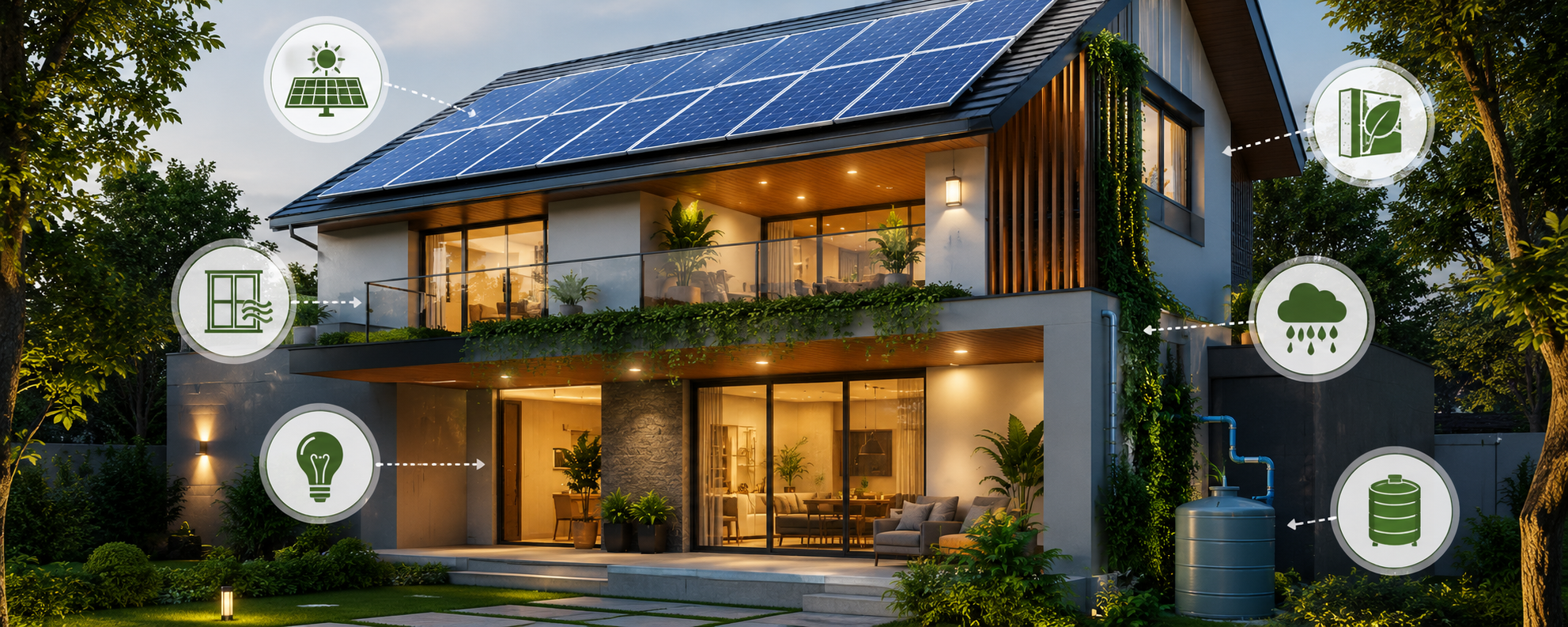

Building a beautiful home is important, but building a home that saves money every month is even smarter. Rising electricity costs have made energy-efficient home design one of the biggest priorities for modern homeowners. A well-planned energy-efficient home not only reduces monthly electricity bills but also creates a healthier, more comfortable living environment throughout the year.
Many people believe reducing electricity consumption simply means switching off lights or buying energy-saving appliances. While these habits certainly help, the real savings begin much earlier—during the planning and construction stage of your home. From the orientation of the building and window placement to insulation, ventilation, lighting, and material selection, every design decision affects your home’s energy performance.
An intelligently designed house consumes less electricity without compromising comfort, making it a long-term investment rather than an additional expense.
Start with Smart House Orientation
One of the most effective ways to improve energy efficiency is by positioning the house correctly on the plot. Proper orientation allows your home to receive maximum natural light while minimizing excessive heat gain.
In India, east-facing windows welcome pleasant morning sunlight, while limiting large west-facing glass openings helps reduce intense afternoon heat. By understanding the movement of the sun, architects can naturally maintain comfortable indoor temperatures throughout the day.
This simple planning strategy decreases dependence on artificial lighting during daylight hours and reduces the need for continuous air conditioning during summer.
Maximize Natural Lighting
Natural light is completely free, yet many homes fail to utilize it effectively. Large windows, skylights, glass partitions, and open layouts allow sunlight to reach deeper into the house.
Bright interiors reduce the need for electric lights during the daytime while also creating a healthier and more cheerful living environment. However, natural lighting should be balanced carefully to avoid excessive heat entering the house.
Using reflective interior colours like white, cream, or light beige helps distribute daylight evenly across rooms, making the entire home feel brighter without increasing electricity consumption.
Design for Natural Ventilation
Good ventilation is just as important as good lighting. Fresh air moving through your home naturally cools indoor spaces and reduces the dependence on air conditioners and exhaust fans.
Cross ventilation is one of the simplest yet most effective design techniques. By placing windows and ventilators on opposite walls, fresh air continuously flows through the room, carrying away heat and humidity.
High ceilings, ventilated roofs, balconies, courtyards, and open staircases further improve air circulation. During pleasant weather, proper ventilation alone can maintain comfortable indoor temperatures without using electrical cooling systems.
Choose Energy-Efficient Building Materials
The materials used during construction directly affect your home’s temperature. Walls and roofs absorb heat throughout the day, making interiors warmer even after sunset.
Using materials such as AAC blocks, insulated roofing systems, heat-resistant tiles, and reflective roof coatings significantly reduces heat transfer into the house. Double-glazed windows also minimize heat gain while improving sound insulation.
Better insulation keeps homes cooler in summer and warmer in winter, reducing the workload on air conditioners and room heaters throughout the year.
Although energy-efficient materials may involve a slightly higher initial investment, the reduction in electricity bills quickly compensates for the additional cost.
Install LED Lighting Throughout the House
Lighting accounts for a considerable portion of household electricity consumption. Replacing conventional bulbs with LED lighting is one of the easiest ways to lower energy usage.
LED lights consume significantly less electricity while providing brighter illumination and lasting much longer than traditional bulbs. Modern LED fixtures are available in various colour temperatures, allowing homeowners to create comfortable lighting for bedrooms, kitchens, living rooms, study areas, and outdoor spaces.
Motion sensor lighting in staircases, bathrooms, parking areas, and gardens further prevents unnecessary electricity wastage.
Select Energy-Efficient Appliances
Even the best-designed home can waste electricity if it uses inefficient appliances. Whenever purchasing electrical equipment, always choose products with higher energy efficiency ratings.
Five-star rated air conditioners, refrigerators, washing machines, ceiling fans, water heaters, and televisions consume considerably less electricity over their lifetime.
Inverter technology in air conditioners and refrigerators adjusts power consumption according to actual usage, helping reduce energy bills without sacrificing performance.
Although energy-efficient appliances often have a higher purchase price, they generate substantial savings over several years.
Smart Home Automation Saves Energy
Modern smart home technology offers excellent opportunities to reduce electricity consumption. Smart switches, programmable thermostats, occupancy sensors, automated curtains, and mobile-controlled lighting systems ensure electricity is used only when required.
Timers can automatically switch off outdoor lights, while smart thermostats regulate room temperature efficiently based on occupancy.
These intelligent systems eliminate unnecessary power consumption and provide homeowners with better control over their daily energy usage.
Harness Solar Energy
One of the most effective long-term investments is installing rooftop solar panels. Solar energy allows homeowners to generate their own electricity using sunlight, significantly reducing dependence on the electrical grid.
During sunny days, solar panels can power lighting, fans, refrigerators, air conditioners, and other household appliances. In many locations, excess electricity can even be supplied back to the grid through net metering, further reducing monthly electricity expenses.
Solar water heaters are another excellent option that minimizes electricity usage for hot water throughout the year.
Although solar installations require an upfront investment, they often recover their cost within a few years through continuous savings.
Landscape Your Home for Better Energy Efficiency
Beautiful landscaping is not only about appearance—it also contributes to energy savings.
Strategically planted trees provide natural shade that protects walls and windows from direct sunlight. Green lawns, vertical gardens, pergolas, and climbing plants reduce surrounding temperatures and improve the microclimate around the house.
Shaded outdoor spaces remain cooler, which indirectly lowers indoor temperatures and reduces the need for excessive air conditioning.
How Kanakdhara Developer Creates Energy-Efficient Homes
At Kanakdhara Developer Private Limited, we believe every home should be beautiful, comfortable, and economical to maintain. Our experienced architects carefully design homes that maximize natural lighting, improve cross ventilation, optimize room orientation, and incorporate energy-efficient construction materials.
From heat-resistant roofing systems and insulated walls to smart electrical planning, solar-ready infrastructure, LED lighting layouts, and sustainable design solutions, we help homeowners reduce electricity consumption without compromising modern aesthetics. Every project is customized according to the plot size, family requirements, climate conditions, and future energy goals, ensuring long-term comfort and significant cost savings.
Our focus is not only on constructing homes but on creating sustainable living spaces that continue delivering value for decades.
Conclusion
Energy-efficient home design is one of the smartest investments any homeowner can make. Thoughtful planning during the design stage leads to lower electricity bills, improved indoor comfort, reduced environmental impact, and higher property value. By combining natural lighting, effective ventilation, insulated construction materials, efficient appliances, LED lighting, smart automation, and solar energy, homeowners can enjoy a modern lifestyle while significantly lowering monthly utility expenses.
If you are planning to build your dream home, now is the perfect time to incorporate energy-efficient design principles from the very beginning. With the expertise of Kanakdhara Developer Private Limited, you can create a home that is stylish, sustainable, environmentally responsible, and designed to save money for many years to come.