
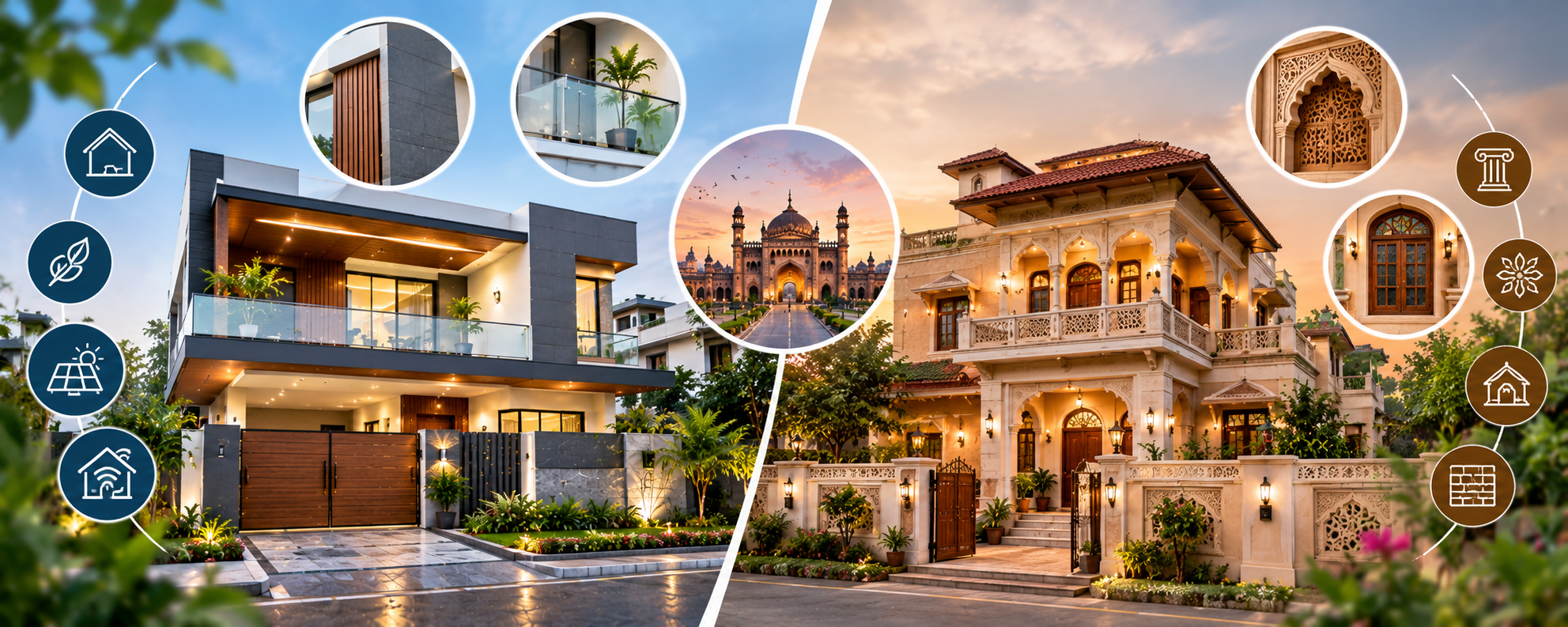

Choosing the right house elevation is an important decision when building a home in Lucknow. The exterior design influences the property’s first impression, architectural character, maintenance requirements, and overall appeal to potential buyers. Some homeowners prefer contemporary elevations with clean lines, large windows, and modern materials, while others like traditional designs featuring decorative details, balconies, arches, and warm colours.
Both styles can work well in Lucknow, but the right choice depends on the plot size, family requirements, budget, local climate, and surrounding neighbourhood. An attractive elevation should do more than look impressive in a design image. It should provide suitable shading, practical ventilation, durable finishes, and a layout that works with the home’s interior.
Understanding the differences between contemporary and traditional house elevations can help homeowners choose a design that remains functional and attractive for years.
What Is a Contemporary House Elevation?
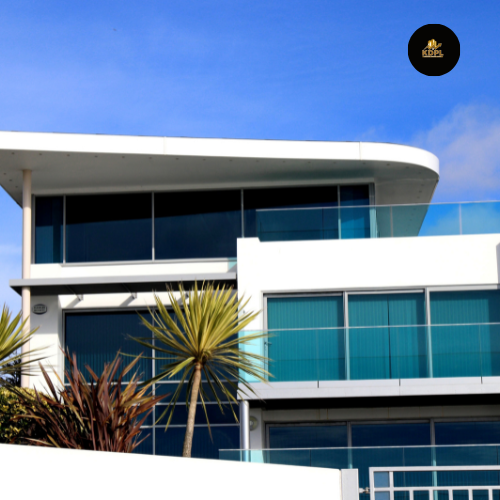
A contemporary house elevation focuses on current architectural preferences, practical detailing, and a clean visual appearance. It commonly features geometric shapes, straight lines, simple balconies, large windows, neutral colours, and a combination of materials such as textured paint, stone finishes, metal, glass, and exterior-grade tiles.
In Lucknow, contemporary elevations are popular for independent houses built on compact urban plots as well as larger residential properties. A well-planned design can make a narrow frontage look balanced by using vertical elements, contrasting finishes, and carefully positioned windows.
For example, a two-storey house may combine an off-white exterior with a grey accent wall, a simple balcony railing, and a covered entrance. Instead of decorating every wall, the design highlights a few architectural features.
The main advantage of contemporary design is flexibility. Homeowners can choose a simple, budget-conscious facade or a more premium finish while keeping the overall architecture coordinated. However, features such as extensive glass, projecting boxes, and decorative cladding need careful detailing to manage heat, rainwater, and maintenance.
What Is a Traditional House Elevation?
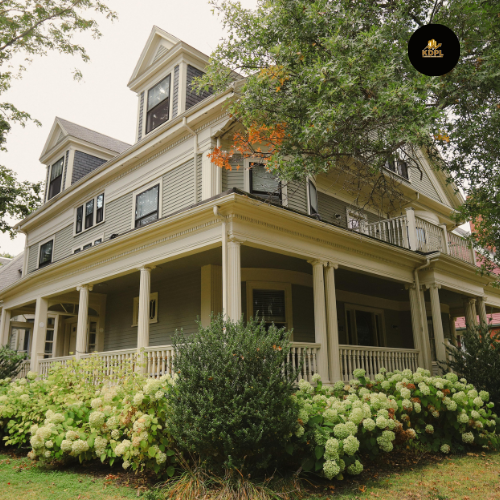
Traditional house elevations draw inspiration from established architectural styles and familiar decorative elements. Depending on the homeowner’s preference, they may include arches, ornamental railings, columns, patterned screens, sloping roof features, decorative cornices, and warm or earthy colour schemes.
In Lucknow, some homeowners appreciate traditional details because they complement the city’s historic architectural character. Traditional-inspired designs can create a welcoming and distinctive appearance, particularly when decorative elements are used thoughtfully rather than applied excessively.
For an independent house, a traditional elevation might feature a prominent entrance, a balcony with decorative railings, cream or sandstone-inspired finishes, and symmetrical window arrangements. These features can give the house a sense of character without requiring the entire building to imitate a historic structure.
Traditional designs may involve additional workmanship when they use elaborate mouldings, custom railings, or detailed finishes. These features can increase construction and maintenance costs, so the design should be matched to the available budget.
1. Which Style Is Better for Lucknow's Climate?
Lucknow experiences very hot summers, a monsoon season, and cooler winter weather. Therefore, climate-responsive design should be considered regardless of whether the elevation is contemporary or traditional.
Contemporary designs can work well when they include external shading, appropriately sized windows, roof insulation where suitable, and materials selected for local weather conditions. Large areas of unshaded glass may increase indoor heat gain, so glazing should be planned according to orientation and exposure.
Traditional-inspired elevations may incorporate shaded balconies, recessed windows, verandah-like spaces, and protective roof projections. These features can reduce direct sunlight on selected openings when designed correctly.
Neither style is automatically better for the climate. The more suitable design is the one that provides effective shade, comfortable ventilation, appropriate daylight, and proper rainwater management. Exterior waterproofing, roof drainage, and durable finishes are particularly important during the monsoon season.
2. Cost Comparison: Contemporary vs Traditional Elevation
The cost of a house elevation depends on its size, design complexity, materials, labour, and detailing rather than its architectural category alone.
A simple contemporary elevation with exterior paint, straightforward balcony railings, and limited accent finishes can be economical. Costs may increase when the design includes extensive glazing, custom metalwork, premium cladding, elaborate projections, or specialized lighting.
Traditional elevations can also be affordable when they use simple proportions and a limited number of decorative details. However, arches, ornamental railings, custom mouldings, and intricate finishes may require more labour and careful installation.
Homeowners should compare complete estimates rather than judging cost from appearance alone. The estimate should account for materials, installation, waterproofing, surface preparation, scaffolding where needed, exterior lighting, and future maintenance.
A simple, well-executed elevation often offers better value than an elaborate design that consumes a large portion of the construction budget without improving everyday functionality.
3. Which Style Looks Better on a Small Plot?
For a narrow plot in Lucknow, a contemporary elevation can be useful because clean lines and controlled use of contrasting colours help create a balanced appearance. Vertical features can visually emphasize the building’s height, while a well-defined entrance and carefully positioned windows help avoid a crowded facade.
Traditional designs can also suit small plots, but decorative elements should be proportionate to the building. Oversized columns, bulky projections, and excessive ornamentation may make a narrow frontage feel congested.
The most important factor is the relationship between the elevation and the actual floor plan. The design should not sacrifice bedroom space, natural light, ventilation, or parking access simply to create an impressive front view.
Before finalizing the elevation, homeowners should consider the width of the plot, the number of floors, road access, neighbouring buildings, and applicable local building regulations.
4. Materials, Durability, and Maintenance
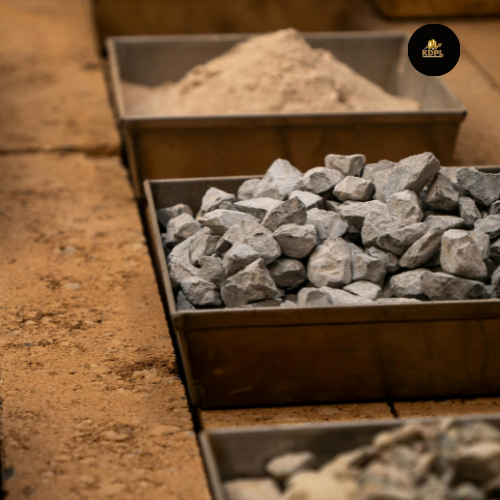

Material selection has a direct impact on how the house looks after several years. Both contemporary and traditional elevations can perform well when their materials are suitable for outdoor exposure and installed correctly.
Contemporary designs may use exterior-grade paint, textured finishes, selected stone surfaces, metal railings, and weather-resistant cladding. These materials should be chosen according to their resistance to sunlight, moisture, dust, and temperature changes.
Traditional designs may use painted mouldings, decorative plasterwork, stone-inspired finishes, and ornamental metalwork. Such details need proper surface preparation and protection against water penetration. Complex projections and ledges should be designed to prevent water from collecting or staining the facade.
In Lucknow, dust and seasonal rain can affect exterior surfaces, so homeowners should consider cleaning requirements and the likely repainting cycle. A material that looks attractive at installation may not be economical if it requires frequent repairs.
5. Which Elevation Can Improve Resale Appeal?
Both contemporary and traditional elevations can make a property attractive to buyers. The result depends on the quality of the design, the condition of the building, the neighbourhood, and the preferences of local buyers.
A contemporary elevation may appeal to buyers looking for a clean, modern appearance and relatively simple exterior detailing. A traditional-inspired facade may attract people who prefer decorative character and familiar architectural features.
However, the elevation alone cannot guarantee a higher resale price. Buyers also consider location, road access, parking, interior layout, construction quality, natural light, ventilation, and maintenance.
For stronger long-term appeal, choose a design that looks coordinated, uses durable materials, and avoids overly personalized features that may be expensive to change. A timeless design can be easier for future owners to adapt to their preferences.
6. Can Contemporary and Traditional Styles Be Combined?
Yes. A blended or transitional elevation can combine contemporary simplicity with selected traditional details. This approach can work particularly well for homeowners who want a modern house that still reflects familiar architectural influences.
For example, a house can have clean geometric lines, neutral exterior colours, and simple windows while incorporating an arched entrance, a traditional-style balcony railing, or a textured finish inspired by natural stone.
The key is balance. Too many contrasting styles, colours, and materials can make the facade appear inconsistent. Select one main architectural language and use the other style for a few carefully chosen features.
This approach allows homeowners to personalize their house without making the elevation unnecessarily complicated or expensive.
Conclusion
Contemporary and traditional house elevations can both suit Lucknow when designed around the property’s actual requirements. Contemporary designs offer clean lines, flexible material choices, and a modern appearance, while traditional designs provide decorative character and opportunities for shaded balconies, recessed openings, and distinctive entrances.
For many homeowners, the best choice is not simply the style that looks more luxurious. It is the design that fits the plot, manages local weather conditions, stays within budget, and remains easy to maintain.
Before making a final decision, compare design drawings, material specifications, construction estimates, and maintenance needs. A carefully planned elevation can improve everyday comfort and curb appeal while helping the property remain attractive to future buyers.
FAQs
1. Which house elevation is best for Lucknow: contemporary or traditional?
Both can work well. Contemporary designs suit homeowners who prefer clean lines and modern finishes, while traditional designs appeal to those who like decorative details and classic character. Climate suitability and construction quality matter more than style alone.
2. Is a contemporary house elevation cheaper than a traditional one?
Not necessarily. A simple contemporary facade can be economical, but extensive glazing and premium cladding can increase costs. Traditional designs may also be affordable if decorative elements are limited and materials are selected carefully.
3. Which elevation is better for a small plot in Lucknow?
A simple contemporary elevation often works well on a narrow plot because clean lines and vertical features can create visual balance. A traditional design can also work if its decorative details remain proportionate to the building.
4. Which elevation is more suitable for Lucknow's hot summers?
Either style can perform well when it includes effective shading, suitable window placement, ventilation, and appropriate roof and wall treatments. Avoid relying on appearance alone when selecting the design.
5. Does a modern elevation increase property value?
It may improve curb appeal and buyer interest, but it does not guarantee a higher selling price. Location, interior planning, parking, construction quality, and local market demand also influence property value.
6. Are traditional elevations more difficult to maintain?
They can be if they include elaborate mouldings, intricate railings, or numerous ledges that collect dust and rainwater. A simpler traditional design with durable materials can be relatively easy to maintain.
7. Can I combine contemporary and traditional elevation designs?
Yes. A contemporary facade can incorporate selected traditional elements, such as an arched entrance, decorative railing, or stone-inspired finish. Keeping the number of materials and decorative features limited helps maintain visual balance.
8. Which exterior colours are suitable for houses in Lucknow?
Neutral colours such as cream, off-white, beige, and grey can create a versatile appearance. The best combination depends on the architectural style, surrounding buildings, sunlight exposure, and the selected exterior materials.
9. Should I finalize the elevation before starting construction?
Yes. The elevation should be coordinated with the floor plan and structural design before construction progresses. This helps avoid costly changes to windows, balconies, projections, exterior finishes, and other building elements.
10. What should I prioritize when designing a house elevation?
Prioritize good proportions, suitable shading, durable materials, waterproofing, practical window placement, a functional entrance, and parking access. Decorative finishes should complement these essentials rather than replace them.