
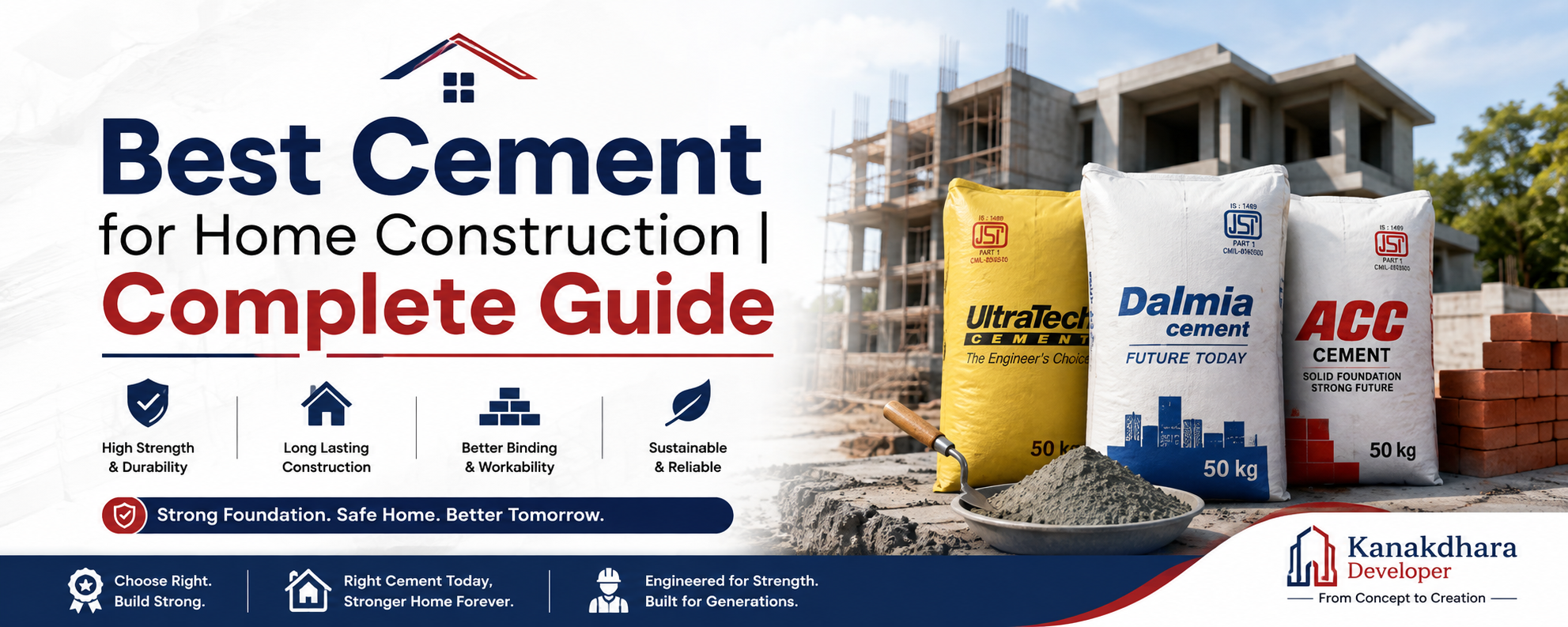

A Complete Guide for Building a Strong and Durable Home
Building your dream home is one of the biggest investments of your life, and choosing the best cement for home construction is one of the most important decisions you’ll make. Cement is the backbone of every structure, providing the strength, durability, and stability needed for a safe and long-lasting home.
Many homeowners focus on tiles, paint, or interiors while overlooking the quality of cement. However, even the most beautiful home can develop cracks, leakage, or structural problems if low-quality cement is used.
This guide explains everything you need to know about selecting the best cement for home construction, including different cement types, essential quality factors, common mistakes to avoid, and expert recommendations.
Why Choosing the Best Cement for Home Construction Matters
The quality of cement directly affects the strength and lifespan of your building. High-quality cement creates stronger bonds between construction materials and protects the structure against weather, moisture, and heavy loads.
Benefits of using the best cement for home construction include:
- Higher structural strength
- Better resistance to cracks
- Improved durability
- Enhanced water resistance
- Longer building life
- Reduced maintenance costs
- Better finishing quality
Investing in premium cement today can save significant repair costs in the future.
Types of Cement Used in Home Construction
Understanding different cement types helps you select the right product for each stage of construction.
Ordinary Portland Cement (OPC)
OPC is widely used for residential and commercial construction. It gains strength quickly and is ideal for structural work.
Advantages
- High compressive strength
- Faster setting time
- Excellent for RCC structures
- Reliable performance
Best used for:
- Columns
- Beams
- Slabs
- Foundations
Portland Pozzolana Cement (PPC)
PPC contains pozzolanic materials that improve durability and reduce heat generation during hydration.
Advantages
- Better resistance to chemicals
- Reduced shrinkage cracks
- Lower heat of hydration
- Smooth plaster finish
- Eco-friendly production
Best used for:
- Brick masonry
- Plastering
- Water tanks
- Residential buildings
Portland Slag Cement (PSC)
PSC contains blast furnace slag, making it highly resistant to moisture and corrosion.
Advantages
- Excellent durability
- High sulphate resistance
- Better protection in coastal areas
- Lower maintenance
Suitable for:
- Foundations
- Basements
- Water-retaining structures
How to Identify the Best Cement for Home Construction
Before purchasing cement, evaluate these important factors.
1. Check Manufacturing Date
Fresh cement performs better than old cement.
Always purchase cement that is less than three months old.
2. Look for ISI Certification
Ensure the cement bag carries the BIS (Bureau of Indian Standards) certification mark. Certified cement follows strict quality standards and delivers consistent performance.
3. Buy from Trusted Brands
Established manufacturers maintain better quality control, ensuring consistent strength and reliability.
4. Inspect the Cement Bag
Avoid bags that show signs of:
- Moisture damage
- Torn packaging
- Hardened lumps
- Broken seals
These indicate poor storage conditions.
5. Store Cement Properly
Even the best cement for home construction can lose quality if stored incorrectly.
Store cement:
- On wooden pallets
- Away from walls
- In a dry area
- Covered with waterproof sheets
Which Cement is Best for Different Construction Works?
Different construction activities require different cement characteristics.
Foundation Work
Use OPC for higher early strength and better load-bearing capacity.
RCC Structures
Columns, beams, and slabs generally perform well with OPC due to its high strength.
Brick Masonry
PPC offers better workability and smoother bonding.
Plastering
PPC provides a finer finish with reduced chances of shrinkage cracks.
Water Tanks
PPC and PSC are excellent choices because of their superior water resistance.
Common Mistakes While Choosing Cement
Many homeowners unknowingly make costly mistakes.
Avoid these common errors:
- Buying cement without checking manufacturing date
- Selecting products based only on price
- Ignoring storage conditions
- Mixing different cement types unnecessarily
- Purchasing from unauthorized dealers
- Not following engineer recommendations
Tips to Get Maximum Strength from Cement
Using premium cement alone is not enough.
For the best results:
- Use clean water.
- Follow the correct water-cement ratio.
- Use quality sand and aggregates.
- Ensure proper curing for at least 7–14 days.
- Avoid adding excessive water during mixing.
- Hire experienced construction professionals.
Signs of Good Quality Cement
You can identify quality cement through simple checks.
Good cement should:
- Feel smooth when rubbed between fingers
- Be free from hard lumps
- Have a uniform grey color with a slight greenish shade
- Sink slowly when placed in water
- Produce a smooth paste without impurities
These basic observations can help identify fresh cement before use.
Is Expensive Cement Always Better?
Not necessarily.
The best cement for home construction is the one that matches your structural requirements, complies with quality standards, and is used correctly during construction.
Even premium cement can perform poorly if mixed improperly or cured inadequately. Conversely, a suitable quality-certified cement can deliver excellent results when handled correctly.
Selecting the best cement for home construction is a critical step toward building a safe, durable, and long-lasting home. Rather than focusing only on price or brand popularity, evaluate the cement’s freshness, certification, intended application, and storage conditions.
Working with experienced engineers and contractors, following proper construction practices, and choosing quality materials will help ensure your home stands strong for generations. A well-informed decision today can reduce maintenance costs, improve structural safety, and provide lasting peace of mind.