
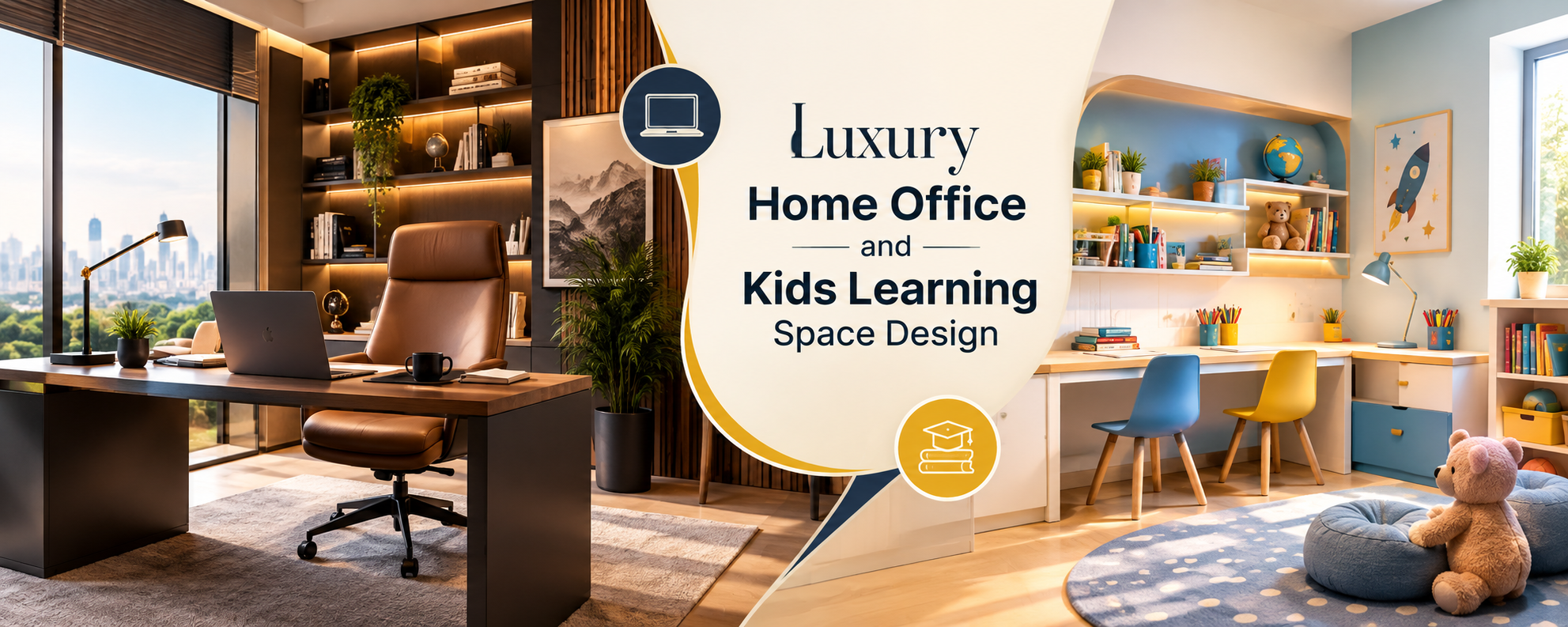

A Home Workspace That Inspires Both Work and Wonder
A home office can be more than a desk placed in an unused room. With thoughtful planning, it can become an elegant professional workspace while also accommodating a small children’s learning corner where creativity, reading and hands-on activities feel natural. The challenge is to combine two different environments without making the room look crowded, childish or visually disconnected.
A successful luxury home office and kids learning space design brings together refined materials, practical furniture, comfortable lighting, intelligent storage and a carefully chosen colour palette. Marble-look finishes, warm wood, textured walls and decorative lighting can create a rich atmosphere for adults, while accessible bookshelves, activity boards and creative supplies make the children’s area inviting.
The result should impress guests with its finish while remaining comfortable and useful for everyday family life.
1. Divide the Room into Two Thoughtful Zones
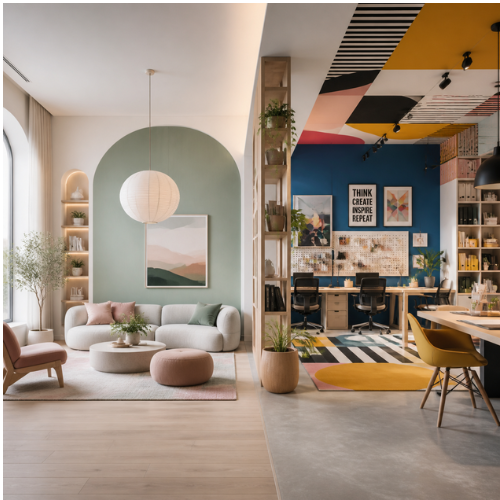
Start by deciding where work will happen and where children will learn. In a compact room, a long wall can accommodate an adult’s desk at one end and a small learning table at the other. In a larger room, a low storage unit, open shelving or a change in wall treatment can visually distinguish the two areas.
Avoid using tall, solid partitions that block natural light or make the room feel smaller. Open wooden slats or a low cabinet can provide subtle separation while maintaining a connected appearance.
Position the adult workstation away from the busiest play area when possible. Children need room to draw, read, build and explore, while the office side should remain organised for calls and focused work.
Before purchasing furniture, measure the available floor area, door openings, windows and circulation routes. Both zones should remain accessible without chairs, storage boxes or activity materials obstructing the walkway.
2. Create a Professional Backdrop with Rich Materials
The office side should establish the room’s premium character. A desk with a walnut-toned finish, a stone-look tabletop and clean-lined cabinetry can create a sophisticated foundation.
Natural marble may be used on a feature surface or console, while marble-look porcelain and other engineered surfaces can provide alternatives with different maintenance requirements. A large marble feature is not essential; even a smaller stone accent can add elegance when paired with warm wood.
For the main office wall, consider vertical wooden panels, subtle decorative mouldings or a textured paint finish in warm greige, taupe or muted olive. A slim metallic trim in brushed brass or champagne tones can introduce a refined detail without making the room look overly decorative.
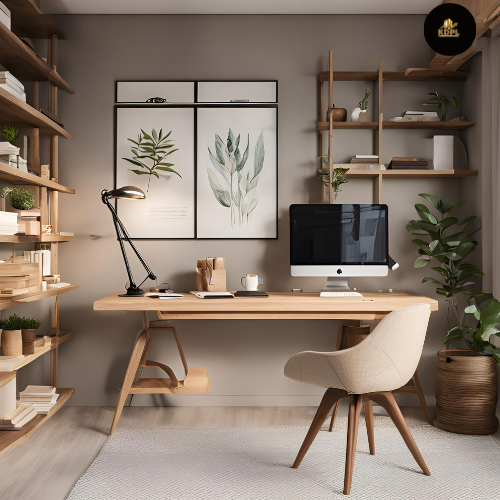
If video meetings are frequent, design the wall behind the desk carefully. A restrained arrangement of shelving, a framed artwork and soft architectural lighting can create a professional background without distracting from the person speaking.
3. Design a Children's Corner That Encourages Curiosity
Lorem ipsum dolor sit amet, consectetur adipiscing elit. Ut elit tellus, l
The children’s area should feel playful without looking disconnected from the rest of the room. Instead of filling it with bright colours everywhere, use a calm base and introduce colour through furniture, learning materials and selected wall features.
A compact child-height table with rounded corners and comfortable seating creates a dedicated place for drawing, puzzles, reading and simple craft activities. Choose furniture suitable for the child’s age and size, with stable construction and surfaces that are easy to clean.
A low bookshelf allows children to see and select books independently. Front-facing book displays can make picture books more inviting, while labelled baskets help organise blocks, crayons, flashcards and other learning materials.
uctus nec ullamcorper mattis, pulvinar dapibus leo.
Consider a magnetic activity board, a writable surface or a chalkboard panel in a designated area. Check that all products are appropriate for the child’s age, securely installed and made with suitable finishes. Keep small objects, magnets, sharp tools and craft materials that could present choking or injury risks out of reach of younger children.
4. Use Colour to Connect Elegance with Playfulness
A coordinated colour palette makes the dual-purpose room feel intentional. For the adult workspace, consider warm white, beige, taupe, walnut and restrained charcoal accents. These colours create a calm backdrop for computer equipment, documents and books.
For the children’s corner, introduce sage green, dusty blue, soft yellow, muted terracotta or pastel peach. These colours can appear on the chair, storage boxes, artwork or a small feature wall rather than across every surface.
One effective combination is warm ivory walls, walnut furniture, muted sage accents and a small amount of brushed brass. Another is light oak, soft grey, dusty blue and cream. Both can feel sophisticated while allowing children’s books and artwork to add personality.
Avoid choosing colours based only on appearance in a showroom. Test paint samples under the actual room lighting, because warm artificial light can change how cool colours appear.
5. Layer the Lighting for Work, Reading and Creative Activities
Lighting should support different activities without creating glare or uncomfortable shadows. A single ceiling light rarely provides the right conditions for computer work, detailed drawing and reading.
Use general ceiling lighting to illuminate the room evenly. Add an adjustable desk lamp for focused work, ensuring it can be positioned to reduce screen reflections and shadows from the writing hand. For the children’s table, provide a stable task light that illuminates the working surface without shining directly into the child’s eyes.
Concealed LED strips can highlight the office shelving or a decorative wall panel. Wall sconces or a refined pendant can add visual interest, while dimmers allow the room’s atmosphere to change after work hours.
Warm-neutral lighting around 3000K–3500K can work well in a combined workspace, depending on daylight and personal preference. Prioritise good colour rendering and comfortable brightness rather than choosing lights based only on their appearance.

Keep cords secured, use suitable electrical protection and position lamps so children cannot easily pull them down. Any decorative pendant should be installed at an appropriate height and away from active play areas.
6. Add Activity Tools That Make Learning Engaging
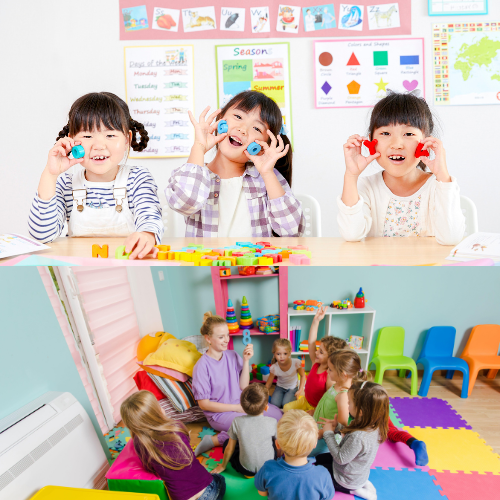
A children’s learning corner becomes more useful when activities are visible, accessible and easy to rotate. The aim is not to turn the home into a classroom; it is to provide a welcoming place for exploration.
A practical collection might include picture books, alphabet cards, number puzzles, building blocks, drawing materials, matching games and simple science or nature activities suited to the child’s age. A small tray can hold the materials for one activity, while separate labelled containers keep the rest organised.
A wall-mounted display can showcase drawings, completed puzzles or small learning projects. Change the displayed work occasionally so the area continues to feel fresh. A magnetic board can support letter matching or visual schedules, provided the materials are age-appropriate and safely stored.
For movement breaks, keep a little clear floor space for stretching, balance activities or simple movement games. The corner should support different kinds of learning, not only sitting at a table.
7. Choose Flooring and Surfaces for Real Family Use
Flooring should connect the room visually while handling frequent use. Large-format porcelain tiles can create a clean, elegant appearance, while wood-look flooring can make the children’s area feel warmer. Natural marble may suit the office side, but its maintenance needs and suitability for the overall room should be assessed carefully.
If different flooring materials are used, make the transition level and safe. Avoid loose rugs that slide beneath chairs. A securely fitted, easy-to-clean rug or suitable play mat can define the learning zone and provide a softer surface for floor-based activities.
For walls, washable paint is useful around children’s tables, while wood or laminate panels may protect selected high-contact areas. Choose finishes based on durability, cleaning requirements and product safety. Avoid sharp furniture edges, unstable shelves and heavy objects placed where they could fall.
8. Make Storage Part of the Interior Design
Clutter is one of the biggest challenges in a combined office and children’s corner. Instead of adding storage as an afterthought, incorporate it into the design.
Closed cabinets can conceal office files, chargers, stationery and less frequently used supplies. Open shelves can display a limited selection of books, decorative objects and attractive storage baskets. Keep frequently used children’s materials on lower shelves and adult documents, tools and electronics in secure upper storage.
A desk with integrated drawers helps keep the work surface clear. A compact mobile drawer unit can provide flexibility, while a wall-mounted shelf frees up floor space.
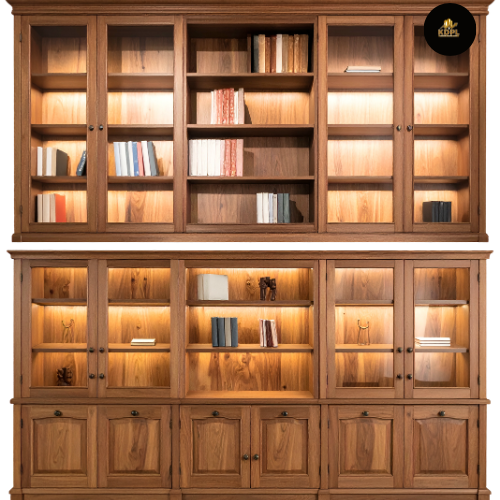
Use consistent finishes across the cabinetry to maintain the royal appearance. The children’s area can still have colourful containers, but repeating the same wood tone or hardware finish helps both zones feel connected.
9. Finish with Decorative Details and Family Personality
A luxury room should feel personal rather than like a furniture showroom. On the office side, use a framed artwork, a refined desk organiser, a sculptural accessory or a small indoor plant suited to the available light. Keep the desktop relatively clear to support concentration.
In the learning corner, display a few children’s drawings, a colourful educational poster or a rotating collection of favourite books. A comfortable reading cushion or small upholstered seat can make story time more inviting if sufficient space is available.
Use brushed brass, bronze or black accents consistently in selected handles, lighting fixtures and frames. Avoid mixing too many metallic finishes or adding unnecessary decorative objects.
For homes in hot regions such as Lucknow and other parts of Uttar Pradesh, consider daylight control, ventilation, dust management and heat entering through windows when planning the layout and materials.
Conclusion: A Refined Space That Grows with the Family
A well-designed home office with a children’s learning corner can combine professional elegance and family-friendly functionality without compromising either. Warm wood, stone accents, layered lighting and coordinated colours create a sophisticated backdrop, while child-height furniture, books, activity tools and accessible storage encourage independent exploration.
Plan both zones around the family’s daily routine, prioritise safety and comfort, and select finishes that are easy to maintain. With the right balance, this shared room can become a beautiful part of the home that supports productive work, meaningful learning and memorable family moments.
Frequently Asked Questions
1. How can I combine a home office and a children's learning area in one room?
Use separate furniture zones, coordinated colours and shared storage finishes. Keep the adult desk away from the main activity area when possible, and maintain clear circulation between both spaces.
2. Which colours work best for a luxury home office with a kids' corner?
Warm white, beige, taupe and walnut create a refined foundation. Sage green, dusty blue, muted yellow or terracotta can introduce a playful touch in the children’s zone.
3. What type of desk is best for a home office?
Choose a stable desk with adequate working depth, comfortable legroom and enough space for the computer and essential accessories. Integrated drawers help keep documents and cables organised.
4. What learning materials should I include for young children?
Age-appropriate picture books, puzzles, blocks, drawing supplies, number games, alphabet cards and simple creative activities are useful starting points. Rotate materials to maintain interest.
5. Is marble suitable for a home office and learning room?
Marble can create an elegant feature surface or floor, but its maintenance requirements should be considered. Suitable porcelain or wood-look finishes may offer practical alternatives.
6. Which lighting is best for a combined workspace?
Use even general lighting, an adjustable desk lamp and a separate task light for the children’s table. Position lights to minimise glare, shadows and direct brightness in the eyes.
7. How do I keep the children's learning corner organised?
Use low bookshelves, labelled baskets, activity trays and closed storage. Keep only a manageable selection of toys and learning materials accessible at one time.
8. How can I make the room feel royal without overspending?
Invest in one or two focal elements, such as a well-designed office wall, quality desk or attractive lighting. Coordinated colours, tidy surfaces and consistent hardware can create a premium appearance without expensive finishes everywhere.
9. What safety measures should I consider in a children's learning corner?
Secure tall furniture and shelves, use stable child-sized seating, protect electrical outlets, manage cords and avoid sharp edges. Keep choking hazards, scissors, chemicals and fragile décor out of reach.
10. Can the learning corner grow with the child?
Yes. Choose adaptable storage, adjustable furniture where appropriate and neutral permanent finishes. Books, activity boards and decorative accessories can be updated as the child’s age and interests change.