
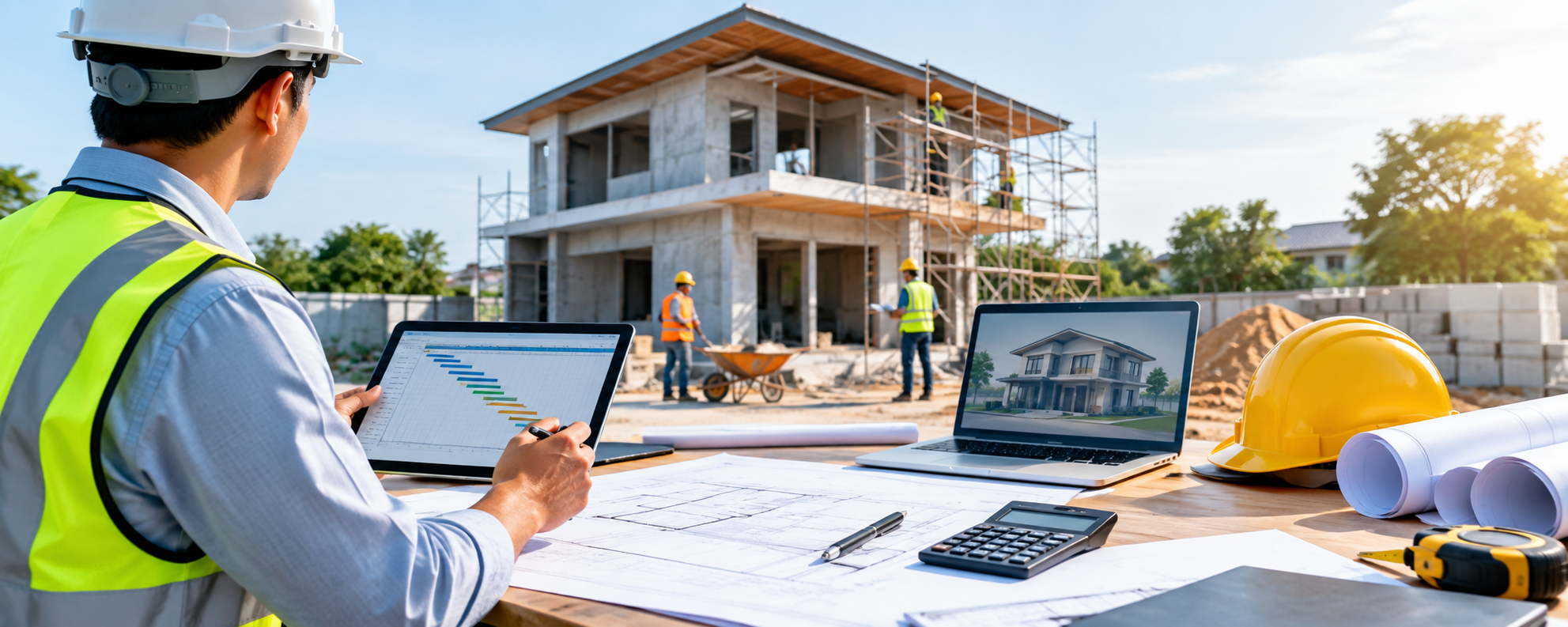

Building a house is a major investment that involves much more than bricks, cement, steel, and finishing materials. A successful construction project requires proper planning, coordination, budgeting, scheduling, quality control, and regular supervision. This is where project management in house construction becomes important.
Without effective project management, even a well-designed house can experience delays, unexpected expenses, material wastage, communication problems, and construction-quality issues.
A structured project management approach helps coordinate every stage of construction, from initial planning and design to finishing and final handover. It ensures that different professionals, workers, suppliers, and contractors work toward the same goal.
What Is Project Management in House Construction?
Project management in house construction means planning, organizing, monitoring, and controlling the different activities involved in building a home.
A construction project may involve architects, structural engineers, contractors, electricians, plumbers, interior professionals, suppliers, and several types of skilled workers. Project management brings these activities together in an organized manner.
The main objective is to complete the house according to the agreed scope, budget, quality standards, and timeline.
Why Is Project Management Important?
1. Better Planning Before Construction
Good project management starts before construction begins.
The project manager or construction team can coordinate architectural drawings, structural plans, site requirements, material specifications, estimated costs, and construction schedules.
Proper planning helps identify potential problems early instead of discovering them after construction has already started.
For example, electrical points, plumbing routes, structural requirements, doors, windows, and other elements should be coordinated with the building design before work progresses too far.
2. Helps Control the Construction Budget
Budget management is one of the biggest challenges in house construction.
Material prices, labor costs, design changes, transportation, site conditions, and unexpected work can affect the final cost.
Effective project management involves preparing a realistic budget, tracking expenses, monitoring material usage, and controlling unnecessary changes.
Regular cost monitoring can help homeowners understand where money is being spent and identify potential cost overruns early.
3. Keeps the Project on Schedule
House construction involves multiple activities that depend on one another.
Foundation work needs to progress before structural work. Electrical and plumbing installations need coordination with walls and ceilings. Flooring, painting, fixtures, and other finishing activities must be planned in the correct sequence.
A construction schedule helps organize these activities and reduces unnecessary waiting time.
When one activity gets delayed, project management helps identify its impact on the following activities and adjust the schedule accordingly.
4. Improves Communication
Communication problems can create major issues during construction.
A homeowner may discuss a requirement with the contractor, while the architect or workers may have different information. If instructions are unclear, work may have to be changed or repeated.
Project management creates a structured communication process between the homeowner, architect, engineers, contractor, workers, and suppliers.
Clear drawings, written specifications, regular meetings, and documented decisions can reduce misunderstandings.
5. Helps Maintain Construction Quality
Finishing a house quickly is not enough. The construction should also meet the required quality standards.
Project management allows important construction activities to be monitored at different stages.
Depending on the project, checks may include:
- Foundation and reinforcement work
- Concrete quality and placement
- Brick or block masonry
- Waterproofing
- Plumbing installation
- Electrical work
- Flooring and tiling
- Doors and windows
- Painting and finishing
- Final fixtures and fittings
Regular inspections can help identify defects before they become difficult or expensive to correct.
6. Better Material Management
Construction requires a large variety of materials, including cement, steel, bricks or blocks, sand, aggregates, pipes, electrical products, tiles, paint, hardware, and finishing materials.
Poor material management can result in wastage, theft, storage problems, damaged products, or work stoppages.
A well-managed project tracks material requirements and coordinates procurement with the construction schedule.
Materials can then be ordered and delivered according to project needs rather than being purchased without proper planning.
7. Coordinates Different Professionals
A house is rarely built by one person or one type of worker.
Architects handle design, structural engineers address structural requirements, electricians install electrical systems, plumbers handle water and drainage systems, and construction workers execute different building activities.
These activities need to work together.
For example, electrical conduits and plumbing pipes may need to be installed before certain wall or ceiling finishes are completed. Good project management coordinates these activities so that one team’s work does not unnecessarily interfere with another team’s work.
8. Reduces Construction Risks
Every construction project has potential risks.
These may include unexpected site conditions, material delays, design changes, safety issues, weather disruptions, labor shortages, or coordination problems.
Project management involves identifying potential risks and preparing practical responses.
For example, important materials can be planned in advance, construction activities can be sequenced properly, and critical decisions can be finalized before they affect site progress.
9. Controls Changes During Construction
Homeowners sometimes decide to make changes after construction has started.
Changing room layouts, flooring, electrical points, windows, plumbing fixtures, or finishes may affect both cost and schedule.
A proper project management process evaluates the effect of a proposed change before implementation.
The homeowner can then understand the likely impact on the budget and timeline and make an informed decision.
10. Makes Final Handover Easier
Project management continues until the construction is completed and the house is ready for handover.
The final stage may involve checking finishes, fixtures, electrical systems, plumbing, doors, windows, waterproofing-related areas, and other completed work.
A systematic handover checklist can help identify unfinished or defective work that needs attention before the project is considered complete.
Key Stages of Project Management in House Construction
A typical house construction project can be managed through several stages:
Pre-Construction Planning
This stage includes understanding the homeowner’s requirements, site evaluation, design development, budgeting, approvals, material planning, and contractor selection.
Design and Documentation
Architectural drawings, structural drawings, electrical layouts, plumbing layouts, specifications, and other necessary documents are coordinated before major construction begins.
Construction Scheduling
The project team establishes a sequence for foundation, structure, masonry, services, plastering, flooring, painting, and finishing activities.
Procurement and Material Planning
Required materials are identified, suppliers are coordinated, and deliveries are planned according to the construction schedule.
Site Execution and Supervision
Construction activities are monitored to ensure that work follows the drawings, specifications, safety requirements, and planned schedule.
Quality and Cost Monitoring
Progress, expenses, material usage, workmanship, and quality are reviewed throughout the project.
How Homeowners Can Improve Construction Project Management
Homeowners can make the process easier by taking a few important steps:
- Finalize major design decisions early.
- Keep approved drawings and specifications organized.
- Establish a realistic construction budget.
- Discuss payment terms clearly.
- Use a written agreement with defined responsibilities.
- Monitor progress regularly.
- Document approved changes.
- Avoid unnecessary design changes during construction.
- Check material specifications before purchasing.
- Maintain clear communication with the construction team.
- Conduct inspections at important construction stages.
These practices can reduce confusion and help maintain better control over the project.
Why Choose an Experienced Construction Partner?
Effective project management requires experience, coordination, and attention to detail. An experienced construction company can help manage multiple aspects of a house construction project while keeping the homeowner’s requirements in focus.
Kanakdhara Developer Private can help homeowners plan and build their homes according to their requirements, coordinating construction activities with the project’s design, budget, and practical needs.
Before selecting a construction company, homeowners should review previous projects, understand the scope of services, discuss timelines and costs, and confirm how quality control and project coordination will be handled.
Final Thoughts
Project management in house construction plays an important role in turning a house plan into a completed home. It brings together planning, budgeting, scheduling, procurement, communication, quality control, and site supervision.
A properly managed project can reduce avoidable delays, control unnecessary expenses, improve coordination, and help maintain construction quality.
Whether you are building a small residential property or a larger custom home, investing time in proper project management can make the construction process more organized and predictable.
The goal is not simply to complete construction—it is to deliver a home that meets the owner’s requirements while maintaining the expected quality, budget, timeline, and functionality.