
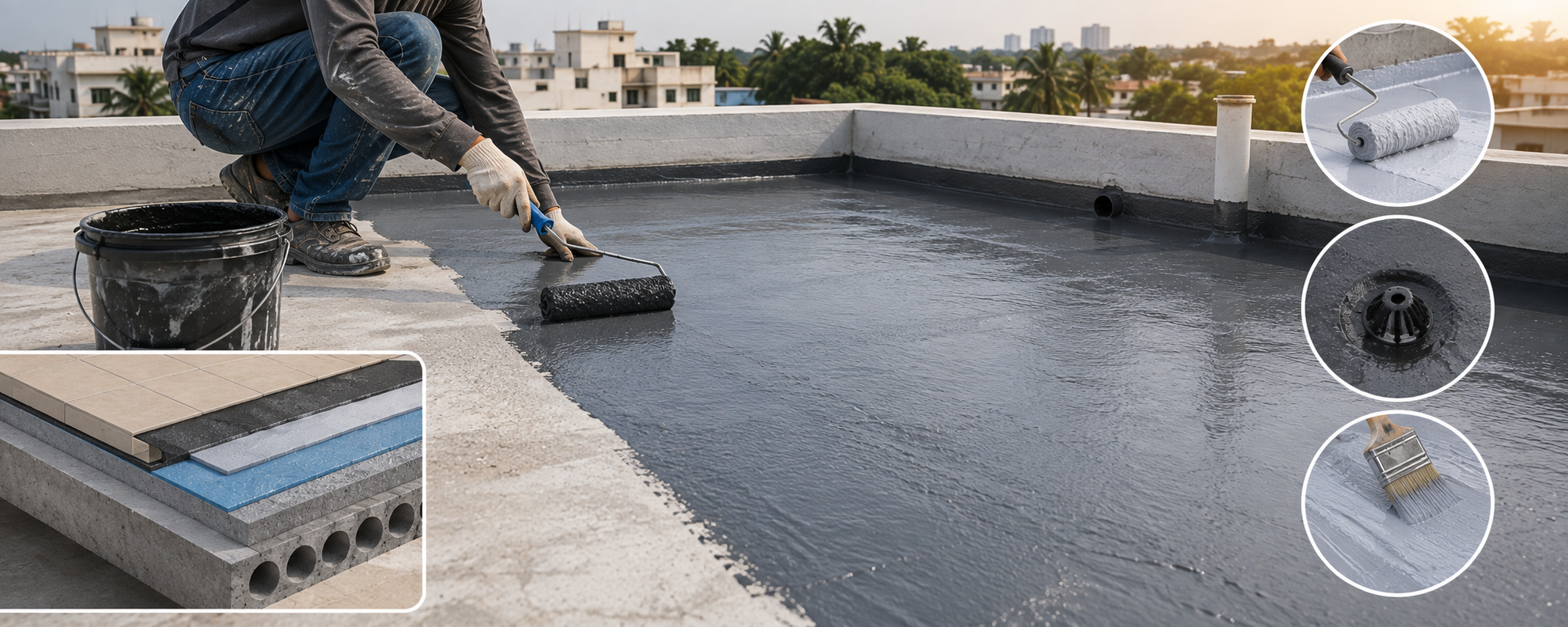

Terrace Waterproofing: Methods, Cost and Maintenance
A terrace is one of the most exposed parts of any building. It faces intense sunlight during summer, heavy rainfall during the monsoon, and continuous temperature changes throughout the year. Over time, these weather conditions create cracks, weaken the concrete surface, and allow water to seep into the structure. What starts as a small leak can eventually lead to damp ceilings, peeling paint, mold growth, corrosion of reinforcement steel, and costly structural repairs.
Many homeowners only think about waterproofing after leakage becomes visible. Unfortunately, by then the damage has already begun beneath the surface. At Kanakdhara Developer Private Limited, we believe terrace waterproofing should be treated as a preventive investment rather than a repair solution. A professionally waterproofed terrace protects your home, extends the life of the building, and significantly reduces long-term maintenance costs.
This guide explains the most effective terrace waterproofing methods, the factors that influence waterproofing costs, and the maintenance practices that help ensure long-lasting protection.
Why Terrace Waterproofing Is Important
Concrete may appear solid, but it contains microscopic pores that allow moisture to penetrate over time. During rainfall, water gradually enters these pores and reaches the reinforcement steel hidden inside the slab. Once steel begins to corrode, it expands, causing cracks, concrete spalling, and weakening of the structural elements.
Waterproofing creates a protective barrier that prevents water infiltration while protecting the roof slab from weather-related deterioration. It also improves indoor comfort by preventing dampness, reducing mold growth, and preserving interior finishes such as paint, false ceilings, and electrical installations.
Popular Terrace Waterproofing Methods
Selecting the right waterproofing system depends on the terrace condition, climate, intended usage, and construction type. Modern waterproofing combines advanced materials with proper application techniques to provide durable protection.
Liquid Waterproofing Membrane

Liquid-applied waterproofing is one of the most widely used methods for residential buildings. A liquid coating is applied over the terrace surface, where it cures to form a seamless waterproof membrane.
Because there are no joints, this method effectively reduces leakage risks and performs well on terraces with irregular shapes or multiple service penetrations.
Bituminous Membrane Waterproofing
Bituminous membranes are factory-manufactured waterproof sheets applied over prepared concrete surfaces using heat or self-adhesive systems. These membranes provide excellent water resistance and are commonly used for terraces, basements, and podium slabs.
They are highly durable and particularly suitable for buildings exposed to heavy rainfall.
Polyurethane Waterproofing
Polyurethane waterproofing forms a flexible, highly elastic coating capable of bridging small surface cracks. It performs exceptionally well on terraces subjected to temperature fluctuations because it expands and contracts without losing its waterproofing properties.
Although it is generally more expensive than conventional coatings, it offers excellent long-term performance.
Cementitious Waterproofing
Cement-based waterproof coatings are easy to apply and widely used in residential construction. They bond well with concrete surfaces and provide reliable moisture protection for terraces with moderate waterproofing requirements.
They are also commonly used during repair and renovation projects.
Factors That Affect Waterproofing Cost
The cost of terrace waterproofing varies depending on several factors rather than a fixed price alone.
The total terrace area is one of the biggest cost considerations. Larger roofs require more material and labour. The condition of the existing surface also influences pricing because damaged terraces often require crack repairs, surface preparation, or re-plastering before waterproofing can begin.
The choice of waterproofing material significantly affects the overall budget. Premium membrane systems generally cost more than cementitious coatings but offer longer service life and better performance. Labour quality, application methods, accessibility of the terrace, and warranty coverage also contribute to the final cost.
Instead of selecting the cheapest option, homeowners should evaluate waterproofing based on durability, maintenance requirements, and long-term value.
Common Waterproofing Mistakes
Many terrace leakage problems occur because important construction details are ignored. Applying waterproofing over damp or dusty surfaces reduces bonding strength and shortens the lifespan of the protective layer.
Improper treatment of expansion joints, parapet walls, drain outlets, and pipe penetrations often becomes the starting point of water seepage. Another common mistake is failing to maintain the proper roof slope, allowing rainwater to accumulate instead of draining efficiently.
Using low-quality waterproofing products or hiring inexperienced applicators may reduce initial costs but often leads to repeated repairs within a few years.
Terrace Waterproofing Maintenance Tips
Even the best waterproofing system requires periodic inspection to maintain its effectiveness. Homeowners should clean terrace drains regularly to prevent water accumulation during the rainy season. Leaves, debris, and dirt should never be allowed to block drainage outlets.
Inspect the terrace surface annually for cracks, damaged sealants, or peeling coatings. Small defects repaired early are far less expensive than addressing widespread leakage after significant water infiltration.
Avoid drilling unnecessary holes through waterproofed surfaces for new installations unless proper sealing methods are used. If rooftop solar panels, water tanks, or outdoor structures are installed, ensure their supports do not damage the waterproof membrane.
A Unique Perspective: Waterproofing Protects More Than Your Roof
Most people think terrace waterproofing only prevents ceiling leaks. In reality, it also protects the hidden structural components inside your building. Moisture entering reinforced concrete gradually corrodes steel bars, reducing structural durability long before visible signs appear indoors.
Effective waterproofing also improves energy efficiency. A dry roof absorbs and transfers less heat compared to a damp concrete slab, helping maintain comfortable indoor temperatures and reducing cooling costs. This makes waterproofing not only a maintenance solution but also an investment in your home’s long-term performance and sustainability.
Why Choose Kanakdhara Developer Private Limited?
At Kanakdhara Developer Private Limited, we approach waterproofing as an essential part of quality construction rather than an afterthought. Our experienced architects, engineers, and construction professionals evaluate every terrace based on structural condition, drainage design, exposure to weather, and intended usage before recommending the most suitable waterproofing solution.
We use premium waterproofing materials, follow proven application techniques, and carefully inspect surface preparation, crack treatment, drainage systems, and protective coatings to deliver long-lasting results. Whether you are constructing a new home or repairing an existing terrace, our comprehensive approach ensures superior protection against water damage while extending the lifespan of your building.
Conclusion
A properly waterproofed terrace is one of the best investments you can make for your property. It protects your home from leaks, structural deterioration, mold growth, and expensive future repairs while improving the overall durability and value of the building.
By choosing the right waterproofing method, using quality materials, and following regular maintenance practices, homeowners can enjoy years of reliable protection with minimal upkeep.
If you are planning a new home or looking to repair an existing terrace, Kanakdhara Developer Private Limited offers expert waterproofing solutions, architectural planning, structural engineering, and complete construction services designed to deliver long-lasting quality, durability, and peace of mind.