
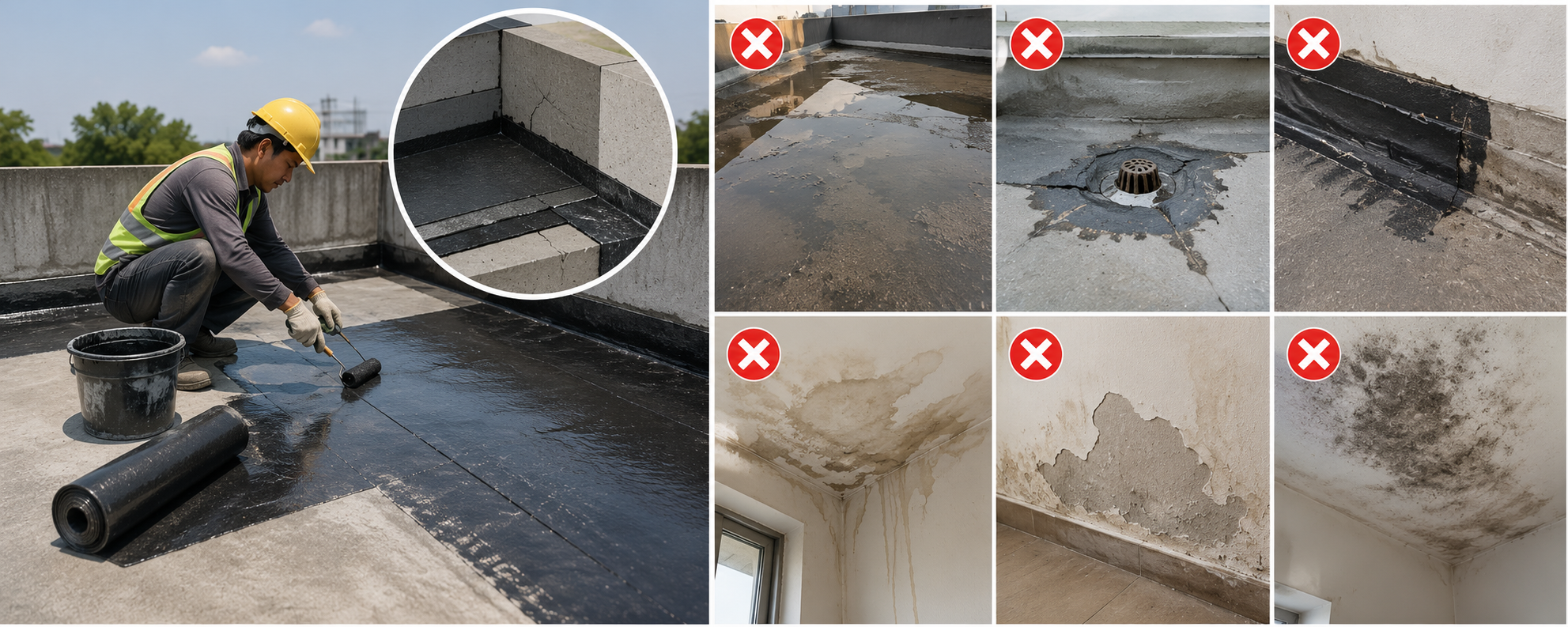

Waterproofing Mistakes That Cause Expensive Repairs
Waterproofing is one of those construction activities that homeowners often notice only when something goes wrong. A small damp patch on a ceiling, peeling paint, a musty smell or water seeping through a wall may initially appear like a minor maintenance issue. But if the underlying waterproofing problem is ignored, the repair can become significantly more expensive.
Good waterproofing is not simply about applying a chemical coating to a surface. It involves proper planning, surface preparation, drainage, material selection, application and protection. Here are some of the most common waterproofing mistakes that cause expensive repairs and how to avoid them.
1. Waterproofing Without Identifying the Source of Water
One of the biggest mistakes is treating the visible symptom instead of finding the actual source of moisture.
For example, water appearing on a bedroom ceiling may originate from a bathroom above, a terrace, a leaking pipe or an external wall. Simply applying putty, paint or a waterproof coating to the visible damp area may temporarily hide the problem without solving it.
Before starting waterproofing repairs, the source of water should be identified through proper inspection. This is particularly important when moisture is travelling through concrete or masonry from another location.
2. Poor Surface Preparation
Even a high-quality waterproofing product can fail when applied over a poorly prepared surface.
Dust, loose concrete, oil, old paint, laitance, cracks and other contaminants can prevent proper bonding between the waterproofing system and the substrate. Uneven or damaged surfaces can also create weak points where water may eventually penetrate.
The surface should therefore be cleaned, repaired and prepared according to the requirements of the selected waterproofing system before application begins.
3. Ignoring Cracks and Construction Joints
Water often finds its way through cracks and vulnerable joints. Simply covering them with a waterproofing layer does not necessarily address the underlying problem.
Cracks should be inspected to understand their nature and significance. Construction joints, movement joints, pipe penetrations and junctions between different materials require particular attention because they can become common leakage paths.
A proper waterproofing system should include suitable treatment for these vulnerable areas rather than relying only on a surface coating.
4. Using the Wrong Waterproofing System
There is no single waterproofing product that is ideal for every part of a building.
A terrace exposed to intense sunlight and rain has different requirements from a basement, bathroom, water tank or external wall. The substrate, water pressure, exposure conditions and expected movement can all influence the appropriate system.
Choosing a product simply because it is inexpensive or popular can result in premature failure. Waterproofing should be selected according to the location and actual site conditions.
5. Applying Too Little or Too Much Material
Another common mistake is treating waterproofing material like ordinary paint.
Many waterproofing systems require a specific thickness, number of coats, coverage rate and application method. Applying insufficient material may leave weak areas, while excessive or improperly applied material can also create problems.
Following the manufacturer’s technical instructions and project specifications is essential. Site workers should also maintain consistent application rather than relying on visual estimation alone.
6. Poor Treatment Around Pipes and Drainage Points
Pipe penetrations are among the most vulnerable areas in bathrooms, terraces, balconies and utility spaces.
If the junction between the pipe and surrounding concrete is not properly sealed, water can gradually enter the structure. Similarly, poorly designed or blocked drainage points can allow water to remain on a surface for long periods.
Waterproofing and drainage should therefore be considered together. A waterproof surface is much more effective when water can quickly and safely move toward properly designed outlets.
7. Not Providing Proper Terrace Slope
A terrace may have excellent waterproofing materials and still experience leakage if water does not drain properly.
Incorrect slope can create ponding, where water remains standing on the roof after rainfall. Continuous exposure to water can place additional stress on the waterproofing system and increase the likelihood of leakage through vulnerable points.
Terrace drainage should be planned during construction, with appropriate slopes directed toward functioning rainwater outlets. Existing terraces should also be checked for low spots before waterproofing work begins.
8. Skipping the Water-Retention or Testing Stage
Waterproofing should not simply be assumed to work because the surface looks good.
Where appropriate for the particular application, the completed waterproofing system should be tested before it is concealed by tiles, screed, plaster or other finishes. For bathrooms and other wet areas, a controlled water-retention test can help identify leakage before the area is handed over.
Finding a problem during testing is far cheaper than discovering it after tiles, ceilings and interior finishes have already been completed.
9. Damaging Waterproofing During Subsequent Work
A waterproofing layer can be damaged after installation by drilling, chasing, cutting, fixing railings, installing equipment or carrying out plumbing and electrical work.
This is particularly common on terraces and bathrooms, where other trades may work after waterproofing has been completed.
Waterproofed surfaces should therefore be protected during subsequent construction activities. Any penetration or damage should be properly repaired using a compatible system rather than simply filling the hole with cement.
10. Ignoring Plumbing and Drainage Problems
Not every damp patch is a waterproofing failure.
Leaking water-supply pipes, defective bathroom plumbing, damaged drainage lines and overflowing rainwater pipes can all produce symptoms similar to waterproofing problems.
Replacing the waterproofing system without investigating plumbing can waste money while the actual source of moisture remains active. A professional inspection should distinguish between waterproofing, plumbing and drainage issues before major repair work begins.
11. Choosing Waterproofing Based Only on Price
The cheapest waterproofing quotation is not necessarily the most economical solution.
A low initial price may exclude important activities such as crack treatment, surface preparation, multiple coats, protection layers, testing or proper detailing around joints and penetrations.
Instead of comparing only the material price, homeowners should compare the complete waterproofing system, including preparation, application method, workmanship, testing and applicable warranty terms.
Why Professional Waterproofing Matters
Waterproofing is a relatively small part of the overall construction budget, but its failure can affect expensive finishes, electrical systems, ceilings, flooring and even structural elements over time.
At Kanakdhara Developer Private Limited, we believe waterproofing should be treated as an integrated part of building construction rather than a last-minute repair activity. Proper detailing, suitable materials, skilled workmanship and quality checks can significantly reduce the risk of future leakage.
Final Thoughts
The most expensive waterproofing problems are often caused not by one major mistake but by several small oversights—poor surface preparation, inadequate drainage, untreated cracks, incorrect material selection, improper application or damage during later construction.
The best time to prevent these problems is during the planning and construction stage. If leakage has already appeared, avoid simply covering the affected area with paint or another coating. First identify the source, assess the damage and select an appropriate repair system.
A properly planned waterproofing system can protect your building, preserve interior finishes and save homeowners from repeated repair expenses in the future.