
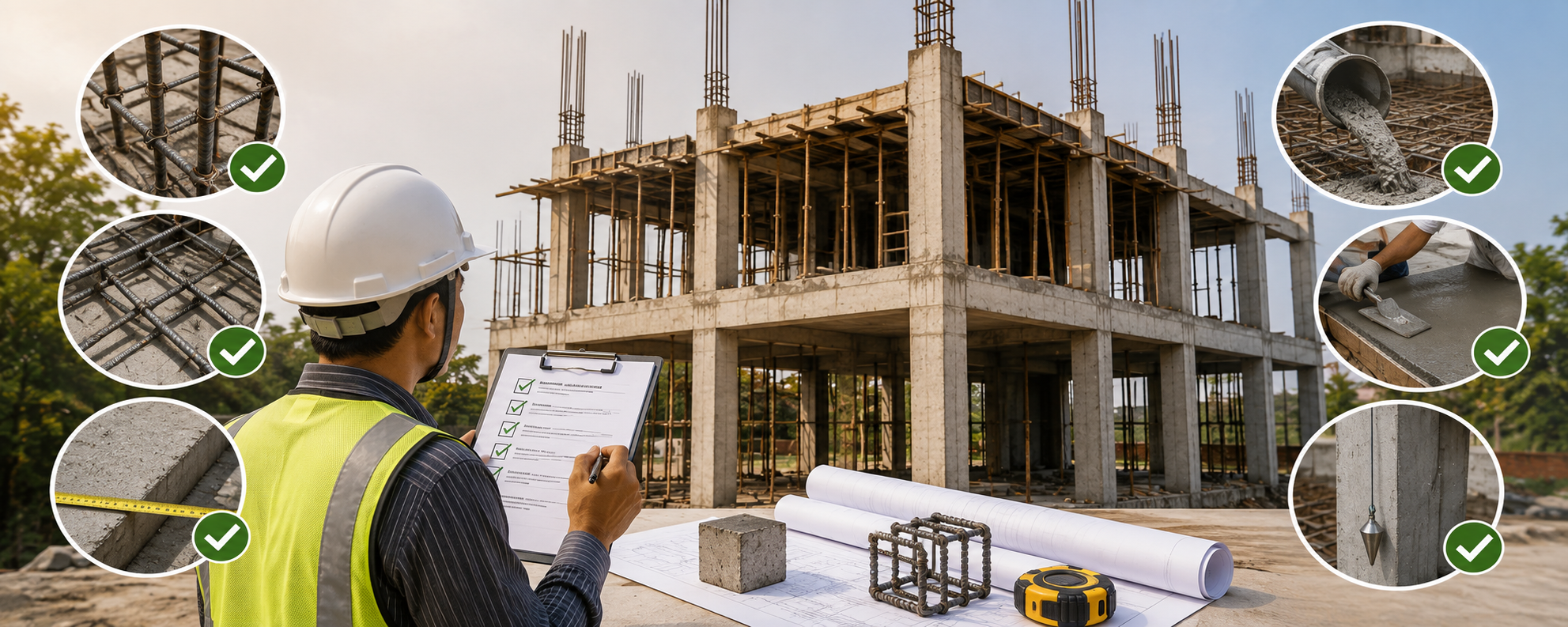

Quality Checklist for RCC Work in Residential Construction
The strength of a house depends on more than just its design—it relies on the quality of its structural framework. Reinforced Cement Concrete (RCC) is the backbone of every residential building, forming the foundation, columns, beams, slabs, and staircases that support the entire structure. Even minor mistakes during RCC work can reduce the life of the building, increase maintenance costs, and compromise safety.
At Kanakdhara Developer Private Limited, we believe that quality should never be left to chance. Every stage of RCC construction requires careful inspection, proper planning, and strict adherence to engineering standards. Homeowners who understand the basics of RCC quality control can make informed decisions and ensure their dream home is built to last for generations.
This guide highlights the most important checkpoints every homeowner should verify during RCC work.
Why RCC Quality Matters
RCC provides the structural strength required to withstand everyday loads as well as environmental forces such as wind, heavy rainfall, and seismic activity. Poor-quality RCC work can lead to cracks, water seepage, corrosion of reinforcement steel, uneven settlement, and expensive structural repairs in the future.
Maintaining quality throughout the RCC process is far more economical than repairing structural defects after construction is complete.
Verify Structural Drawings Before Construction
Every RCC component should be constructed according to approved structural drawings prepared by a qualified structural engineer. The drawings specify the dimensions of columns, beams, slabs, reinforcement details, and concrete grades required for each part of the building.
Starting RCC work without verified structural drawings increases the risk of design errors that may affect the building’s overall stability.
Check the Quality of Construction Materials
The durability of RCC depends on the quality of its ingredients. Cement should be fresh, stored in a dry environment, and sourced from a trusted manufacturer. Reinforcement steel should be free from excessive rust, oil, or dirt before placement. Sand and aggregates must be clean and properly graded to achieve the required concrete strength.
Using certified materials from reliable brands ensures consistent quality and improves the overall performance of the structure.
Inspect Reinforcement Steel Placement
Before concrete is poured, reinforcement bars should be inspected carefully. The diameter, spacing, lap length, anchorage, and positioning of steel bars must match the structural drawings.
Concrete cover blocks should also be placed correctly to maintain the required protective layer around reinforcement steel. Proper concrete cover protects steel from corrosion and significantly extends the life of the building.
Ensure Strong and Accurate Formwork
Formwork supports fresh concrete until it gains sufficient strength. Weak or poorly aligned shuttering can result in uneven slabs, honeycombing, or dimensional inaccuracies.
Before concreting, verify that the formwork is rigid, level, leak-proof, and properly supported. Clean shuttering also prevents unwanted marks and surface defects after concrete removal.
Maintain Correct Concrete Mixing
The quality of concrete depends on the correct proportion of cement, sand, aggregates, and water. Excess water may make concrete easier to place but significantly reduces its final strength.
Whether concrete is mixed on-site or supplied by a ready-mix plant, the approved mix design should always be followed. Consistency in mixing is essential for achieving uniform structural performance.
Proper Concrete Placement and Vibration
Concrete should be poured continuously without unnecessary interruptions. During placement, mechanical vibrators should be used to remove trapped air and eliminate voids within the concrete.
Proper vibration creates dense, compact concrete that improves load-bearing capacity while reducing the chances of honeycombing and future structural weaknesses.
Never Ignore Concrete Curing
One of the most overlooked stages of RCC work is curing. Concrete requires adequate moisture after placement to achieve its designed strength.
Insufficient curing often causes shrinkage cracks, reduced durability, and lower compressive strength. Continuous curing for the recommended duration ensures stronger, more durable concrete capable of withstanding long-term environmental exposure.
Monitor Weather Conditions During Concreting
Extreme weather can affect concrete quality. High temperatures may cause rapid moisture loss, while heavy rainfall can weaken fresh concrete and disturb its surface finish.
Professional construction planning schedules RCC work according to suitable weather conditions and implements protective measures whenever necessary.
Conduct Quality Testing
Visual inspection alone cannot guarantee structural quality. Professional RCC construction should include appropriate quality tests such as concrete cube testing, slump testing, and reinforcement inspections where required.
These tests verify whether the concrete has achieved the specified strength and provide documented assurance of construction quality.
A Unique Perspective: Document Every RCC Stage
An excellent practice that many homeowners overlook is maintaining a photographic record of RCC work. Capture images of reinforcement placement, shuttering, electrical conduits inside slabs, plumbing sleeves, and concrete pouring before each stage is completed.
This documentation becomes valuable for future maintenance, renovations, insurance claims, or identifying concealed service lines. It also provides confidence that every structural component was executed according to approved plans.
How Kanakdhara Developer Private Limited Ensures RCC Quality
At Kanakdhara Developer Private Limited, quality control begins long before concrete is poured. Our structural engineers, architects, and site supervisors carefully inspect every stage of RCC construction, from reinforcement placement and shuttering alignment to concrete mixing, vibration, curing, and final inspection.
We follow systematic quality control procedures, use premium construction materials, prepare detailed BOQs, and ensure every RCC element complies with approved structural designs. Through continuous site supervision and transparent construction practices, we help homeowners build safe, durable, and long-lasting homes with complete peace of mind.
Conclusion
RCC is the structural foundation of every residential building, and its quality directly determines the safety, durability, and lifespan of your home. Careful inspection of materials, reinforcement, formwork, concrete placement, curing, and testing helps prevent costly structural problems and ensures your investment remains secure for decades.
If you are planning to build your dream home, Kanakdhara Developer Private Limited offers expert architectural planning, structural engineering, quality-controlled RCC construction, and complete project management services. Our commitment to engineering excellence and transparent construction practices ensures your home is built on a foundation of strength, precision, and lasting quality.