
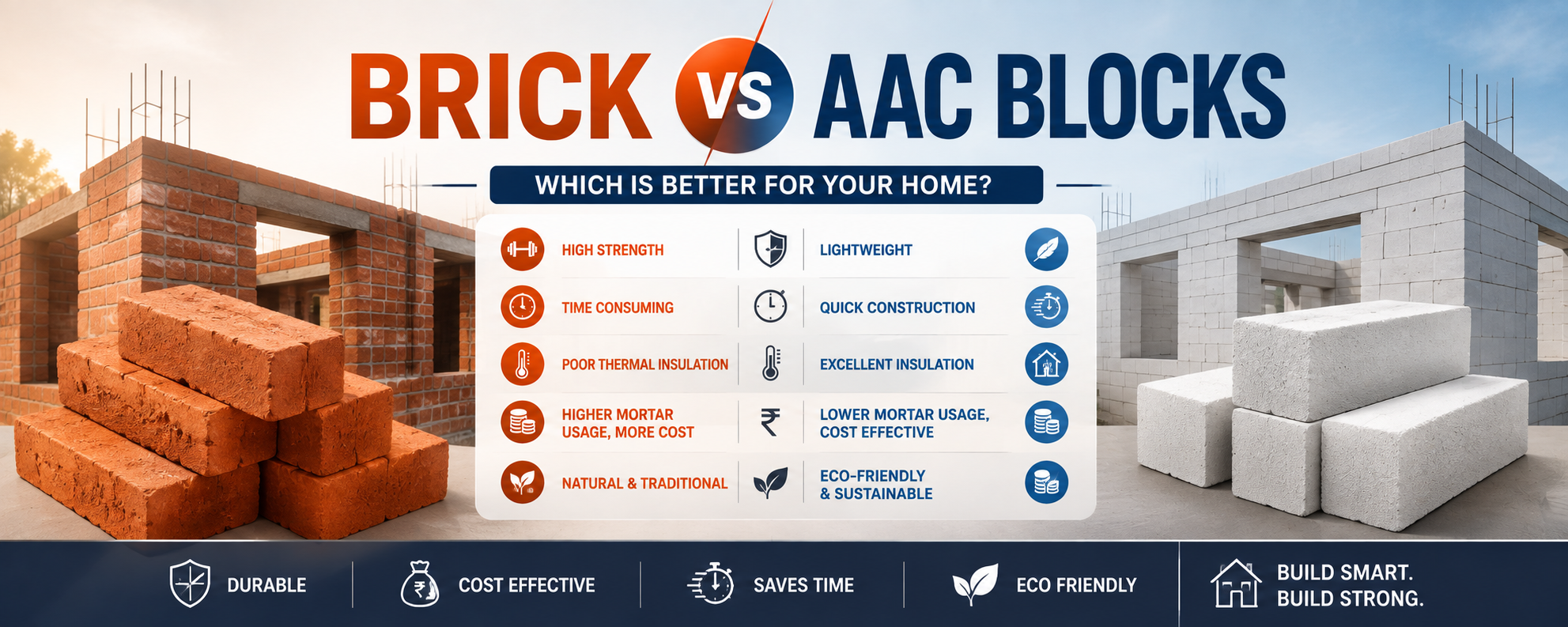

Brick vs AAC Blocks: Which Is Better for House Construction?
Selecting the right wall construction material is one of the most important decisions when building a home. Traditional clay bricks have been used for centuries, but modern construction has introduced Autoclaved Aerated Concrete (AAC) blocks as an efficient alternative. Both materials have their own advantages and limitations, making it essential to understand their differences before starting your project.
In this guide, we’ll compare Brick vs AAC Blocks based on cost, strength, durability, insulation, construction speed, and maintenance to help you make the right choice for your dream home.
What Are Clay Bricks?
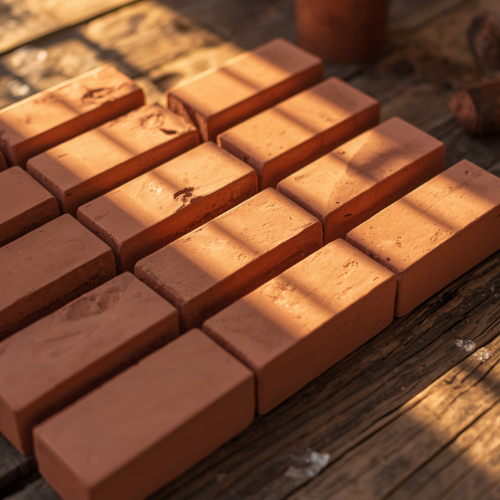
Clay bricks are one of the oldest and most commonly used building materials in India. They are manufactured by molding natural clay and firing it in a kiln at high temperatures. Bricks are known for their durability and have been used in residential, commercial, and heritage buildings for generations.
Because of their availability and familiarity, clay bricks remain a popular choice for many homeowners.
What Are AAC Blocks?
AAC (Autoclaved Aerated Concrete) blocks are lightweight precast building materials made from cement, lime, sand, gypsum, water, and aluminum powder. During manufacturing, tiny air pockets are formed inside the blocks, making them significantly lighter than traditional bricks.
AAC blocks are increasingly preferred in modern construction because they offer excellent thermal insulation, faster construction, and reduced structural load.
Brick vs AAC Blocks: Key Differences
1. Weight
One of the biggest differences between the two materials is their weight.
Clay bricks are much heavier, which increases the dead load on the building structure. AAC blocks are lightweight and reduce the overall structural load, making them suitable for multi-storey buildings and earthquake-resistant construction.
2. Construction Speed
AAC blocks are much larger than standard bricks. A single AAC block can replace several clay bricks, allowing masons to complete wall construction much faster.
Since fewer joints are required, plastering is also quicker and uses less mortar.
3. Strength
Traditional clay bricks offer excellent compressive strength and have been trusted for decades.
AAC blocks also provide sufficient strength for residential buildings. While their compressive strength may be slightly lower than high-quality clay bricks, they easily meet the requirements of most homes when used correctly.
4. Thermal Insulation
AAC blocks are well known for their superior thermal insulation. Their air-filled structure reduces heat transfer, helping keep indoor spaces cooler during summer and warmer during winter.
In cities with hot climates like Lucknow, AAC blocks can contribute to improved energy efficiency by reducing the need for air conditioning.
5. Sound Insulation
Because of their porous structure, AAC blocks provide better sound insulation than traditional bricks. This makes them a good choice for bedrooms, offices, and homes located near busy roads.
Cost Comparison
At first glance, AAC blocks may appear more expensive than traditional bricks. However, the overall construction cost often becomes comparable because AAC blocks reduce expenses in several areas:
- Lower mortar consumption
- Reduced plaster thickness
- Faster labor work
- Lower transportation costs due to lighter weight
- Smaller structural members in some designs
When total project costs are considered, AAC blocks can provide long-term savings.
Durability and Maintenance
Both clay bricks and AAC blocks are durable building materials when constructed properly.
Clay bricks have a long history of lasting for decades with minimal maintenance. AAC blocks are resistant to termites, mold, and fire, making them suitable for modern residential construction.
Proper waterproofing and quality workmanship are essential regardless of the material selected.
Environmental Impact

Sustainability has become an important consideration in construction.
AAC blocks are generally considered more eco-friendly because they use fewer natural resources, generate less construction waste, and improve energy efficiency throughout the building’s life.
Traditional brick manufacturing often consumes fertile topsoil and requires high-temperature firing, which contributes to higher carbon emissions.
Advantages of Clay Bricks
Clay bricks continue to offer several benefits:
- Proven durability
- High compressive strength
- Easy availability
- Familiar construction methods
- Suitable for various building types
They remain an excellent option where skilled brick masonry is readily available.
Advantages of AAC Blocks
AAC blocks provide several modern construction benefits:
- Lightweight structure
- Faster installation
- Better thermal insulation
- Improved sound insulation
- Fire resistance
- Reduced structural load
- Lower long-term energy consumption
- Environmentally friendly manufacturing
These advantages make AAC blocks increasingly popular among architects and builders.
Which Material Should You Choose?
The decision between bricks and AAC blocks depends on your project requirements.
Choose clay bricks if you prefer traditional construction methods, local availability, and proven durability.
Choose AAC blocks if you want faster construction, better insulation, energy efficiency, and a lighter building structure. They are particularly suitable for modern homes where comfort and sustainability are priorities.
Consulting your architect or structural engineer will help ensure the chosen material aligns with your building design and budget.
Final Thoughts
The debate over Brick vs AAC Blocks doesn’t have a one-size-fits-all answer. Both materials are capable of producing safe, durable, and attractive homes when used correctly.
For homeowners looking to build energy-efficient houses with quicker construction timelines, AAC blocks offer several modern advantages. On the other hand, traditional clay bricks remain a trusted and dependable choice with a long history of successful use.
Before making your final decision, compare the total construction cost, local availability, climate conditions, and long-term performance. Choosing the right wall material today can improve your home’s durability, comfort, and value for many years to come.