
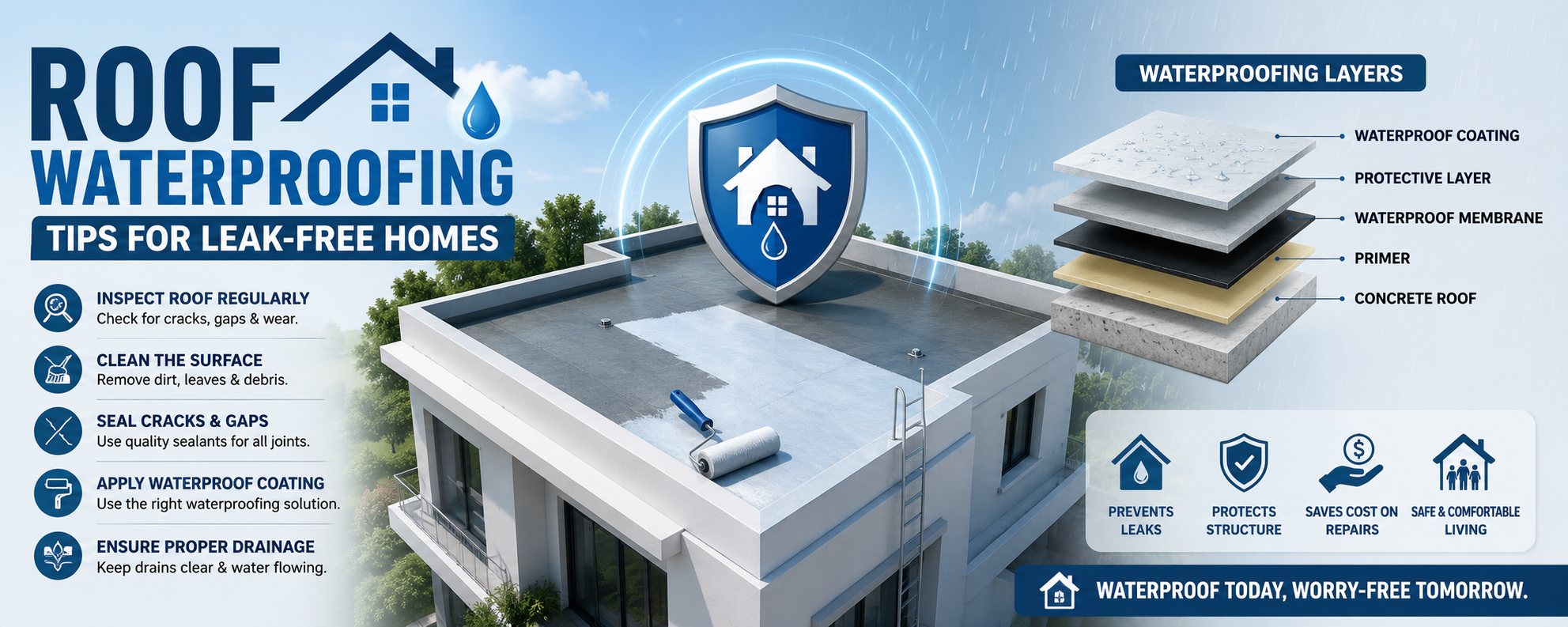

A strong roof is one of the most important parts of any home, but even the strongest concrete roof can develop problems if it is not properly waterproofed. Water seepage may seem like a minor issue in the beginning, but over time it can lead to cracked ceilings, peeling paint, mold growth, damaged electrical wiring, and even structural deterioration. This is why Roof Waterproofing should never be overlooked during construction or renovation.
Many homeowners invest heavily in premium paint and beautiful interiors but ignore roof protection until they notice damp patches inside their homes. By that time, repairs often become more expensive than preventive waterproofing.
This guide explains everything you need to know about roof waterproofing, including why it is necessary, the best waterproofing methods, commonly used materials, maintenance tips, and mistakes to avoid.
What Is Roof Waterproofing?
Roof Waterproofing is the process of creating a protective barrier on the roof surface to prevent rainwater and moisture from entering the building. This barrier helps stop water from penetrating cracks, joints, and porous concrete surfaces.
A properly waterproofed roof protects not only the terrace but also the walls, ceilings, beams, and electrical systems inside the house. It also increases the lifespan of the building by reducing long-term water damage.
Whether you are constructing a new home or renovating an existing one, waterproofing should be treated as an essential investment rather than an optional expense.
Why Roof Waterproofing Is Important
Your roof is continuously exposed to changing weather conditions throughout the year. Heavy rainfall, intense sunlight, humidity, and temperature fluctuations gradually weaken unprotected concrete.
Without effective waterproofing, your home may experience several problems, including:
- Water leakage during the rainy season
- Damp ceilings and walls
- Growth of mold and mildew
- Peeling paint and plaster
- Rusting of steel reinforcement
- Reduced structural durability
- Increased maintenance costs
Taking preventive action early is far more economical than repairing extensive water damage later.
Common Causes of Roof Leakage
Understanding the source of leakage is the first step toward selecting the right waterproofing solution.
Some of the most common causes include:
Liquid Waterproofing Membrane
Liquid waterproofing coatings form a seamless and flexible protective layer after drying.
They are ideal for roofs with multiple corners, joints, and irregular shapes because they cover every surface evenly.
Improper Joint Sealing
Expansion joints, pipe openings, and construction joints are common leakage points if they are not sealed correctly.
Hairline Cracks
Concrete naturally develops small cracks over time due to temperature changes and shrinkage. These tiny openings allow rainwater to seep into the structure.
Poor Drainage
If rainwater remains on the roof for long periods, it gradually penetrates weak areas. Proper slope and efficient drainage outlets are essential for preventing water accumulation.
Low-Quality Construction Materials
Using poor-quality cement, sand, or waterproofing compounds during construction can reduce the roof’s resistance to moisture.
Damaged Waterproofing Layer
Older waterproofing membranes or coatings lose their effectiveness after years of exposure to sunlight and weather conditions.
Best Roof Waterproofing Methods
Different roofs require different waterproofing techniques. Choosing the right method depends on the building’s design, climate, and budget.
Cementitious Waterproofing
This is one of the most commonly used methods for residential buildings.
A cement-based waterproof coating is applied over the concrete surface, creating a protective layer against moisture. It is easy to apply and suitable for new construction as well as repair work.
Acrylic Waterproof Coating
Acrylic coatings provide excellent UV resistance and flexibility.
These coatings reflect sunlight, reduce surface temperature, and protect roofs from weather-related damage.
Polyurethane Waterproofing
Polyurethane coatings offer outstanding waterproofing performance and strong adhesion.
They are especially useful for flat roofs where standing water is a common problem.
Waterproofing Materials Commonly Used
Successful roof waterproofing depends on selecting high-quality materials.
Some commonly used products include:
- Waterproof cement additives
- Acrylic waterproof coatings
- Liquid membranes
- Polymer-modified mortar
- Bituminous sheets
- Crack fillers
- Polyurethane sealants
- Waterproof primers
Choosing certified materials from trusted manufacturers ensures better durability and long-lasting performance.
Signs Your Roof Needs Waterproofing
Many homeowners wait until water starts dripping from the ceiling. However, several warning signs appear much earlier.
Look for these indicators:
- Damp patches on ceilings
- Paint bubbles or peeling paint
- White salt deposits on walls
- Mold growth
- Small roof cracks
- Standing water after rain
- Musty smell inside rooms
Addressing these issues early can prevent costly structural repairs.
Roof Maintenance Tips for Long-Term Protection
Even the best waterproofing system requires regular maintenance.
Follow these simple practices:
Clean the Roof Regularly
Leaves, dust, and debris block drainage outlets, causing water to collect on the roof.
Check for Cracks Every Year
Inspect the roof before and after the rainy season. Seal small cracks before they become major leaks.
Keep Drainage Pipes Clear
Ensure rainwater flows freely through downpipes and drainage channels.
Avoid Heavy Loads
Avoid placing unnecessary heavy objects on the roof, as they can create stress and cracks in the concrete.
Repair Damage Immediately
Small repairs are inexpensive compared to replacing damaged ceilings or structural components.
Mistakes to Avoid During Roof Waterproofing
Many waterproofing failures occur because of poor workmanship rather than poor materials.
Avoid these common mistakes:
- Applying waterproof coating on dirty surfaces
- Ignoring surface cracks before coating
- Skipping the primer coat
- Applying coatings during rainy weather
- Using incompatible waterproofing products
- Not allowing adequate drying time between coats
- Hiring inexperienced contractors
Proper surface preparation and professional application significantly improve waterproofing performance.
How to Choose the Right Roof Waterproofing Solution
Every home has different waterproofing requirements.
Before selecting a waterproofing system, consider:
- Local climate conditions
- Roof design
- Existing damage
- Expected maintenance
- Product durability
- Warranty offered
- Budget
- Professional installation quality
Consulting an experienced construction professional can help identify the most suitable solution for your specific roof.
Final Thoughts
Investing in Roof Waterproofing is one of the smartest decisions a homeowner can make. A well-protected roof not only prevents leaks but also preserves the strength, appearance, and value of your property for years to come.
Instead of waiting for water stains or ceiling damage to appear, adopt a preventive approach by inspecting your roof regularly and using high-quality waterproofing materials. Combined with proper drainage, timely maintenance, and expert installation, an effective waterproofing system ensures your home remains safe, dry, and comfortable in every season.
Whether you are building a new house or upgrading an older one, roof waterproofing is an investment that delivers long-term savings, improved durability, and complete peace of mind.