
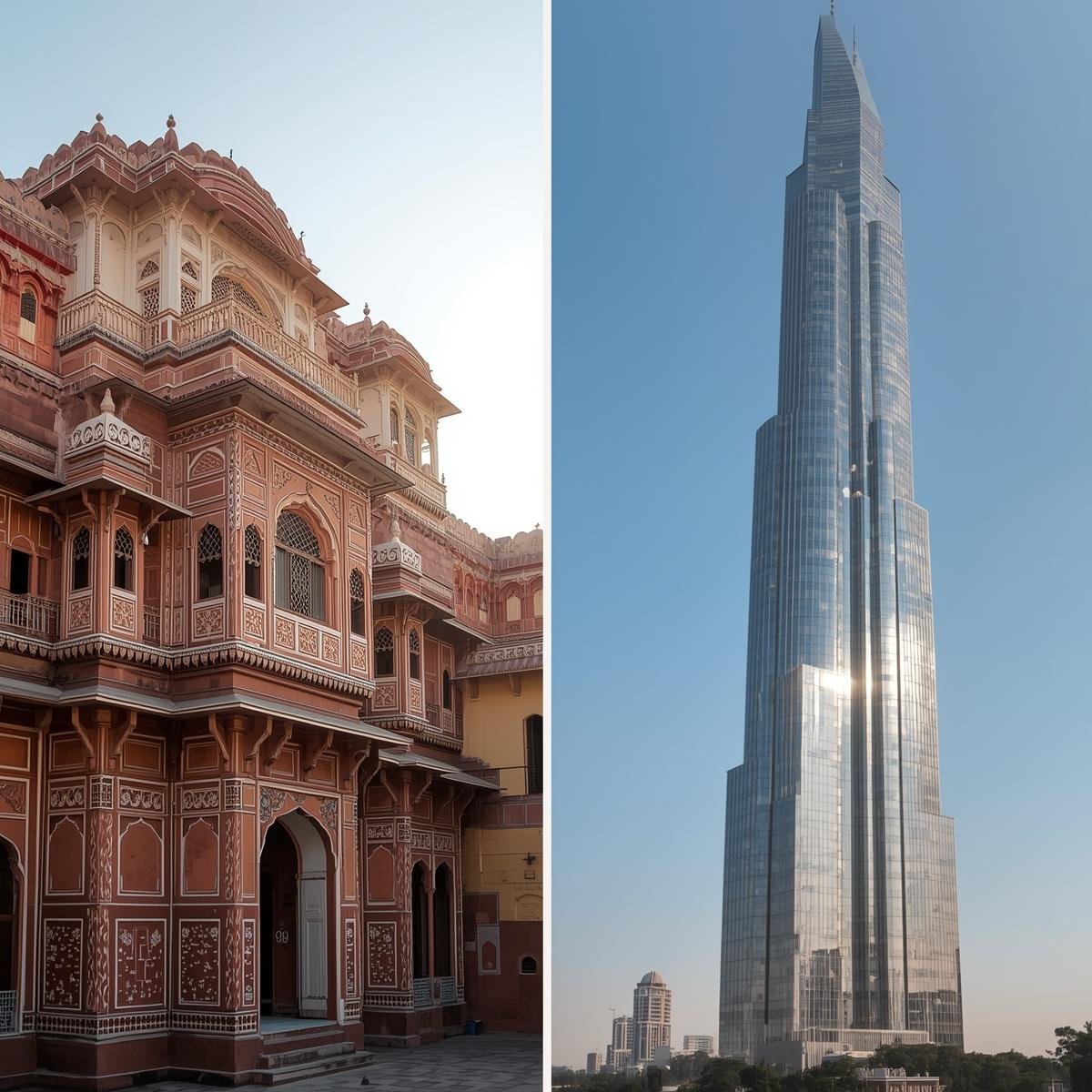

India’s architectural journey is one of the most fascinating in the world. From ancient temples and palaces to sleek glass buildings and minimal homes, the story of traditional vs contemporary Indian architecture reflects our cultural evolution and changing lifestyle. Both styles represent India’s creativity — one rooted in history, the other inspired by innovation.
In this blog, we will explore the differences, similarities, and influences between traditional vs contemporary Indian architecture, showing how these two styles continue to shape the nation’s skyline.
What is Traditional Indian Architecture?
Traditional Indian architecture is deeply influenced by religion, climate, geography, and materials. It focuses on harmony between human life and nature. In the debate of traditional vs contemporary Indian architecture, the traditional side represents:
- Use of local materials like stone, wood, and clay.
- Vastu Shastra principles guiding layout and energy flow.
- Decorative carvings and motifs showing regional art.
- Climate-responsive design, such as courtyards and verandas.
Famous examples include Rajasthan’s havelis, South India’s temples, and Mughal monuments — all showcasing the timeless beauty of Indian craftsmanship.
What is Contemporary Indian Architecture?
Contemporary Indian architecture, on the other hand, focuses on simplicity, sustainability, and technology. When we discuss traditional vs contemporary Indian architecture, the contemporary style represents the modern India that embraces:
- Clean lines and open spaces.
- Glass, steel, and concrete as primary materials.
- Smart homes and green buildings.
- Minimalist aesthetics and global design trends.
Cities like Mumbai, Bengaluru, and Gurgaon are leading examples of how India’s architecture is evolving with time.
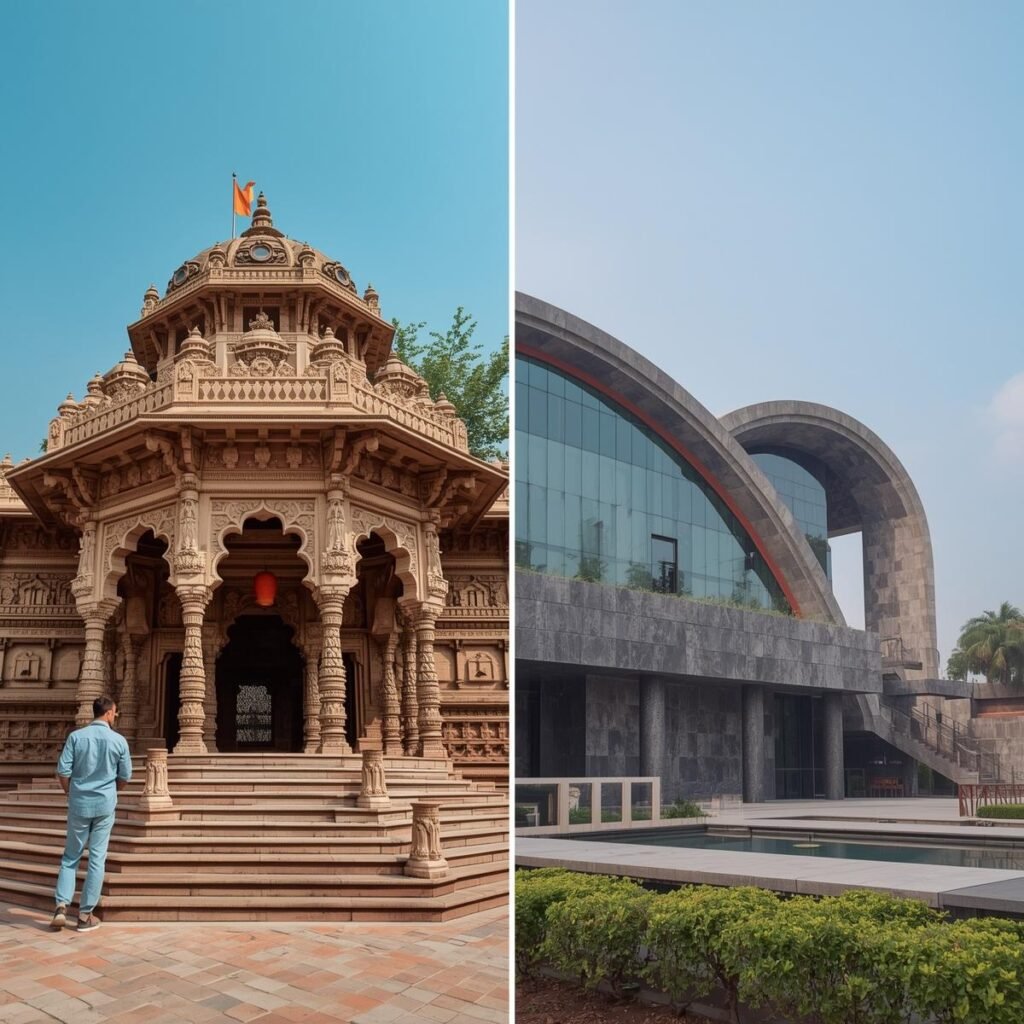
Key Differences in Traditional vs Contemporary Indian Architecture
Let’s compare the main differences between traditional vs contemporary Indian architecture:
Feature | Traditional Architecture | Contemporary Architecture |
Materials | Natural (stone, clay, wood) | Industrial (glass, concrete, steel) |
Design Philosophy | Based on Vastu & culture | Based on function & innovation |
Ornamentation | Rich and detailed | Minimal and clean |
Sustainability | Naturally eco-friendly | Depends on modern green tech |
Lifestyle Fit | Suited to rural & heritage living | Suited to urban & modern life |
The Cultural Essence of Traditional vs Contemporary Indian Architecture
Culture is the heart of traditional vs contemporary Indian architecture. While traditional designs showcase India’s spiritual and regional roots, contemporary styles express global openness and individuality. Yet, both styles continue to evolve — merging culture with modern needs.
For example, architects today often blend traditional vs contemporary Indian architecture by using modern materials in temple-inspired homes or combining old courtyard concepts with new open-plan layouts.
How Climate Influences Traditional vs Contemporary Indian Architecture
India’s diverse climate has always guided architectural design. In traditional vs contemporary Indian architecture, this influence can be seen in:
- Traditional homes using thick walls, sloping roofs, and courtyards to beat the heat.
- Contemporary designs using insulation, ventilation systems, and solar panels for comfort.
Both approaches highlight how Indian architects adapt to nature rather than fight it.
Materials Used in Traditional vs Contemporary Indian Architecture
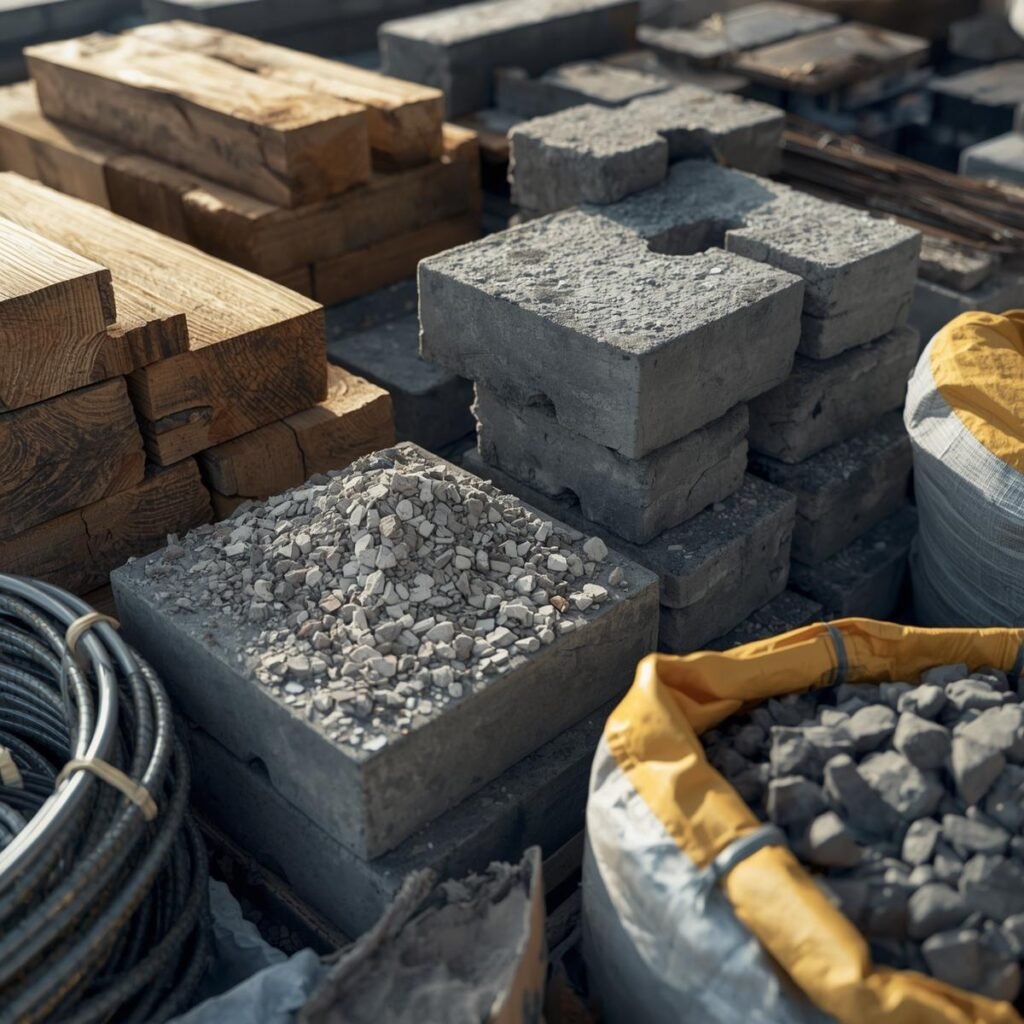
The choice of materials says a lot about traditional vs contemporary Indian architecture.
- Traditional buildings rely on earthy materials like mud bricks, lime plaster, and wood — easily available and sustainable.
- Contemporary buildings use industrial materials like steel, concrete, and glass — providing durability, flexibility, and modern aesthetics.
Today’s architects often mix both to create eco-friendly yet stylish designs.
Sustainability in Traditional vs Contemporary Indian Architecture
Sustainability is not new to India. Ancient builders naturally designed homes that stayed cool in summer and warm in winter. In the context of traditional vs contemporary Indian architecture, both styles now focus on green design.
Modern architects borrow from traditional methods like jaali windows, courtyards, and natural ventilation — proving that the old still guides the new.
Fusion Trends in Traditional vs Contemporary Indian Architecture
One of the most exciting trends today is the fusion of traditional vs contemporary Indian architecture. Designers blend historical aesthetics with modern functionality — for example:
- Wooden jaalis with steel frames.
- Terracotta tiles with concrete finishes.
- Courtyards inside apartments.
This balance creates spaces that are both culturally rooted and future-ready.
The Role of Technology in Traditional vs Contemporary Indian Architecture
Technology is reshaping how architects approach design. In traditional vs contemporary Indian architecture, digital tools allow professionals to visualize spaces, test energy efficiency, and build smart homes.
From 3D walkthroughs to energy-saving systems, technology bridges the gap between heritage and modernity — ensuring India’s buildings are not only beautiful but also intelligent.
The Future of Traditional vs Contemporary Indian Architecture
The future lies in integration. Architects are realizing that the best designs come from learning both sides of traditional vs contemporary Indian architecture.
Future homes and buildings in India are expected to:
- Use local materials intelligently.
- Combine traditional aesthetics with modern planning.
- Incorporate smart and sustainable features.
This approach ensures that India’s architectural identity remains timeless yet adaptive to global progress.
The story of traditional vs contemporary Indian architecture is not about competition — it’s about connection. Both styles enrich India’s architectural identity, showing how our past inspires our future.
As India continues to grow, the perfect architecture will be one that honors tradition while embracing innovation — creating spaces that are sustainable, soulful, and modern.
FAQs – Traditional vs Contemporary Indian Architecture
What defines traditional Indian architecture?
Traditional Indian architecture focuses on cultural values, local materials, and climate-based design.
How does contemporary Indian architecture differ?
Contemporary architecture emphasizes minimalism, technology, and modern lifestyles.
Can traditional and contemporary styles be combined?
Yes! Many architects now blend both — this fusion makes buildings culturally rich and modern.
Which is more sustainable — traditional or contemporary?
Both can be sustainable when designed thoughtfully. Traditional styles use natural cooling, while modern designs use technology for energy efficiency.
Why is understanding traditional vs contemporary Indian architecture important?
It helps us build homes and cities that respect our heritage while fitting our present and future needs.