
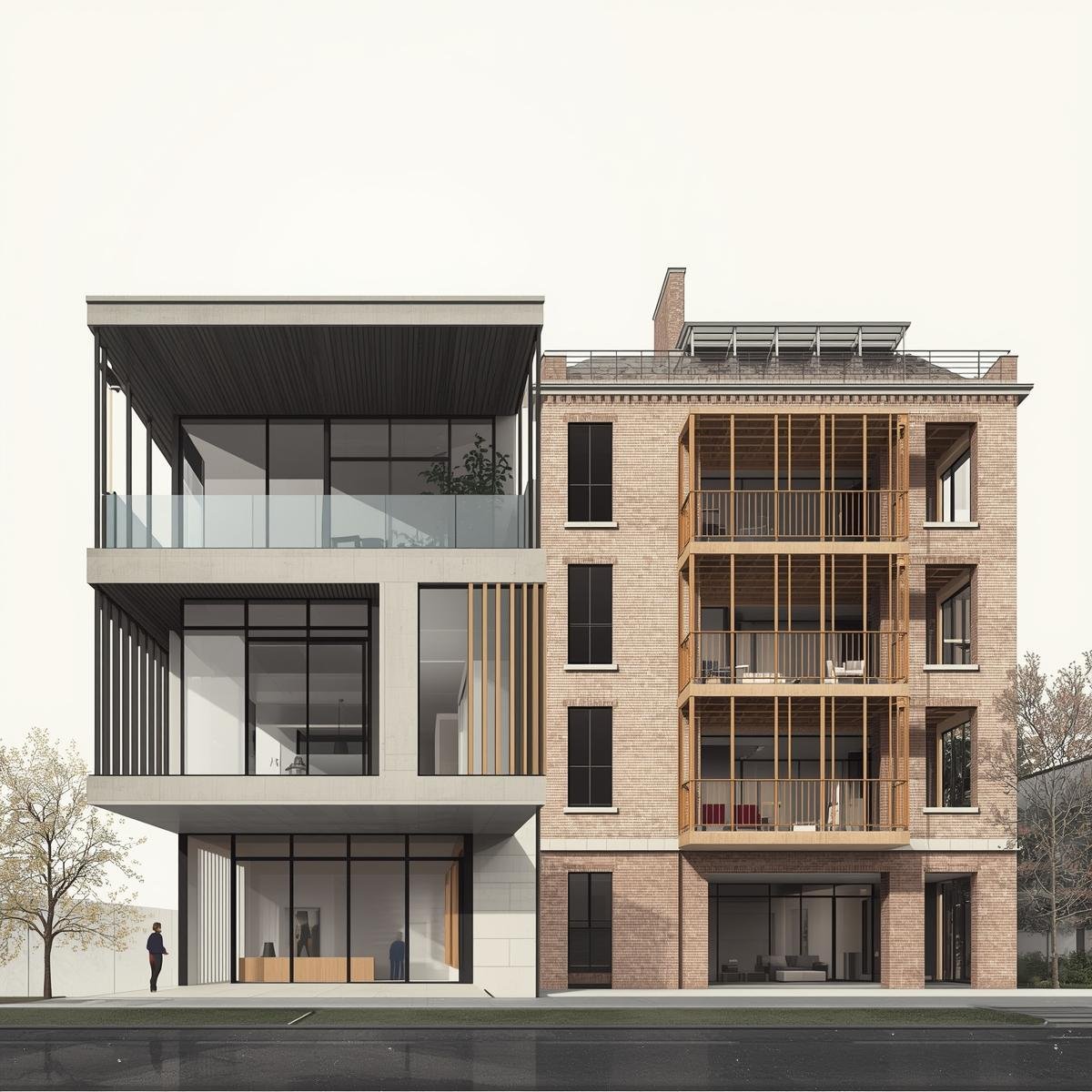

The Shift in Modern Construction
The construction industry is evolving rapidly with the demand for faster, cost-effective, and sustainable building solutions. One major innovation transforming industrial and commercial construction is the Pre-Engineered Building (PEB) system.
Traditionally, buildings were constructed using conventional methods — brick, cement, concrete, and steel — built entirely on-site. But today, PEB systems are becoming the preferred choice for factories, warehouses, offices, showrooms, schools, hospitals, and even homes.
At Kanakdhara Developer Pvt. Ltd., we specialize in both Pre-Engineered Buildings and conventional structures, helping clients choose the best solution based on their project goals, budget, and timeline.
Let’s explore how PEB differs from conventional construction — and which one is right for your next project.
What Is a Pre-Engineered Building (PEB)?
A Pre-Engineered Building (PEB) is a modern construction system where structural components like beams, columns, and frames are manufactured in a factory and assembled on-site.
These components are designed and fabricated using advanced technology, ensuring precision, uniform quality, and quick installation.
Common applications:
- Industrial sheds and factories
- Warehouses and storage units
- Commercial buildings
- Schools, hospitals, and large halls
- Cold storage facilities
PEBs are designed to meet specific load, climate, and usage requirements, offering strength, flexibility, and speed unmatched by conventional methods.
What Is Conventional Construction?
Conventional construction refers to the traditional method of building where all structural elements are constructed on-site using raw materials like cement, sand, steel, bricks, and concrete.
This approach involves manual labor, on-site fabrication, and longer timelines. While it’s ideal for residential and aesthetic projects, it can be time-consuming and costlier for large-scale or industrial needs.
Common applications:
- Residential houses and apartments
- Small commercial buildings
- Institutional or aesthetic structures requiring custom design
Key Differences Between PEB and Conventional Construction
Here’s a detailed comparison of Pre-Engineered Buildings (PEB) vs Conventional Construction:
Parameter | Pre-Engineered Buildings (PEB) | Conventional Construction |
Design & Engineering | Pre-designed and optimized using software for exact load and dimension. | Designed manually with more on-site adjustments. |
Speed of Construction | 50–60% faster due to off-site fabrication and easy assembly. | Slower as everything is built from scratch on-site. |
Cost Efficiency | Lower cost due to reduced labor, material wastage, and faster completion. | Higher cost because of labor intensity and longer duration. |
Quality Control | High-quality manufacturing under factory supervision. | Depends on site conditions and workmanship. |
Flexibility & Expansion | Easy to expand or modify. | Difficult and time-consuming to expand. |
Maintenance | Minimal maintenance, long-lasting steel structures. | Higher maintenance due to concrete wear and weathering. |
Sustainability | Eco-friendly; recyclable steel and less waste. | Generates more construction waste. |
Foundation Requirement | Lighter structure → smaller foundation needed. | Heavier load → larger, costlier foundation required. |
Advantages of Pre-Engineered Buildings (PEB)
PEBs have become the future of modern construction due to several strong advantages:
Speed and Efficiency
Since most parts are fabricated in factories, PEB structures can be installed in half the time of conventional construction. This ensures faster project delivery and earlier returns on investment.
Cost Savings
PEBs save cost through reduced labor, minimal material wastage, and shorter construction duration. Moreover, the lighter structure means lower foundation cost.
Durability and Strength
High-tensile steel used in PEBs is resistant to corrosion, fire, and seismic activity. These buildings can withstand extreme weather conditions with minimal maintenance.
Flexibility and Expansion
PEB systems allow easy modification or expansion in the future. Need to add a new bay or section? It can be done without major structural changes.
Environment-Friendly
PEBs are built with recyclable steel and generate significantly less waste, making them sustainable and eco-conscious solutions.
Advantages of Conventional Construction
Although PEBs are modern and efficient, conventional construction still holds value for certain types of projects:
Custom Design Freedom
Traditional construction allows intricate architectural designs, shapes, and finishes — perfect for residential buildings, villas, and heritage structures.
Readily Available Materials
Cement, bricks, and sand are easily available in all regions, making conventional building accessible and familiar.
Better for Small Projects
For smaller-scale buildings or homes, traditional methods are often more practical and budget-friendly.
Applications: Where Each Method Works Best
Pre-Engineered Buildings (PEB):
- Industrial factories and manufacturing units
- Warehouses and logistics centers
- Agricultural buildings
- Large commercial showrooms
- Metro stations, auditoriums, and airports
Conventional Construction:
- Houses and apartments
- Schools and hospitals requiring aesthetic interiors
- Retail shops and office complexes
- Renovations and extensions of old buildings
At Kanakdhara Developer Pvt. Ltd., we guide clients to choose the right system based on project type, function, timeline, and cost priorities.
PEB: The Smart Future of Construction
The growing demand for fast-track construction and cost efficiency has made PEB the preferred solution for industries and government infrastructure.
PEB structures can be designed to meet custom load, design, and insulation requirements, while still being lightweight and durable.
With modern design tools and precision fabrication, Kanakdhara Developer delivers PEB projects that are efficient, aesthetic, and long-lasting — from concept to completion.
Why Choose Kanakdhara Developer Pvt. Ltd. for PEB and Conventional Projects
At Kanakdhara Developer Pvt. Ltd., we bring technical expertise, design innovation, and construction excellence to every project. Whether you choose PEB or conventional construction, we ensure:
- Precise design and planning by expert architects
- Cost-effective material sourcing
- On-time project execution
- Compliance with all safety and quality standards
We have successfully executed a range of industrial, commercial, and institutional projects across Lucknow, Ayodhya, Kanpur, Gorakhpur, Prayagraj, and Unnao, delivering durable and high-performance structures every time.
Which Is Right for You — PEB or Conventional Construction?
If your goal is speed, scalability, and long-term savings, PEB is the clear choice.
If you prioritize aesthetic detailing, complex architecture, or small-scale residential construction, conventional methods may suit you better.
At Kanakdhara Developer, our team evaluates every client’s requirements and budget to recommend the most efficient and suitable construction approach.
Conclusion: Building Smarter with Kanakdhara Developer Pvt. Ltd.
Both Pre-Engineered Buildings (PEB) and Conventional Construction have their own advantages. However, as India moves toward industrial growth and infrastructure expansion, PEB is emerging as the preferred method for modern, cost-efficient, and sustainable construction.
With the right partner like Kanakdhara Developer Pvt. Ltd., you can ensure your project — whether PEB or traditional — is built with quality, precision, and value.
Build smart. Build strong. Build with Kanakdhara.