

Managing rising electricity bills has become a priority for homeowners, especially in rapidly developing cities where energy needs are growing. While most people focus on energy-efficient appliances, the truth is that your interior design plays a much bigger role in controlling energy consumption. Smart interiors—designed with lighting, ventilation, materials, and spatial planning in mind—can significantly reduce your monthly electricity bills.
This detailed, practical guide explains how thoughtfully designed interiors can help you save energy, cut down electricity costs, and create a more comfortable home environment.
1. The Power of Smart Interiors in Energy Efficiency
Smart interiors are not just about beauty—they are about functionality and efficiency. By planning spaces that support natural light, ventilation, and insulation, you can reduce reliance on artificial lighting and cooling systems.
Well-designed interiors can reduce energy consumption by 30–40% depending on the choices you make. This makes interior planning an essential part of long-term energy savings.
2. Maximize Natural Light to Reduce Artificial Lighting Needs
Increasing natural light is one of the easiest and most effective ways to save electricity.
Tips to Boost Natural Light:
a. Larger and Well-Placed Windows
Install windows on walls that capture the most sunlight. South-facing openings are best for consistent daylight.
b. Light-Colored Walls and Ceilings
Shades of white, beige, and pastels reflect more sunlight, making the room naturally brighter.
c. Use Glass Partitions
Glass partitions allow sunlight to flow from room to room while keeping spaces visually open.
d. Mirror Placement
Keep mirrors opposite windows to multiply the amount of natural light entering the room.
With these techniques, your daytime electricity consumption for lighting can drop by nearly 40%.
3. Effective Ventilation for Lower Cooling Costs
Cooling appliances like air conditioners consume a major portion of household electricity. Smart ventilation reduces heat buildup naturally.
Cross Ventilation
Windows on opposite walls keep air flowing continuously, reducing the need for AC.
Ventilation Jalis and Louvers
These allow fresh air to enter while blocking harsh sunlight.
Higher Ceilings
High ceilings trap hot air above head level and keep your living areas cooler.
Indoor Plants
Plants like Areca Palm and Ferns cool the air naturally and reduce indoor heat.
Better ventilation can cut cooling costs by 25–30%, especially during summers.
4. Switching to Energy-Efficient Lighting Systems
Lighting is a major part of any home’s electricity consumption, especially in spaces that stay illuminated for long hours. Replacing outdated lighting systems with energy-efficient alternatives can drastically improve power savings. LED lights consume far less electricity compared to halogen or fluorescent lights and generate minimal heat, which helps maintain a cooler environment indoors.
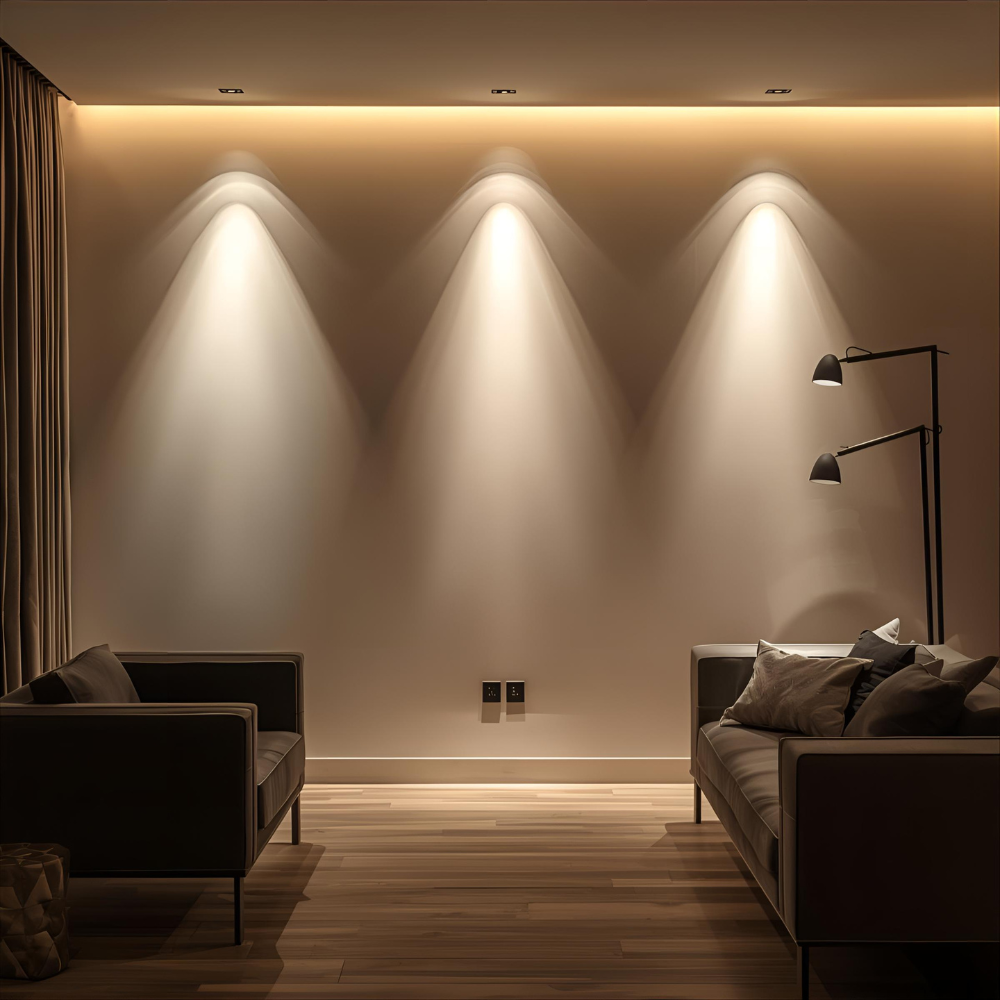
Layered lighting is another smart interior concept that helps control energy usage. When you incorporate multiple light sources such as ceiling lights, wall lights, an occasional lamp, or a concealed cove light, you gain the freedom to use only the amount of light you need. Instead of turning on a bright ceiling fixture for every task, you can choose smaller lights for reading, relaxing, or performing daily activities.
Smart lighting systems, including dimmers and automated controls, further enhance efficiency. Dimmers allow you to adjust the brightness based on the time of day or mood, preventing unnecessary energy consumption. Motion sensors in less-used areas such as bathrooms, balconies, and storage spaces automatically switch lights on and off, eliminating wastage altogether.
5. Designing Intelligent Layouts for Better Energy Flow
The layout of your home influences how well it utilizes natural lighting and ventilation. Poorly planned spaces can block airflow and sunlight, increasing your dependence on electrical appliances. Smart interiors encourage open layouts that allow light and air to circulate freely. When large pieces of furniture are placed away from windows, natural ventilation remains uninterrupted.
Open layouts also reduce the number of artificial lighting points required, as light can travel across the space more easily. Smart storage solutions, such as built-in cabinets, keep rooms organized and prevent clutter from blocking ventilation pathways. A well-thought-out layout ensures that your home remains bright and airy naturally, reducing the need for fans, ACs, and artificial lighting.
6. Selecting Heat-Reflective and Insulating Materials
The materials used in your home greatly influence indoor temperature. Some materials absorb heat, making rooms warmer, while others reflect or resist heat, keeping interiors comfortable with minimal cooling needs. Insulated wall panels help reduce heat transfer from the outside, ensuring that your home stays cooler during summer and warmer during winter.
Installing double-glazed or UPVC windows provides excellent insulation against outside heat. These windows maintain indoor temperatures efficiently, reducing the workload on air conditioners and heaters. Thermal curtains and blinds help block excess sunlight during peak hours, making them useful for bedrooms and living areas.
False ceilings provide additional insulation and reduce overall room temperature, especially in homes located in tropical climates. Using tiles or natural stone flooring also helps maintain a cooler indoor atmosphere, as these materials resist heat effectively. Choosing the right interior materials creates a long-term energy-saving environment.
7. Integrating Smart Home Technology for Efficient Energy Management
Technology has transformed the way modern homes operate. Smart home devices contribute significantly to energy conservation by automatically managing appliances based on usage patterns. Smart fans, smart lighting systems, and intelligent thermostats adjust their performance depending on temperature, occupancy, and time of day.
A smart thermostat, for example, can understand your cooling preferences and adjust the air conditioner accordingly, preventing energy wastage caused by excessive cooling. Similarly, smart plugs and power monitoring systems help you track and control energy consumption across all appliances. Automated curtains and blinds can open to let natural light in and close when sunlight becomes too harsh, maintaining a balanced indoor temperature.
Integrating these technologies with your interior design ensures your home remains energy-efficient and comfortable while reducing electricity expenses significantly.
8. Creating Energy-Efficient Kitchens and Bathrooms
Kitchens and bathrooms are two areas where electricity usage tends to be higher because of appliances, lighting, and water heating systems. In the kitchen, choosing light-colored finishes and reflective surfaces helps brighten the space naturally. Proper ventilation through windows or a well-placed chimney prevents heat buildup, reducing the need for exhaust fans or cooling appliances.
Under-cabinet lighting provides targeted brightness for cooking tasks without requiring large ceiling lights to stay on constantly. Selecting energy-efficient appliances with high star ratings further reduces electricity consumption.
In bathrooms, natural ventilation helps reduce humidity and improves air quality. Motion-sensor lights ensure that electricity is used only when necessary. Installing a solar water heater, if feasible, significantly reduces energy usage and offers long-term financial benefits.
9. Using Sustainable Furniture and Natural Materials for Better Insulation
Sustainable materials not only benefit the environment but also improve energy efficiency in your home. Furniture made of bamboo or cane stays cooler than synthetic materials. Natural fiber rugs made of cotton or jute provide comfort without trapping heat, unlike synthetic carpets.
Decor items made of earthen clay, terracotta, or traditional ceramics help regulate temperature naturally. Recycled wood and eco-friendly panels produce fewer toxins and offer better insulation, creating a healthier and more energy-efficient interior environment.
10. Maintaining Your Home Regularly for Continued Energy Efficiency
Even the most well-designed home requires regular maintenance to remain energy-efficient. Air conditioners, for example, consume significantly more electricity when filters are clogged. Regular cleaning ensures smooth airflow and prevents the unit from overworking. Fans, lights, and electrical systems also need periodic servicing to maintain optimal performance.
Checking for air leaks around windows and doors helps prevent cool air from escaping, reducing the effort required by your cooling system. Routine inspections ensure that your home continues to operate efficiently and your electricity bills remain low.
Conclusion: Smart Interiors Lead to Smarter Savings
Smart interiors are an investment that offers long-term benefits in comfort, cost savings, and sustainability. By planning your home to maximize natural light, improve ventilation, incorporate smart technology, and use energy-efficient materials, you can significantly reduce your electricity bills. Every thoughtful decision contributes to creating a home that is both beautiful and energy-conscious.