
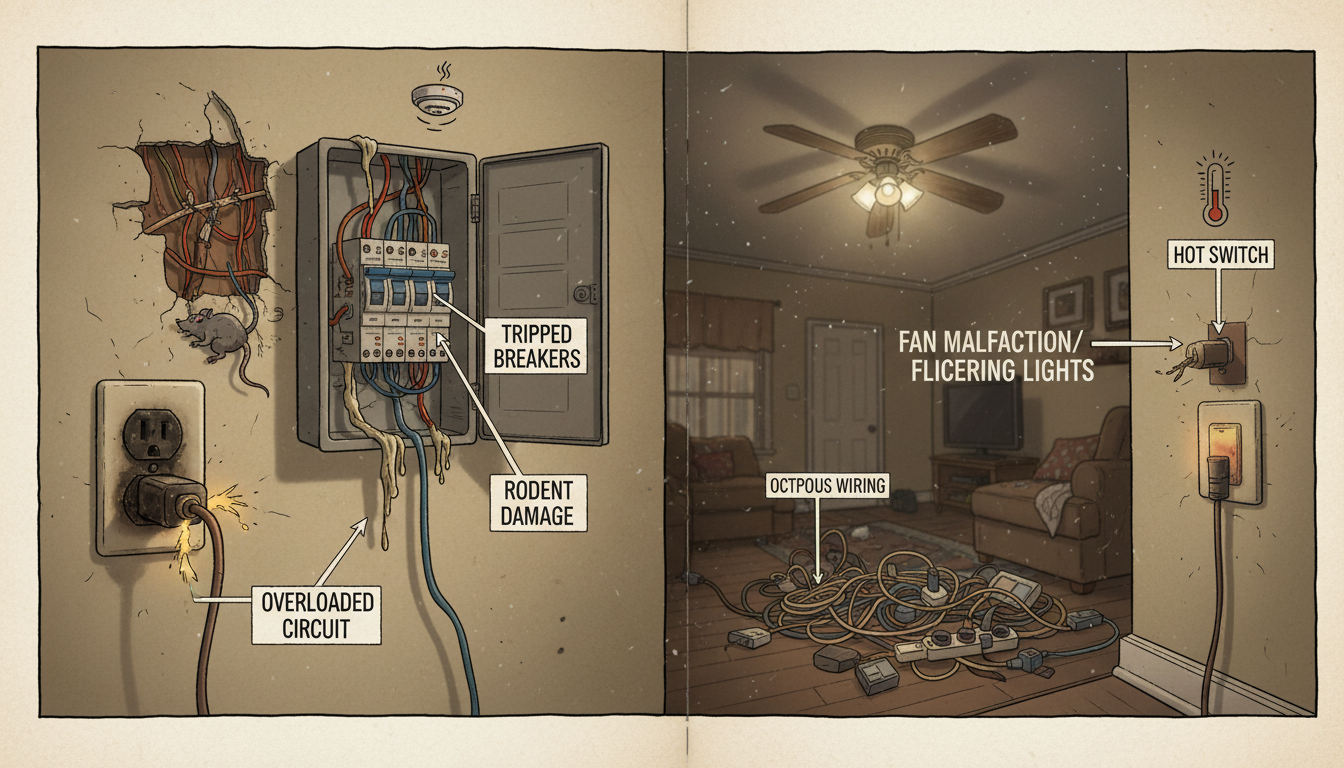

Understanding the most frequent electrical problem in homes is essential for safety, comfort, and preventing long-term damage. Whether it’s flickering lights, tripping breakers, burnt smells, or overloaded circuits, electrical issues can appear small at first but often signal deeper faults behind walls, panels, and wiring. Many people try DIY methods without knowing the risks, which can lead to expensive repairs or hazardous situations. This blog explains the most common electrical faults, the reasons behind them, and practical fixes that any homeowner can follow carefully.
Good electrical maintenance starts with recognizing symptoms early. Each electrical problem in homes has a cause, and understanding that cause is the key to fixing it correctly. Let’s explore the real-world issues that occur in modern homes and how to deal with them safely and effectively.
Flickering or Dimming Lights
One of the most visible signs of an electrical problem in homes is flickering or dimming lights. This usually happens when there is loose wiring, a faulty bulb, or overloaded circuits. In some cases, it can indicate that high-power appliances on the same circuit are drawing excess electricity.
Solution
Start by tightening the bulb or replacing it with a new one. If the flickering persists, check whether large appliances like refrigerators or AC units are connected to the same circuit. If the issue continues, the problem may involve loose wiring in the switchboard or ceiling, which requires a licensed electrician.
Frequently Tripping Circuit Breakers
A home’s breaker panel is designed to protect you. When breakers trip often, it usually signals an overload or short circuit. In older houses, it’s common because the wiring cannot support modern electricity demands.
Solution
Unplug appliances from the affected circuit and test them one by one. If a particular appliance causes the breaker to trip immediately, it may be faulty. To prevent overloads, distribute appliances across different circuits. If the breaker trips even with small loads, call a professional for circuit inspection, as this is a potentially dangerous electrical problem in homes.
Warm or Hot Electrical Outlets
No outlet should feel warm to the touch. When it does, it is often due to loose connections, internal damage, or excessive load on the outlet. Heat buildup can lead to melting, burning, or fire hazards.
Solution
Stop using the outlet immediately. Unplug all devices and have the outlet inspected. Replace old or damaged outlets with high-quality ones and avoid plugging too many high-wattage appliances into a single receptacle.

Buzzing Sounds in Switches or Outlets
Electrical systems should operate silently. A buzzing or humming sound indicates worn-out wiring, loose connections, or faulty switches. This is a serious electrical problem in homes because it suggests current is jumping across gaps, a condition known as arcing.
Solution
Turn off the switchboard and avoid using the affected outlet. Replace the faulty switch or socket. If buzzing continues after replacement, the underlying wiring needs professional inspection.
Electrical Shocks from Appliances or Switches
A mild shock while plugging in a device or touching a switch indicates grounding issues or faulty wiring. Even small shocks should never be ignored because they often signal a larger safety failure.
Solution
Unplug the appliance immediately. Test it in another outlet to confirm if the fault lies in the device or the wiring. If the outlet is giving shocks, hire an electrician to check grounding connections and repair wiring faults. Grounding issues are a major cause of electrical problem in homes.
High Electricity Bills Without Increased Usage
Unexpectedly high energy bills are a hidden electrical problem. This often happens due to leaking currents, outdated wiring, failing appliances, or power surges that force your electrical system to work harder.
Solution
Inspect old appliances for inefficiency and unplug devices when not in use. Consider an energy audit to identify the source of wasted electricity. Fixing poor wiring and upgrading appliances often reduces bills dramatically.
Burning Smell or Discolored Outlets
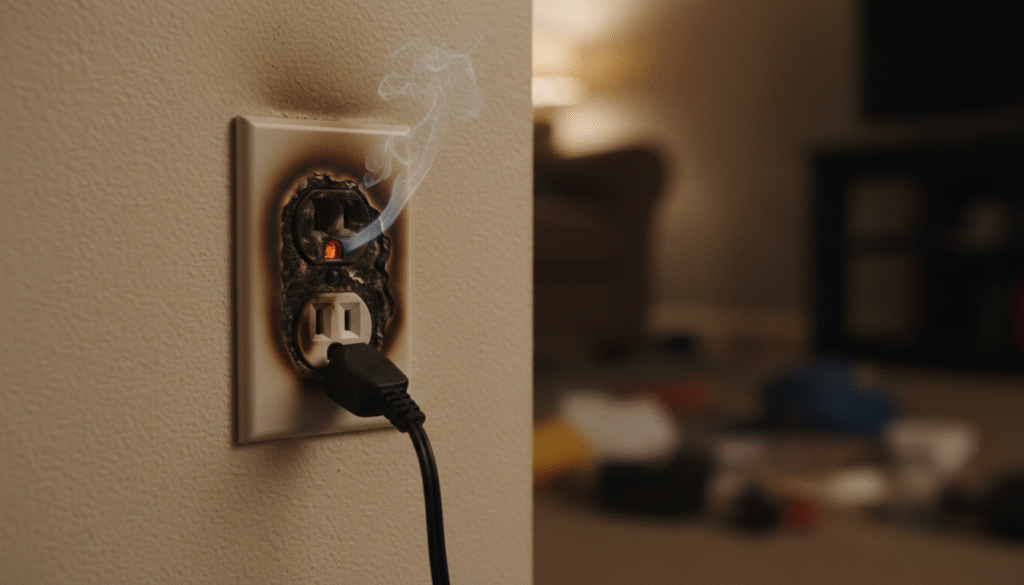
A burning smell, brown marks, or melted plastic around outlets or switches indicates overheating or sparking behind the board. This is one of the most dangerous forms of electrical problem in homes and may lead to fire hazards.
Solution
Turn off the main power supply immediately. Do not use the outlet under any circumstances. Contact an electrician to locate the fault, replace the wiring, and repair any heat-damaged components.
Light Bulbs Burning Out Frequently
If bulbs keep burning out faster than usual, the cause may be loose wiring, excessive voltage, or poor-quality light fixtures. Sometimes the wrong type of bulb is used for a particular holder.
Solution
Switch to LED bulbs and avoid using high-wattage options in small fixtures. Check if the voltage supplied to the fixture is correct. If bulbs still burn out, the wiring inside the ceiling box or holder must be inspected.
Dead Outlets or Partial Power Loss
Dead outlets are common in older houses and often indicate internal wiring breaks, tripped GFCI outlets, or burnt components. Sudden loss of power in one room can also be due to circuit overload.
Solution
Reset nearby GFCI outlets and check the breaker panel. If resetting does not work, internal wiring may be damaged. This type of electrical problem in homes requires rewiring of the affected section.
Overloaded Extension Cords
Many households depend on extension cords, especially in rooms with limited outlets. However, overloading them with high-power devices like heaters or microwaves is extremely dangerous.
Solution
Avoid connecting multiple heavy appliances to extension boards. Install additional outlets if needed, and use electrical strips with built-in surge protectors. Replace low-quality extensions with certified models.
Loose or Old Wiring Behind Walls
Invisible electrical issues are the most dangerous. Old or poorly installed wiring can lead to voltage drops, sparking, fires, and persistent electrical problem in homes. Many houses more than 15–20 years old have wiring that no longer meets safety standards.
Solution
Schedule a full inspection if your home is older or has frequent electrical disturbances. Rewiring older homes prevents major hazards and improves electrical efficiency. Make sure only licensed electricians handle rewiring work.
Power Surges and Frequent Voltage Fluctuations
Surges occur due to lightning, faulty appliances, grid issues, or internal wiring faults. These surges damage electronics, reduce appliance lifespan, and cause unsteady lighting.
Solution
Install surge protectors, voltage stabilizers, and quality MCBs. Unplug devices during storms. Check wiring and grounding if surges occur frequently. A persistent surge indicates a serious electrical problem in homes that needs professional diagnosis.

Humming Sounds from the Main Panel
The main electrical panel should not make continuous humming or crackling sounds. This usually indicates loose breakers, overloaded systems, or faulty panel components.
Solution
Do not open the panel yourself. A specialist should inspect the breaker contacts and identify faulty parts. Upgrading the panel may be necessary for homes with heavy appliance usage.
Why Fixing Electrical Problems Early Matters
Every electrical problem in homes—whether tiny or severe—has long-term effects. Small issues can develop into bigger hazards like burnt wiring, appliance failure, or electrical fires. Fixing problems early keeps your home safe, protects appliances, and improves overall electrical efficiency.
If you notice repeated issues such as flickering lights, warm outlets, or tripping breakers, your home may require a wiring upgrade. Understanding these symptoms and solutions helps homeowners act before the problem becomes dangerous.
Material Sheet for Home Electrical Repairs
Wiring Materials Needed
Copper wiring, high-quality insulation, switchboards, MCBs, RCCBs, GFCI outlets, electrical tape, conduit pipes, junction boxes.
Tools Required
Voltage tester, wire stripper, insulated screwdriver, pliers, drilling tools, non-contact tester.
Safety Materials
Gloves, protective glasses, insulated mats, fire extinguisher (Class C rated).
All materials should follow BIS (Bureau of Indian Standards) safety ratings.
Conclusion
Electrical issues are a part of every home, but knowing how to recognize early signs can prevent accidents and costly repairs. Whether it’s flickering lights, buzzing switches, or dead outlets, each electrical problem in homes has a cause that requires timely action. Some issues can be handled with simple fixes, while others require professional help. By understanding the symptoms, using quality materials, and prioritizing safety, homeowners can maintain a secure and efficient electrical system that lasts for years.