
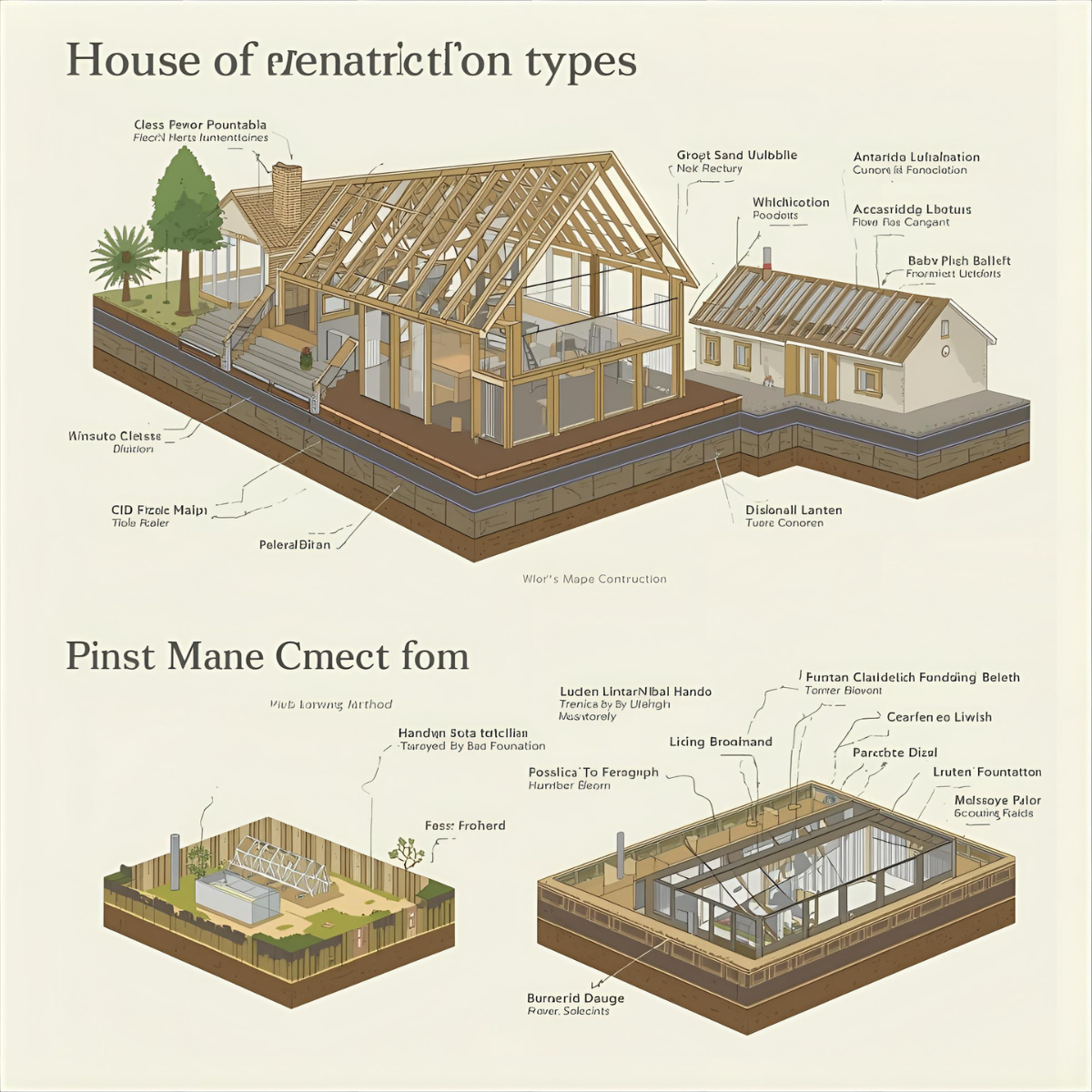

Every great building begins beneath the ground. No matter how stunning your design or how premium your materials, your structure’s safety and lifespan depend on one essential element — the foundation.
The foundation is the unseen hero that transfers the load of the entire structure to the ground and keeps it stable under different weather and soil conditions. Choosing the right foundation type is a complex process influenced by soil type, load, moisture, environment, and construction methods.
As one of the best construction services in Lucknow, Kanakdhara Developers Pvt. Ltd. understands that every soil tells a different story — and each demands a different foundation solution. In this blog, we will explore:
- Different types of foundations
- The soil conditions they suit best
- The steps to choose the right foundation
- Expert insights from Lucknow’s leading construction professionals
Why Soil Type Matters in Construction
Before laying the foundation, understanding the type and behavior of soil beneath your site is vital. The soil is not just dirt; it’s a complex mixture of minerals, organic matter, and moisture that reacts differently under pressure.
The soil type determines the strength, durability, and stability of your structure. Poor soil choices or incorrect foundations can lead to cracks, settlement issues, or even total structural failure over time.
Key Soil Types in Uttar Pradesh and What They Mean
In Lucknow and surrounding areas like Ayodhya, Kanpur, Prayagraj, and Gorakhpur, the following soils are most common:
- Clay Soil: High moisture retention, low bearing capacity. It expands and shrinks with water content.
- Sandy Soil: Excellent drainage, moderate bearing capacity but prone to shifting.
- Loamy Soil: Ideal for construction — balanced sand, silt, and clay mixture.
- Silty Soil: Smooth texture but poor drainage; needs deep foundations.
- Rocky Soil: Strong and stable; excellent for most foundation types.
Before any project begins, Kanakdhara Developers — known for the best construction services in Lucknow — conducts thorough soil testing using modern geotechnical methods.
Main Steps Before Choosing the Right Foundation
A solid structure begins with a well-planned process. Here are the steps professionals follow before selecting a foundation:
Step 1: Soil Investigation
The first step involves collecting soil samples and testing for properties like bearing capacity, moisture content, compaction, and type.
Step 2: Load Calculation
Engineers estimate the total weight of the structure (dead load + live load) to determine how much stress the soil must bear.
Step 3: Foundation Depth Selection
Depending on soil strength and groundwater level, engineers decide whether to use a shallow or deep foundation.
Step 4: Design and Structural Analysis
The foundation type is designed to distribute loads evenly, minimize settlement, and resist lateral forces.
Step 5: Quality Testing and Material Selection
High-quality materials like reinforced concrete, steel, and waterproofing agents ensure durability and longevity.
Kanakdhara Developers meticulously follow each of these steps to ensure every project meets national standards and lasts for generations.
Types of Foundations Based on Soil Conditions
Foundations are broadly classified into two main categories — shallow and deep foundations. Let’s explore each type and understand where they work best.
1. Shallow Foundations
Shallow foundations are constructed close to the ground surface and are ideal when the topsoil has sufficient bearing capacity to support the structure.
Best Suited For:
- Strong, compact soils (like sandy or gravelly soils)
- Light to medium structures (like residential houses, villas, and small offices)
Types of Shallow Foundations:
a. Isolated Footing Foundation
Used for individual columns, these are the simplest and most economical types of foundations.
Suitable Soil: Firm soil with uniform load distribution.
Steps Involved:
- Mark column locations
- Excavate to required depth
- Lay PCC (plain cement concrete)
- Place reinforcement and pour concrete
Kanakdhara’s experts recommend isolated footings for small houses where loads are moderate.
b. Combined Footing
When two or more columns are close together and their footings overlap, a combined footing is constructed.
Suitable Soil: Firm soils with limited space between columns.
Common Use: Commercial or small industrial buildings.
This type helps distribute loads evenly between multiple columns and prevents unequal settlement.
c. Strap (Cantilever) Footing
Here, individual footings are connected with a strap beam to balance uneven loads.
Best For: Unequal column loads or when boundary limits space.
Common Use: Houses or buildings near property lines.
This foundation requires precise alignment — a key quality maintained by the best construction services in Lucknow.
d. Raft or Mat Foundation
A raft foundation spreads the load over the entire building area. It acts like a single large footing that supports multiple columns.
Best For: Soils with low bearing capacity (like clay or silty soils).
Common Use: High-rise buildings, basements, and industrial complexes.
Key Benefits:
- Prevents differential settlement
- Ideal for expansive or loose soil
- Distributes loads evenly
Kanakdhara Developers often use raft foundations in Lucknow’s soft clay areas to ensure long-term stability.
2. Deep Foundations
When surface soils are weak, and stronger strata are deeper, deep foundations are used to transfer the load to deeper, stable layers.
Best Suited For:
- Weak or compressible soils
- High-rise buildings, bridges, and heavy industrial structures
- Flood-prone or waterlogged areas
Types of Deep Foundations:
a. Pile Foundation
Pile foundations consist of long, slender columns made of concrete, steel, or timber, driven deep into the ground.
Suitable Soil: Clayey or loose sand soils with low bearing capacity.
Steps:
- Drive piles using hydraulic hammers
- Connect pile caps
- Pour concrete for structural stability
Advantages:
- Transfers load to deeper, stable strata
- Reduces settlement and increases durability
At Kanakdhara Developers, engineers use modern pile driving machines for precision and speed, ensuring that even in Lucknow’s water-rich regions, the foundation remains strong.
b. Pier Foundation
Pier foundations are cylindrical columns supporting heavy loads where deep bearing strata are at a moderate depth.
Best For: Bridges, large tanks, or industrial projects.
Steps:
- Bore holes
- Insert steel cages
- Pour concrete to form piers
It’s less expensive than pile foundations and works best where hard soil is reachable within moderate depth.
c. Caisson (Well) Foundation
Well foundations are used underwater or in riverbeds for bridges and marine structures.
Best For: River, harbor, or coastal constructions.
Steps:
- Sink pre-fabricated wells (caissons)
- Remove soil inside
- Fill with concrete to create a solid base
This technique provides stability against water pressure, waves, and scouring — one of the most complex foundation steps handled expertly by the best construction services in Lucknow.
d. Drilled Shaft (Bored Pile) Foundation
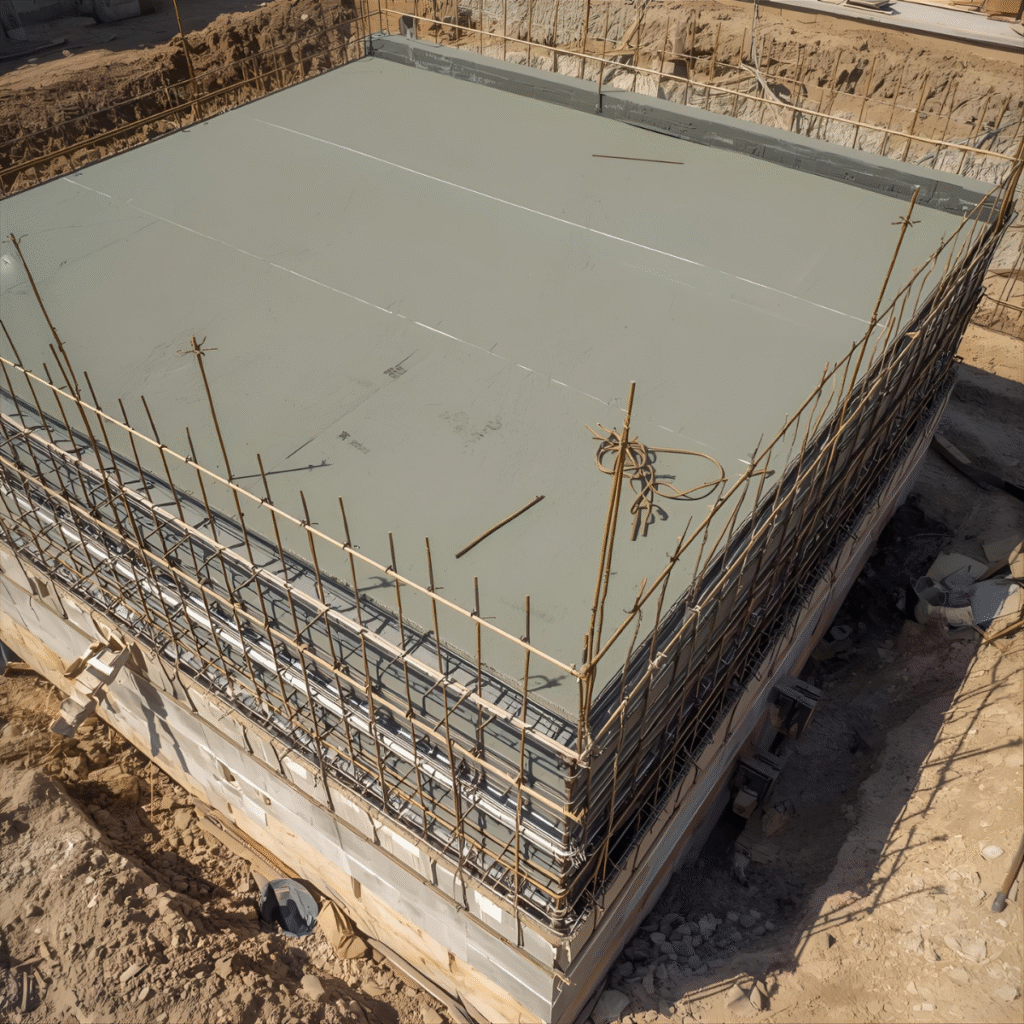
These are deep cylindrical holes filled with reinforced concrete.
Suitable Soil: Loamy or silty soils.
Benefits:
- Supports heavy vertical and lateral loads
- Produces minimal vibration (ideal for urban areas)
This is a modern deep foundation method widely used in commercial towers and hospital constructions.
3. Special Foundation Types
In some areas, soil conditions demand customized foundation techniques.
a. Grillage Foundation
A grillage foundation uses multiple layers of steel beams (grills) embedded in concrete to spread heavy loads.
Best For: Heavy columns, bridges, or industrial machinery.
Steps:
- Lay steel grill layers
- Fill concrete between grills
- Cure and waterproof
This foundation provides high strength and load distribution at a relatively shallow depth.
b. Under-Reamed Pile Foundation
Commonly used in clayey soils that expand and contract with moisture, this foundation has bulbs (under-reams) at intervals along its length to resist uplift.
Best For: Expansive black cotton or clay soils.
Used In: Residential buildings in Lucknow’s clay zones.
This technique ensures stability during seasonal changes — a hallmark of Kanakdhara’s quality foundation engineering.
Comparing Foundation Types by Soil
Soil Type | Recommended Foundation Type | Remarks |
Sandy Soil | Shallow, Isolated Footing | Good drainage and compaction |
Clay Soil | Pile or Raft Foundation | Handles expansion and shrinkage |
Loamy Soil | Shallow or Raft | Ideal for balanced load |
Silty Soil | Deep (Pile or Pier) | Needs strong base due to poor drainage |
Rocky Soil | Shallow Footing | Excellent stability |
Key Engineering Steps for Foundation Construction
Building a durable foundation involves precision, timing, and experience. Here’s how professionals at Kanakdhara Developers approach it:
- Site Preparation: Clearing, leveling, and marking boundaries.
- Excavation: Digging according to the foundation plan and depth.
- Soil Treatment: Stabilizing soil using sand, gravel, or concrete.
- Formwork Installation: Setting molds for concrete pouring.
- Reinforcement Placement: Laying steel bars for structural strength.
- Concrete Pouring and Curing: Using quality concrete mix and adequate curing time.
- Waterproofing and Backfilling: Protecting the foundation against moisture.
Each of these steps ensures the foundation is resistant to settlement, water damage, and environmental pressure.
Common Foundation Problems and Solutions
Even the best foundation can face challenges if not designed or executed properly. Here’s how the best construction services in Lucknow prevent them:
Problem | Cause | Solution |
Settlement Cracks | Weak soil or uneven load | Proper soil testing & load analysis |
Water Seepage | Poor drainage or waterproofing | Waterproof layers & drainage systems |
Structural Tilt | Incorrect pile depth | Re-leveling and structural assessment |
Erosion | Poor site grading | Soil stabilization and retaining walls |
Kanakdhara Developers takes a proactive approach — identifying risks before they arise and addressing every challenge with engineering precision.
Why Choose Kanakdhara Developers for Foundation & Construction
At Kanakdhara Developers Pvt. Ltd., we believe that the strength of a building lies beneath its surface. As a trusted name offering the best construction services in Lucknow, our process combines engineering excellence, modern technology, and local soil expertise.
Our Advantages:
- Advanced geotechnical soil testing
- Custom foundation design for every project type
- Expert supervision at all construction stages
- Quality control and safety compliance
- Experience across residential, commercial, and institutional projects
From house foundations in Lucknow to large-scale industrial bases in Kanpur or Prayagraj, our skilled engineers and architects ensure every foundation stands the test of time.
The foundation is more than concrete — it’s the backbone of your dream project. Selecting the right foundation type based on soil conditions ensures safety, longevity, and structural integrity.
When you choose Kanakdhara Developers Pvt. Ltd., you’re choosing the best construction services in Lucknow, guided by expertise, modern tools, and the right steps for every stage of construction.
Whether it’s a home, school, hospital, or industrial building, our team ensures your foundation is as strong as your vision.