
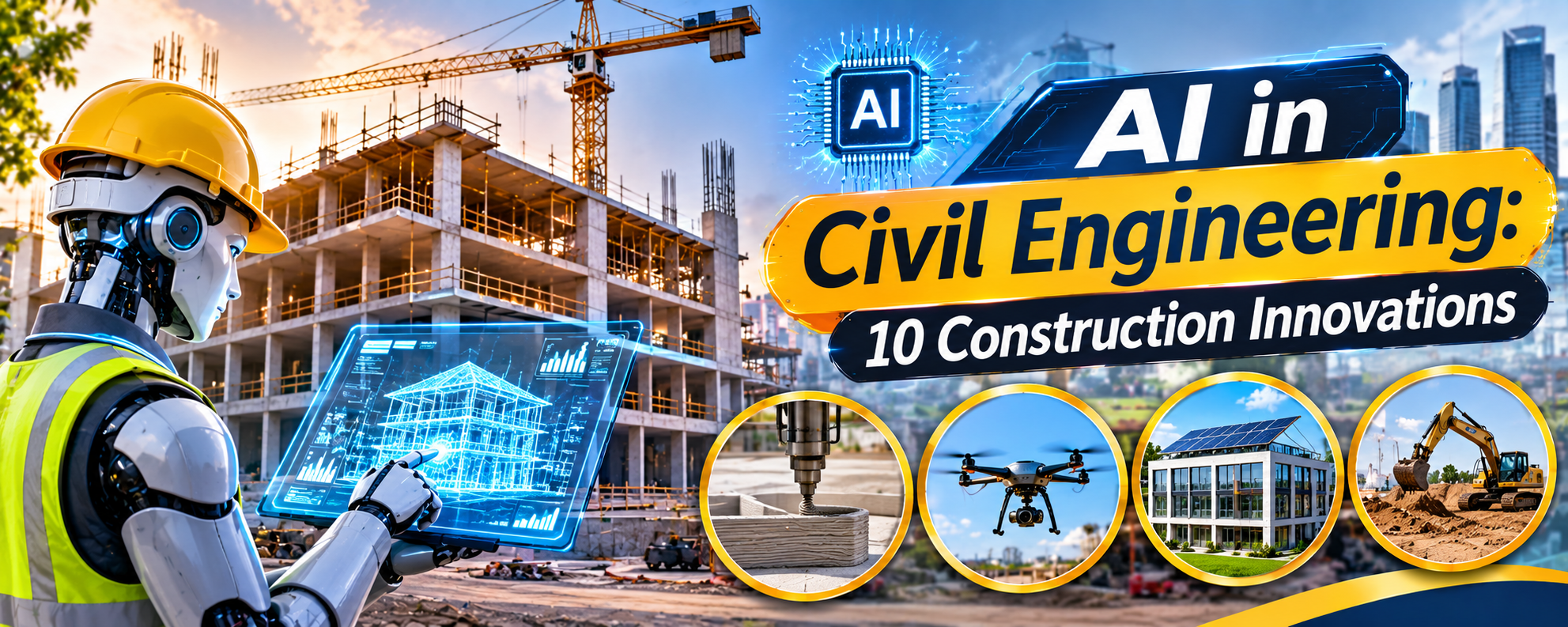

The construction industry is entering a new technological era where artificial intelligence (AI) is changing how buildings are designed, planned, constructed and maintained. Traditionally, civil engineering projects have depended heavily on manual calculations, engineering drawings, physical site inspections, experience-based decisions and conventional project management methods. Although these methods remain important, they can sometimes involve time-consuming processes, coordination difficulties, calculation errors and unexpected project delays.
Today, artificial intelligence is helping civil engineers, architects, contractors and construction companies improve these processes through intelligent software, automated systems, predictive analytics and real-time data analysis.
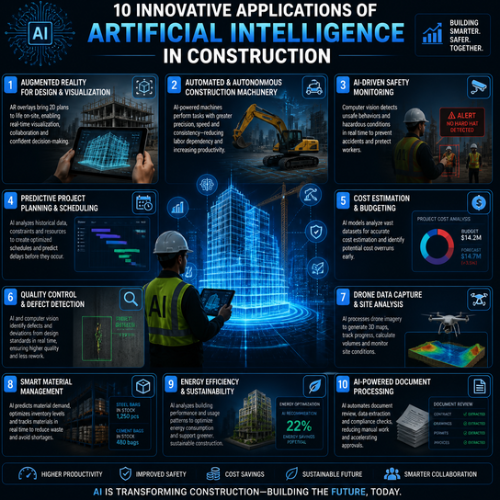
From generating building designs and estimating construction costs to monitoring structural safety and identifying potential project risks, AI is becoming an important technology in modern construction.
For example, AI-powered software can analyse project drawings, identify possible design conflicts, estimate material requirements and help project managers monitor construction progress. Similarly, computer vision systems can analyse site photographs and videos to identify safety violations and visible construction defects.
However, AI is not replacing civil engineers or architects. Instead, it provides additional tools that help professionals make better-informed decisions, reduce repetitive work and improve project efficiency.
Let’s explore 10 important ways artificial intelligence is transforming civil engineering and the construction industry.
10 Ways Artificial Intelligence Is Transforming Construction
1. AI-Powered Architectural Design and Building Planning
One of the biggest applications of AI in civil engineering is architectural design and building planning.
Traditionally, architects prepare building layouts, elevations, floor plans and structural concepts using specialised design software and their professional experience. Creating multiple design alternatives can take considerable time, particularly when a project has specific requirements related to plot dimensions, room sizes, ventilation, sunlight and construction budgets.
AI-powered design tools can analyse these requirements and generate multiple design alternatives within a shorter period.

For example, when planning a residential building on a 1,500-square-foot plot, AI-assisted design software can help explore different room arrangements, circulation patterns, window positions and space utilisation options.
Architects can evaluate these alternatives and make adjustments according to client requirements, local building regulations and practical construction considerations.
Practical applications:
Generating alternative floor plans.
Optimising room layouts and space utilisation.
Analysing natural lighting and ventilation.
Exploring different building elevations.
Supporting sustainable architectural planning.
Popular technologies: Generative design, AI-assisted CAD tools and computational design software.
2. AI-Based Construction Cost Estimation and Material Calculation

Construction cost estimation is one of the most important stages of any residential or commercial project.
A small calculation error in quantities, material requirements or labour costs can affect the overall project budget. Traditionally, quantity surveyors and civil engineers calculate quantities from architectural and structural drawings using manual methods and spreadsheets.
AI-assisted estimation systems can help automate parts of this process.
By analysing digital drawings, BIM models and historical project information, these systems can assist in identifying quantities of materials such as cement, steel, bricks, concrete, tiles and finishing products.
For example, during the planning of a G+2 residential building, AI-assisted tools can help organise quantity information for different construction activities, compare estimated costs and identify possible budget variations.
However, estimates still require professional verification because actual quantities depend on drawing revisions, specifications, construction methods, wastage and site conditions.
Practical applications:
Preliminary construction cost estimation.
Material quantity calculations.
Budget comparison between design alternatives.
Identification of potential cost overruns.
Preparation of project cost reports.
Popular technologies: AI-assisted quantity takeoff, estimating platforms and BIM-based cost estimation.
3. AI in Structural Engineering and Building Safety Analysis
Structural safety is essential for every construction project. Civil and structural engineers must ensure that buildings can safely withstand expected loads and environmental conditions.
AI can support structural engineering by analysing large datasets, identifying patterns and assisting with design optimisation.
For example, AI-assisted engineering workflows can evaluate different structural configurations and help engineers compare their performance under specified loading conditions.
Machine learning can also be used with structural health monitoring data to identify unusual changes in vibration, displacement, strain or other measured parameters.

For a commercial building, sensors installed at selected structural locations can collect information over time. AI-based monitoring systems can analyse this information and flag patterns that may require further engineering inspection.
It is important to understand that AI predictions do not replace structural calculations, approved design procedures or inspections by qualified structural engineers.
Practical applications:
Supporting structural design optimisation.
Analysing structural monitoring data.
Identifying unusual structural behaviour.
Supporting maintenance planning.
Assessing potential structural risks.
Popular technologies: Machine learning, structural health monitoring and AI-assisted engineering analysis.
4. AI-Powered Construction Project Management
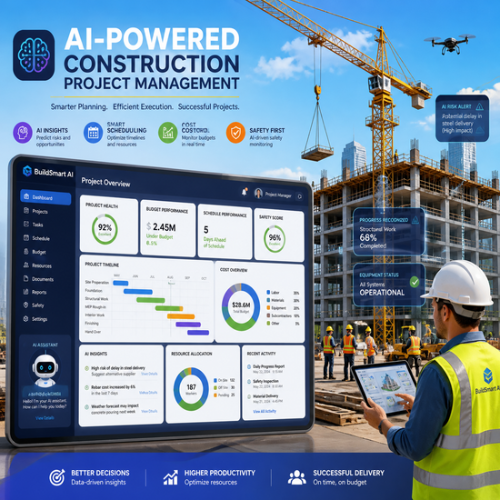
Managing a construction project involves coordinating architects, engineers, contractors, suppliers, labour teams and clients.
A project manager must continuously monitor construction activities, material availability, labour productivity, expenses and project timelines.
Traditional project management often depends on site reports, phone calls, spreadsheets and periodic meetings. These methods can make it difficult to identify delays or coordination problems early.
AI-powered project management systems can analyse project schedules, progress reports, resource availability and historical performance to identify possible risks.
For example, if brickwork is delayed because materials have not reached the site, an AI-assisted system can help identify how the delay may affect subsequent plastering, electrical and finishing activities.
Some systems can also generate progress summaries, identify schedule deviations and support resource planning.
Practical applications:
Monitoring construction progress.
Predicting potential project delays.
Tracking labour and resource utilisation.
Analysing project expenses.
Generating automated progress reports.
Popular technologies: AI-enabled project management platforms, predictive analytics and automated reporting tools.
5. AI and BIM Technology for Better Construction Coordination
Building Information Modeling (BIM) has already transformed how architects, structural engineers and MEP consultants coordinate building projects.
BIM creates a digital representation of a building containing information about its geometry, components and associated project data.
When AI capabilities are integrated into BIM workflows, professionals can perform more advanced analysis and automate selected coordination tasks.
For example, during the design of a commercial building, architectural, structural, plumbing, electrical and HVAC models must work together.
AI-assisted systems can help analyse model information, identify potential coordination issues and highlight areas that require further investigation.

This can be particularly useful for identifying clashes between structural beams, electrical conduits, plumbing pipes and HVAC ducts before construction begins.
Practical applications:
Identifying potential design conflicts.
Improving coordination between consultants.
Supporting automated model checking.
Analysing construction sequences.
Reducing avoidable site-level rework.
Popular technologies: BIM, machine learning, automated model checking and cloud-based collaboration.
6. AI-Based Construction Site Monitoring and Safety Management
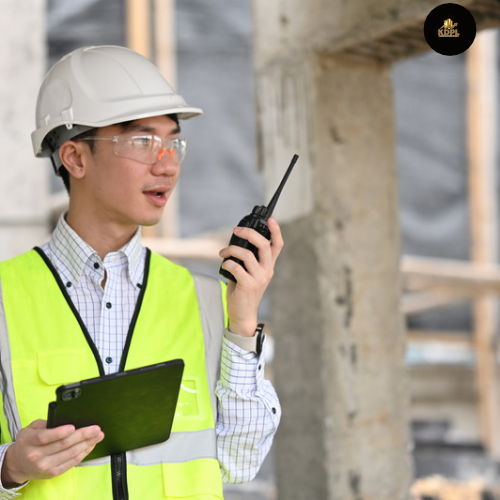
Construction sites involve several safety risks, including working at heights, operating heavy machinery, handling materials and working around electrical installations.
Regular site inspections are essential, but large projects can make continuous monitoring difficult.
AI-powered computer vision systems can analyse images and video feeds from site cameras to identify certain unsafe conditions.
For example, trained vision systems may detect whether workers are wearing helmets and high-visibility jackets in designated areas. They may also identify restricted-zone entry, unsafe proximity to machinery or other visible hazards.
Some systems can send alerts to site supervisors when predefined safety conditions are detected.
However, camera-based monitoring has limitations. Poor lighting, obstructed views and incorrect detection can affect accuracy. Human supervision remains necessary.
Practical applications:
Monitoring personal protective equipment (PPE).
Identifying restricted-area access.
Detecting selected unsafe activities.
Monitoring equipment movement.
Supporting construction safety audits.
Popular technologies: Computer vision, AI video analytics, smart cameras and automated alert systems.
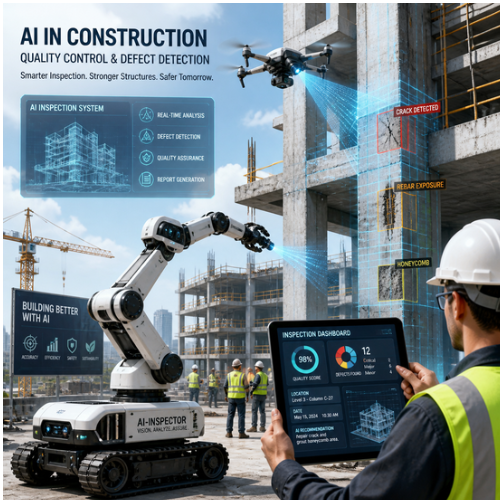
7. AI in Construction Quality Control and Defect Detection
Maintaining construction quality requires regular inspection at every stage, including excavation, reinforcement, concreting, brickwork, plastering, waterproofing and finishing.
Traditional quality inspection depends on engineers and site supervisors physically checking construction work against approved drawings and specifications.
AI can support this process by analysing photographs, videos, sensor information and digital inspection records.
For example, computer vision systems can be trained to identify visible surface cracks, concrete defects, uneven finishes or certain workmanship irregularities.
Similarly, AI-based image comparison can help assess differences between planned construction progress and actual site conditions.
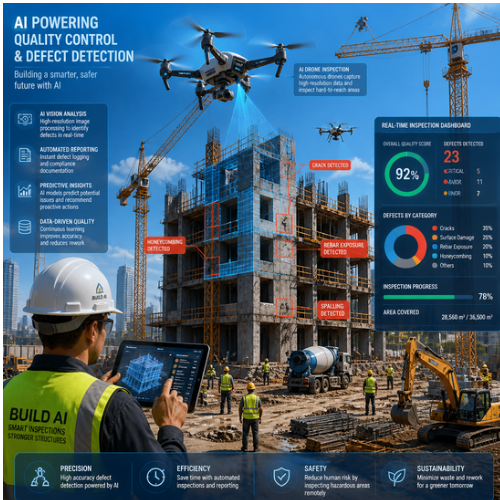
In concrete construction, AI can also analyse sensor readings and historical test data to support quality assessment. However, laboratory testing and established engineering inspection procedures remain essential for verifying concrete strength and material quality.
Practical applications:
Identifying visible cracks and surface defects.
Comparing actual work with digital references.
Organising inspection records.
Analysing quality-related project data.
Supporting defect tracking and corrective actions.
Popular technologies: Computer vision, machine learning, digital inspection systems and sensor analytics.
8. AI and Drone Technology for Land Surveying and Site Inspection
Land surveying is an important activity before starting any construction project. Engineers need accurate information about plot boundaries, ground levels, terrain conditions, existing structures and surrounding features.
Traditionally, surveying teams use equipment such as total stations, GNSS receivers and levels to collect site measurements.
Modern drone technology can complement these methods by capturing aerial photographs and videos of large construction sites.
When combined with AI-based image processing, photogrammetry and other surveying technologies, drone data can help generate site maps, orthomosaic images and three-dimensional terrain models.
For example, during the construction of a large industrial facility, drone surveys can help project teams monitor earthwork progress, stockpile quantities and changes in site conditions.
Practical applications:
Generating aerial site maps.
Monitoring excavation and earthwork.
Tracking construction progress.
Inspecting difficult-to-access locations.
Supporting terrain and stockpile analysis.
Popular technologies: AI-enabled drones, photogrammetry, LiDAR and computer vision.
9. AI for Energy-Efficient and Sustainable Building Design
Sustainable construction is becoming increasingly important because buildings consume significant amounts of energy and natural resources.
AI can help architects and engineers evaluate building performance during the design stage.
For example, AI-assisted analysis can compare different building orientations, window arrangements, shading systems, insulation materials and ventilation strategies.
For a residential building in Lucknow, professionals can examine how afternoon sunlight affects bedrooms and living areas, evaluate roof heat gain and explore suitable shading solutions.
Similarly, AI-powered building management systems can analyse information from temperature sensors, occupancy detectors, lighting controls and energy meters to optimise building operations.
These technologies can help reduce unnecessary electricity consumption while maintaining comfortable indoor conditions.
Practical applications:
Analysing building energy consumption.
Optimising natural lighting.
Improving heating and cooling efficiency.
Monitoring indoor environmental conditions.
Supporting sustainable material selection.
Popular technologies: AI energy management, smart sensors, building simulation and automated building controls.
10. AI-Powered Predictive Maintenance and Smart Building Management
Construction work does not end when a building is handed over to its owner. Residential and commercial buildings require regular maintenance to ensure that their structural, electrical, plumbing and mechanical systems continue functioning properly.
Traditionally, maintenance is often carried out after a problem becomes visible or when a component reaches its scheduled service date.
AI-powered predictive maintenance can help identify unusual operating patterns before certain equipment failures occur.
For example, sensors connected to HVAC equipment can monitor temperature, vibration, pressure and energy consumption. AI systems can analyse these readings and identify patterns that may indicate developing equipment problems.
Similarly, smart building management systems can monitor water usage, electrical consumption, indoor temperature and equipment performance.
This approach can help building owners plan maintenance more effectively and reduce unexpected operational interruptions.
Practical applications:
Monitoring HVAC equipment.
Identifying unusual energy consumption.
Detecting possible equipment faults.
Planning preventive maintenance.
Improving building operational efficiency.
Popular technologies: Predictive analytics, IoT sensors, AI building management systems and digital twins.
Major Benefits of Using AI in Civil Engineering
Artificial intelligence offers several advantages when implemented correctly in construction and engineering workflows.
1. Time savings: AI can automate repetitive tasks such as organising project information, analysing documents and preparing reports.
2. Improved planning: Engineers can use data-driven analysis to compare design alternatives, estimate project requirements and identify potential delays.
3. Better cost control: AI-assisted estimation and predictive analytics can help project teams identify budget variations earlier.
4. Improved safety: Computer vision and smart monitoring systems can help detect selected unsafe conditions on construction sites.
5. Quality improvement: Image analysis and sensor monitoring can support construction inspections and defect tracking.
6. Better resource management: AI can help project managers plan material deliveries, equipment usage and labour requirements.
7. Sustainable construction: Building performance analysis can help professionals explore energy-efficient designs and reduce unnecessary resource consumption.
How Can Indian Construction Companies Start Using AI?
Construction companies do not need to implement expensive AI systems immediately. A practical approach is to begin with activities where automation can provide measurable benefits.
For example, a residential construction company can start by using digital project management software to track daily site progress, material consumption and project expenses.
Architectural firms can explore AI-assisted design tools to generate preliminary concepts and compare layouts. Civil engineers can use BIM platforms to improve coordination between structural, architectural and MEP drawings.
Similarly, contractors working on larger commercial projects can consider drone-based progress monitoring and AI-powered safety systems.
A sensible implementation process includes:
Identify repetitive tasks that consume significant time.
Select software that addresses a specific construction problem.
Train employees to use the selected technology.
Test the system on a small project.
Compare results against existing working methods.
Expand its use after evaluating accuracy, cost and productivity.
The goal should not be to adopt technology simply because it is new. It should solve an actual project problem and deliver measurable value.
Conclusion
AI in civil engineering is changing the way construction professionals approach building design, estimation, project management, structural monitoring and site safety.
From AI-assisted architectural planning and automated quantity estimation to drone-based surveying and predictive maintenance, these technologies are creating new opportunities for improving construction efficiency.
However, successful implementation requires more than purchasing advanced software. It requires accurate project data, trained professionals, proper engineering practices and effective coordination between different teams.
For India’s growing construction industry, combining traditional civil engineering knowledge with AI, BIM, automation and smart monitoring can help create safer, more efficient, sustainable and cost-effective buildings.
The future of construction will not simply be about building faster. It will be about making better decisions, reducing avoidable mistakes and delivering higher-quality projects through intelligent technology.
Frequently Asked Questions
1. What is AI in civil engineering?
AI in civil engineering refers to the use of artificial intelligence technologies such as machine learning, computer vision and predictive analytics to support engineering and construction activities. It can assist with design, cost estimation, structural monitoring, project management and construction safety.
2. How is artificial intelligence used in construction?
Artificial intelligence is used for automated cost estimation, building design analysis, construction progress monitoring, quality inspection, safety management, material planning and predictive maintenance.
3. Can AI replace civil engineers and architects?
No. AI can automate repetitive tasks and support technical decision-making, but it cannot independently replace the professional judgement, site experience, regulatory responsibility and engineering expertise of qualified civil engineers and architects.
4. Which AI software is best for civil engineering?
There is no single best software for every application. Autodesk Forma, Autodesk Revit, TestFit, Autodesk Construction Cloud and Bentley iTwin are examples of platforms that support different design, BIM, planning and construction workflows.
5. How does AI help reduce construction costs?
AI can support material quantity estimation, budget forecasting, project scheduling and resource optimisation. By identifying potential cost variations and project risks earlier, it can help construction teams reduce avoidable expenses.
6. How is AI used in structural engineering?
AI can analyse structural monitoring data, identify unusual patterns, assist with design optimisation and support the assessment of potential structural risks. Final structural designs and safety decisions must still be verified by qualified structural engineers.
7. What is the role of AI in construction project management?
AI helps project managers analyse construction schedules, monitor project progress, forecast potential delays, track resources and organise project reports. It can improve coordination between contractors, engineers and clients.
8. How can AI improve construction site safety?
AI-powered cameras and computer vision systems can identify certain unsafe conditions, such as missing helmets, restricted-area entry and unsafe proximity to machinery. These systems help safety officers monitor sites and respond to potential hazards.
9. Is AI technology affordable for small construction companies in India?
Yes, small companies can start with affordable cloud-based project management tools, AI-assisted documentation and digital estimation solutions. However, advanced systems involving drones, sensors and specialised software may require higher investment.
10. What is the future of AI in the Indian construction industry?
The future of AI in India is expected to involve greater adoption of BIM, automated construction estimation, robotics, smart building systems, drone surveying, digital twins and predictive maintenance. These technologies can help improve productivity, safety, quality and sustainability across residential, commercial and infrastructure projects.