
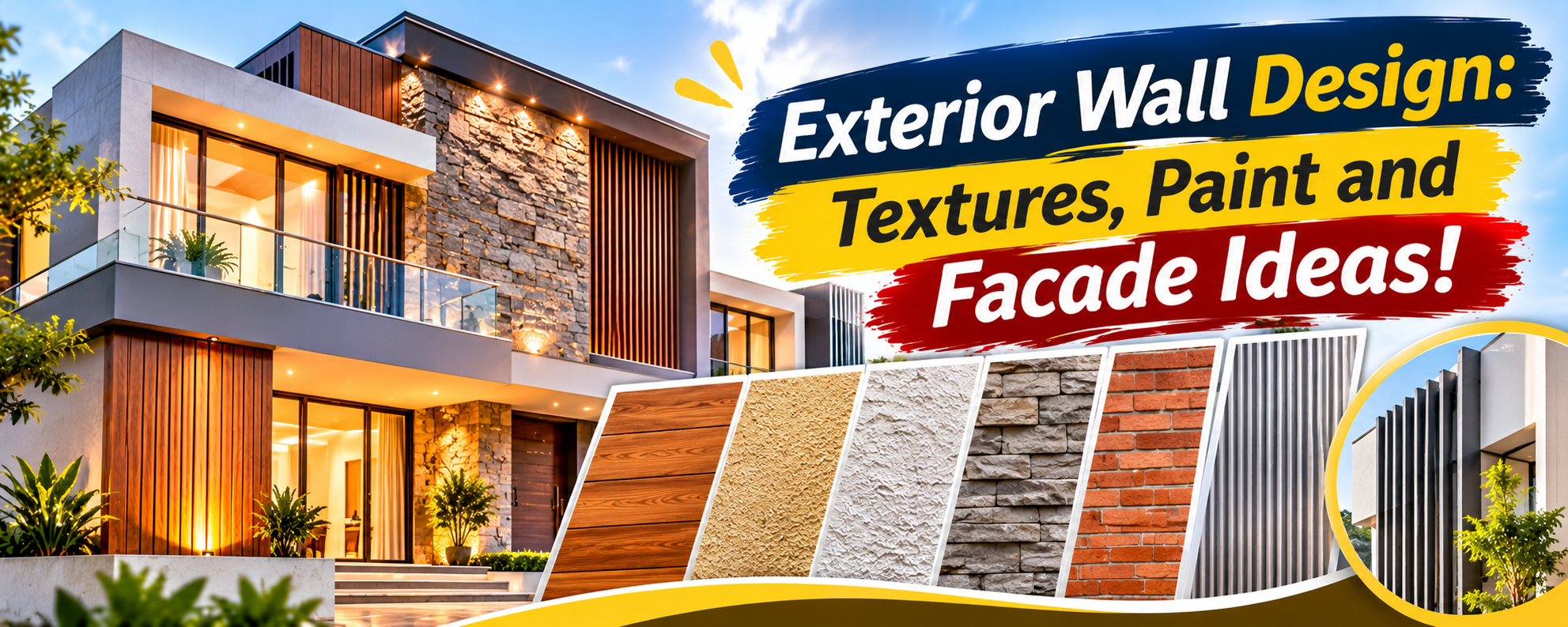


The exterior walls of a house create its first impression. A well-designed facade can make an ordinary home look rich, royal, elegant, modern or beautifully minimal. However, an attractive exterior should do more than look good in photographs. It must also withstand sunlight, rain, dust, temperature changes and everyday environmental exposure.
Homeowners today have many options beyond ordinary exterior paint. Textured coatings, stone cladding, decorative grooves, wooden-look panels, concrete finishes, HPL sheets and architectural elements can create distinctive designs.
The best approach is to combine appearance with practical performance. Here are some useful exterior wall design ideas for different tastes, budgets and house styles.
1. Royal Exterior Design with Stone and Rich Colours
For homeowners who prefer a rich and royal appearance, natural stone, premium textures and carefully selected colours can create an impressive facade.
Consider these combinations:
Beige or cream walls with natural stone cladding.
Warm ivory paint with dark brown architectural details.
Sandstone-finish textures around the entrance.
Decorative columns with subtle grooves.
Warm exterior lighting highlighting selected surfaces.
Natural stone such as sandstone, granite or slate can be used on entrance walls, boundary features and selected facade sections. Instead of covering the entire building, use stone as an accent to control cost and avoid an unnecessarily heavy appearance.
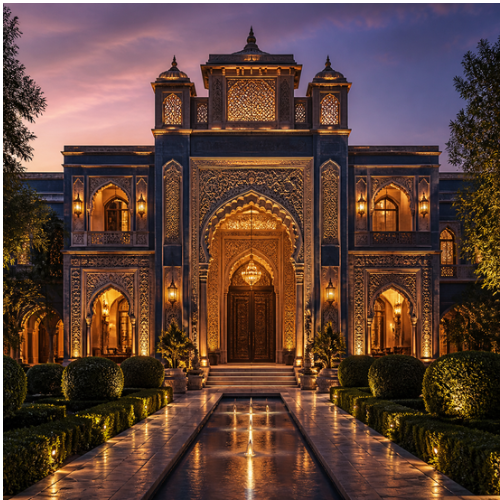
For a royal look, balance decorative details with clean proportions. Too many colours, patterns and materials can make the elevation look crowded.
2. Minimal Exterior Design with Simple Geometry
Minimal design is ideal for homeowners who prefer simplicity, clean lines and an uncluttered appearance.
Use a limited palette of two or three colours, such as:
Off-white with charcoal grey.
Light beige with warm brown.
White with muted olive.
Soft grey with natural wood-look accents.
Create visual interest through rectangular projections, recessed sections, horizontal bands and carefully positioned windows. A simple facade can look premium when its proportions, alignment and finishing are well planned.
Avoid adding decorative mouldings everywhere. In minimal architecture, the quality of the surface and the balance between solid walls and openings matter more than decoration.
3. Exterior Wall Textures That Create a Unique Appearance
Texture is one of the most effective ways to make an exterior wall different without using many colours or expensive materials.
Popular options include:
Sand texture: Creates a fine granular appearance and works well on large exterior surfaces.
Stone texture: Imitates natural stone and can provide a premium look around entrance areas or feature walls.
Cement texture: Gives a raw, contemporary appearance suitable for modern and industrial-style homes.
Stucco finish: Creates a layered or softly patterned surface that can suit both traditional and modern elevations.
Rustic texture: Provides a rough, natural appearance that works well with earthy colours and stone elements.
Roller texture: Uses patterned rollers to create repeated designs on prepared surfaces.
Before selecting a texture, ask for a sample panel on the actual wall or a similar substrate. The final appearance can change with sunlight, application thickness and paint colour. Use exterior-rated products rather than ordinary interior finishing materials.
4. Use Exterior Paint Combinations to Define Different Zones
Paint is usually the most flexible way to change a building’s appearance. The right colour combination can make a small house look balanced and a large house look more refined.
Some attractive combinations are:
| Design preference | Suggested colour combination |
|---|---|
| Royal | Ivory, beige and dark brown |
| Minimal | White and charcoal grey |
| Natural | Sand, olive and earthy brown |
| Contemporary | Light grey and deep blue-grey |
| Warm elegant | Cream, taupe and muted terracotta |
| Premium modern | Off-white, graphite and wood brown |
Use the main colour on larger wall surfaces, a secondary colour on selected projections and a darker shade for limited architectural accents.
Do not choose exterior colours only from a small shade card. Test sample patches outdoors because daylight, shadows and surrounding buildings can change how a colour appears.
5. Wooden-Look Panels for Warm and Premium Facades
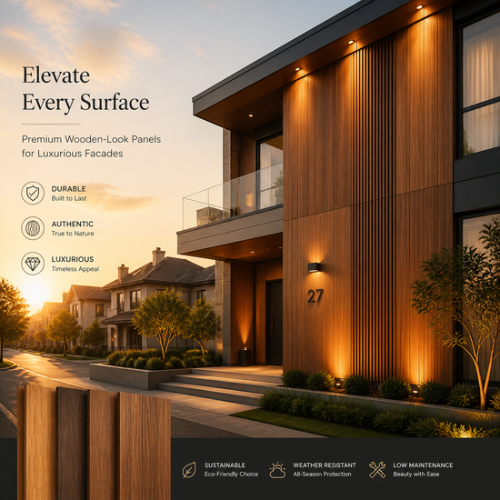
Wood-look finishes add warmth to modern buildings. They work particularly well with white, beige, grey and concrete-textured surfaces.
Possible materials include:
Exterior-grade HPL cladding.
Aluminium panels with wood-finish coating.
Suitable exterior composite cladding systems.
Treated timber in locations where maintenance is practical.
These finishes can be used around balconies, entrance walls, vertical facade strips and covered porch ceilings.
However, not every decorative wooden panel is suitable for outdoor use. Check UV resistance, moisture performance, fixing systems, fire-related specifications and the manufacturer’s installation requirements. Provide suitable joints and drainage details to prevent trapped moisture.
6. Stone, Brick and Tile Cladding for Character
Cladding gives an exterior a material-rich appearance and can make a simple elevation look more distinctive.
Natural stone: Offers individual patterns and a timeless appearance. It needs suitable fixing, substrate preparation and detailing.
Exposed brick: Creates a warm, earthy look and works well with contemporary or traditional architecture. Use suitable quality bricks and protect the wall from water penetration where required.
Exterior wall tiles: Available in stone-look, concrete-look and other finishes. Select tiles specifically suitable for exterior exposure and ensure correct adhesive, joints and installation.
Manufactured stone panels: Can provide a stone-like appearance with a different weight and installation method. Check the product’s suitability for the specific wall system.
Heavy cladding should not be attached casually to a wall. The supporting structure and fixing system must be designed for the material’s weight and exposure conditions.
7. Create a Signature Facade with Grooves, Fins and Panels
Architectural detailing can make a house look unique even when the main wall finish is simple.
Consider these elements:
Vertical fins beside windows.
Horizontal grooves across selected wall sections.
Recessed entrance frames.
Decorative concrete-look bands.
Perforated metal screens.
Geometric exterior panels.
Projected frames around balconies.
These features create shadows and depth, helping the elevation look interesting throughout the day.
Plan them during the architectural design stage wherever possible. Random grooves or projections added later can create water-entry points, cracks and unnecessary maintenance.
8. Add Lighting to Highlight Exterior Features
Exterior lighting can transform a facade after sunset. It can highlight textures, stone walls, entrance columns and architectural projections.
Useful options include:
Wall-washer lights for broad surfaces.
Up-down lights for selected feature walls.
Recessed lights under entrance projections.
Step lights for outdoor stairs.
Suitable landscape lights near the building.
Use outdoor-rated fittings with appropriate weather protection. Plan electrical wiring, access for maintenance and safe drainage before completing the exterior finish.
Avoid excessive brightness. A few well-positioned lights generally create a more elegant effect than placing lights across every wall.
9. Make Exterior Walls Strong and Weather-Resistant
A beautiful facade will not remain attractive if water enters the wall or the coating starts peeling. Durability depends on the complete wall system, not just the final paint.
Follow these practices:
Repair cracks and loose plaster before applying finishes.
Identify and resolve leakage or rising dampness.
Allow cement-based plaster to cure and dry as required.
Use a compatible exterior primer and weather-resistant paint system.
Provide proper slopes, drip edges and drainage around projections.
Seal joints around windows and other openings with suitable materials.
Use corrosion-resistant fixings where required for panels and cladding.
Inspect the facade periodically, especially after heavy monsoon rainfall.
In hot and monsoon-prone cities such as Lucknow, exterior walls face intense sunlight, dust and seasonal rain. Light-coloured finishes can help reduce solar heat absorption compared with darker finishes, although overall indoor comfort also depends on insulation, ventilation, shading and window design.
10. Choose the Right Design According to Budget and Maintenance
Not every home needs expensive stone or decorative panels. A well-planned paint scheme with one textured feature wall can look more attractive than a facade covered with multiple costly materials.
| Budget approach | Recommended exterior treatment |
|---|---|
| Economical | Quality exterior paint with two-tone colour design |
| Mid-range | Paint, one texture feature and simple grooves |
| Premium | Stone cladding, selected HPL panels and facade lighting |
| Luxury | Custom stonework, architectural fins and coordinated lighting |
Before finalising the design, request material samples, installation details, warranty information and a written quotation. Compare the complete installed cost, including surface preparation, accessories, scaffolding, labour and maintenance.
Conclusion
The best exterior wall design is one that reflects the homeowner’s taste while remaining practical for the local climate and building conditions. Royal homes can use stone and warm colours, minimal homes can rely on clean geometry, and contemporary facades can combine textures, panels, grooves and lighting.
For a long-lasting result, focus on proper waterproofing, compatible materials, professional installation and periodic inspection. A thoughtfully designed exterior does not need excessive decoration or the most expensive materials. Good proportions, a balanced colour palette and durable finishing details can make a home look elegant for many years.
Frequently Asked Questions
1. Which exterior wall design looks most luxurious?
Natural stone accents, warm neutral colours, subtle textures and well-planned facade lighting can create a luxurious appearance. Balanced detailing is more important than using many expensive materials.
2. Which texture is best for exterior walls?
Sand, stucco, stone and cement-look textures are popular options. Choose an exterior-rated product suitable for the wall substrate and local weather conditions.
3. Is texture paint better than normal exterior paint?
Texture paint adds patterns and depth, while standard exterior paint provides a simpler finish. Neither is automatically more durable; performance depends on product quality, surface preparation and application.
4. Which colours are best for an elegant house exterior?
Off-white, ivory, beige, light grey, taupe and muted earthy shades are versatile choices. Darker colours work well as limited accents.
5. Are HPL panels suitable for exterior walls?
Exterior-grade HPL panels can be suitable when installed with the manufacturer’s recommended support, fixing, joint and ventilation system. Ordinary interior-grade panels should not be used outdoors.
6. Which is better for exterior cladding: stone or tiles?
Natural stone offers a distinctive appearance, while exterior tiles provide many patterns and finishes. Both need correct fixing, suitable substrates and water-management details.
7. How can I make exterior walls last longer?
Repair cracks, resolve dampness, use compatible primers and exterior coatings, provide proper drainage and inspect joints and cladding periodically.
8. Does exterior texture paint prevent water leakage?
No. Texture paint is primarily a decorative finish. Leakage requires the actual source to be identified and repaired using an appropriate waterproofing or building-envelope system.
9. How can I make a small house exterior look premium?
Use two or three coordinated colours, clean geometric lines, one feature texture or cladding section and well-positioned lighting. Avoid overcrowding the facade with decorative elements.
10. How often should exterior walls be repainted?
There is no fixed repainting period for every building. It depends on the coating system, exposure, workmanship and maintenance. Inspect the walls regularly and repaint when the coating shows deterioration or no longer provides adequate protection.