
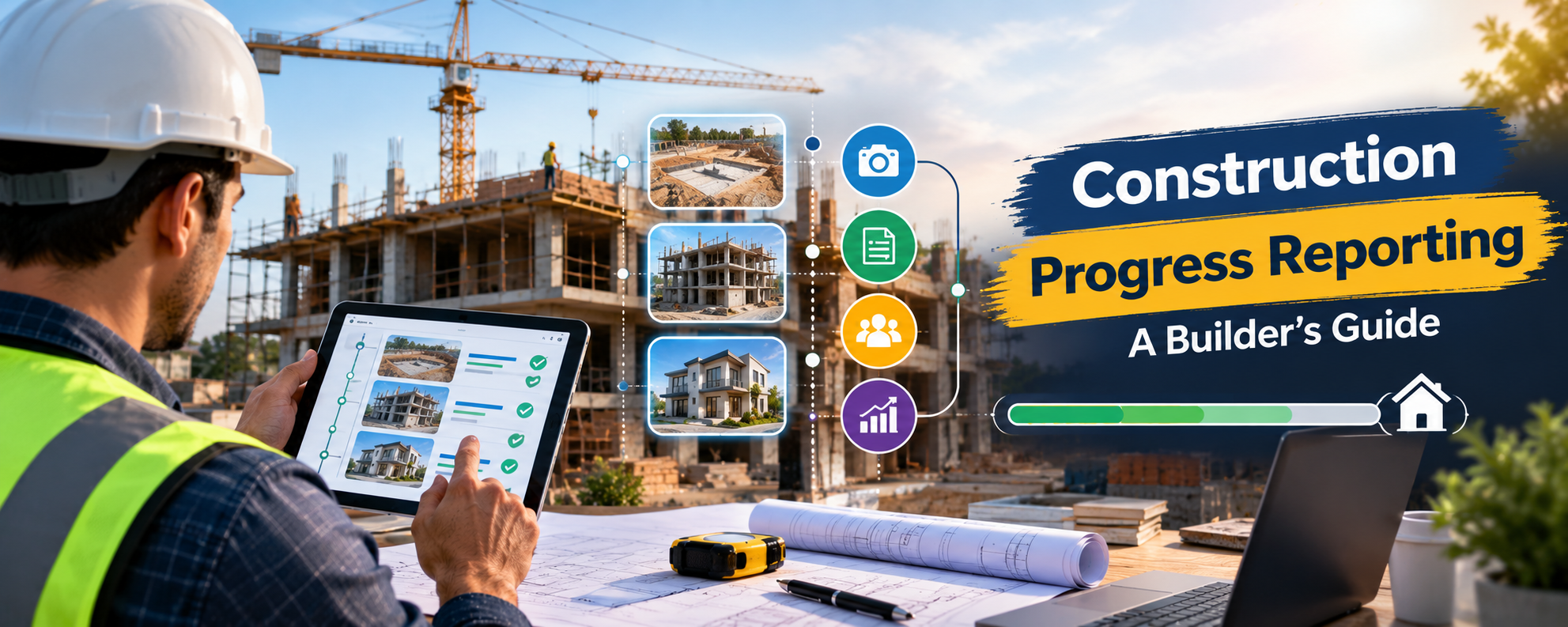

Building a house is a major financial commitment, and homeowners deserve to know how their money is being spent and whether construction is moving according to plan. However, visiting the site occasionally or receiving a message saying that the work is progressing well does not provide enough information to judge the actual situation.
This is where construction progress reporting becomes important. A professional builder should provide clear, consistent and verifiable updates that explain what has been completed, what is currently underway, what comes next and whether any issues could affect the budget or completion date.
A useful progress report is more than a collection of site photographs. It connects physical work with the approved construction schedule, material usage, quality inspections, payments and upcoming decisions. When homeowners receive this information regularly, they can identify delays early, discuss concerns with the builder and make decisions before small problems become expensive.
1. A Clear Summary of Work Completed

Every construction progress report should begin with a straightforward summary of the work completed during the reporting period. Instead of writing only that construction is progressing satisfactorily, the builder should identify the actual activities carried out.
For example, a report might state that reinforcement fixing and shuttering have been completed for a specified slab, the relevant inspection has taken place, and concrete casting is scheduled after the required approvals. Another report may document completed brickwork, plumbing rough-ins or electrical conduit installation.
The report should distinguish between completed work, work in progress and work that has not started. This distinction prevents homeowners from assuming that an activity is finished simply because materials have arrived or workers have begun the task.
Practical tip: Ask your builder to mention the specific floor, room, structural element or work area in every update. Statements such as “first-floor brickwork completed” are more useful than vague descriptions such as “masonry work going on.”
2. Actual Progress Compared With the Construction Schedule
A professional builder should compare the work achieved with the approved construction programme. This allows homeowners to understand whether the project is on schedule or falling behind.
For instance, if the programme planned to complete ground-floor brickwork by a particular week, the report should explain whether that milestone has been achieved. If it has not, the builder should identify the reason and explain the proposed corrective action.
Delays may result from heavy rainfall, late material deliveries, design changes, labour shortages, inspection requirements or activities taking longer than expected. The important point is to communicate the cause clearly rather than waiting until the final handover date approaches.

A useful report includes completed milestones, upcoming milestones and any changes to the forecast completion date. It should also explain whether a delay affects the overall project or can be recovered through adjustments to later activities.
3. Dated Site Photographs and Videos

Photographs provide homeowners with visual evidence of the work completed, particularly when they cannot visit the site regularly. However, photographs become more useful when they are dated, labelled and connected to a specific activity.
A builder should capture important stages such as foundation excavation, reinforcement before concrete placement, waterproofing, concealed plumbing, electrical conduits and completed structural work. These records help homeowners understand what has been installed before it becomes hidden behind concrete, plaster or flooring.
A few clear photographs from consistent viewpoints can be more valuable than dozens of unrelated images. Where appropriate, photographs should include the location, date and stage of work.
For critical activities, photographs should supplement rather than replace professional inspections, test results and approved checklists. A picture of reinforcement, for example, cannot independently confirm every bar diameter, spacing requirement or structural detail.
4. Material Delivery and Quality Records
Materials significantly influence construction quality and expenditure. Progress reporting should therefore record important deliveries and inspections, particularly for cement, reinforcement steel, concrete, bricks, waterproofing products and other specified materials.
Depending on the material and project requirements, records may include supplier details, delivery quantities, product specifications, batch information, test certificates and inspection results.
For concrete work, relevant records may include the grade specified, delivery documentation, casting location, quantity used and applicable sampling or test records. For reinforcement, the builder should maintain the necessary material documentation and ensure the installed steel matches the approved structural drawings.
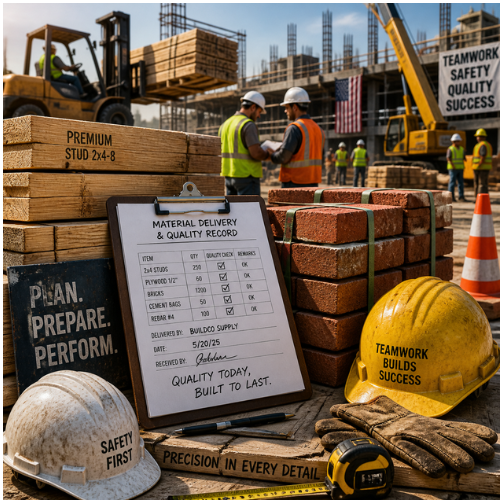
Homeowners should not be expected to interpret every technical document themselves. The builder or supervising engineer should explain whether the materials comply with the approved specifications and highlight any nonconformity requiring corrective action.
5. Quality Inspections and Testing Results
A professional progress report should communicate the quality checks performed during the reporting period. This is especially important because many construction activities become difficult to inspect after subsequent work covers them.
For example, foundation reinforcement should be checked before concrete placement. Plumbing lines may require appropriate testing before concealment, while waterproofing systems should be inspected and tested according to the specified method before protective layers or finishes are installed.
The report should record the inspection date, the activity inspected, the responsible person, the outcome and any corrective work required. If a defect is identified, it should remain open in the report until the correction has been completed and verified.
Where testing is required, the builder should provide relevant results rather than simply stating that the work is satisfactory. Concrete strength results, waterproofing test records and other quality documents should be maintained as applicable to the project.
6. Budget, Payments and Additional Work

Construction progress and financial progress should be reported separately because they do not always move at the same rate. A homeowner may have paid an advance for materials or a scheduled instalment before the corresponding work is fully completed.
A useful report should show the agreed contract value, payments received, approved additional work, outstanding amounts and the financial implications of any changes. It should also connect payment requests to the milestones or terms defined in the contract.
If the homeowner requests a different tile, additional electrical points or a change in the kitchen layout, the builder should explain the cost and schedule implications before proceeding wherever practicable. Approved variations should be documented so that there is a clear record of what changed and why.
Homeowner hack: Maintain your own copy of the contract, payment receipts, approved variation orders and progress reports. Compare them periodically rather than relying solely on verbal assurances about the remaining budget.
7. Labour, Equipment and Site Safety
Labour availability, equipment performance and site conditions can affect both productivity and safety. A progress report should highlight significant issues that may influence the construction schedule.
For example, a shortage of skilled workers may delay plastering, while the breakdown of a concrete pump may affect a planned casting activity. The report should explain the impact and the steps being taken to address the problem.
Safety reporting should also cover relevant inspections, housekeeping issues, access arrangements and incidents or hazards requiring attention. The builder should identify corrective actions and the person responsible for completing them.
A report does not need to include every routine site activity. It should focus on information that helps the project team understand performance, manage risk and make timely decisions.
8. A Two-Week Look-Ahead Plan
One of the most useful features of construction progress reporting is a short-term work plan. A two-week look-ahead schedule can identify the activities planned for the next fortnight, their dependencies and any decisions needed from the homeowner.
For example, the builder may plan to complete concealed electrical work, arrange a plumbing inspection, finish internal plastering and prepare selected areas for waterproofing. The report should identify materials, approvals or design selections needed before those activities can proceed.
This prevents avoidable stoppages caused by late tile selections, missing fittings or unresolved drawing details. It also gives the homeowner time to arrange site visits or consult the relevant professional.
The look-ahead plan should be realistic and updated as conditions change. It is a working forecast, not a guarantee that every activity will finish on the stated date.
9. How Often Should a Builder Provide Progress Reports?
The reporting frequency depends on project size, complexity and the construction contract. For an individual house, a concise weekly written update is often practical, supported by photographs and additional records at important construction milestones.
Large commercial projects may require daily site records, weekly progress reports and monthly programme or financial reviews. Critical activities, such as concrete casting or waterproofing, may require separate inspection documentation regardless of the normal reporting cycle.
The homeowner and builder should agree on the reporting format, frequency, communication channel and responsible person before construction begins. Consistency is more valuable than receiving detailed updates irregularly.
10. What Makes a Progress Report Professional?
A professional report is factual, organized and easy to verify. It uses clear dates, identifies the relevant work areas, distinguishes completed work from pending activities and explains delays without hiding problems.
It should also maintain a record of decisions, outstanding approvals, quality concerns and agreed corrective actions. Each significant issue should have an assigned responsible person and a target date for resolution.
The report should not exaggerate progress or use photographs to create a misleading impression. If an activity is incomplete, that fact should be stated clearly along with the plan for completion.
Ultimately, effective reporting creates a shared understanding between the homeowner, builder, architect and supervising engineer. It reduces confusion and helps everyone focus on the same construction priorities.
Conclusion
Construction progress reporting is an essential part of professional home building because it gives homeowners a clearer picture of work, expenditure, quality and scheduling. A reliable builder does not merely report that the project is progressing; they provide evidence, explain problems and identify the next steps.
By agreeing on a consistent reporting system before construction begins, homeowners can make informed decisions, track important milestones and maintain better communication with their construction team.
Kanakdhara Developer Private believes that a well-managed home construction project should combine clear communication, practical planning and attention to quality. When progress is documented transparently, homeowners can follow their project’s development with greater confidence and fewer unpleasant surprises.
Frequently Asked Questions
1. What is construction progress reporting?
Construction progress reporting is the regular documentation of work completed, activities underway, schedule performance, material records, quality checks, costs and upcoming construction tasks.
2. What should a professional builder include in a progress report?
A report should include a work summary, dated photographs, schedule updates, material information, inspection records, budget changes, outstanding issues and a short-term work plan.
3. How often should I receive a construction progress report?
For an individual house, weekly reporting is often a practical starting point. Critical activities may require separate updates, while larger projects may need daily records and more detailed monthly reviews.
4. Can I track house construction progress through photographs alone?
Photographs help document visible work, but they cannot replace measurements, inspection checklists, test results or verification against approved drawings. Use them as supporting evidence.
5. How can I know whether my house construction is behind schedule?
Compare the actual completion of key activities with the agreed construction programme. Ask the builder to explain delays, their impact on later activities and the proposed recovery plan.
6. Should a progress report include construction costs?
Yes. It should identify relevant payment milestones, payments received, approved variations, additional costs and outstanding amounts in accordance with the contract.
7. What if the builder refuses to provide progress reports?
Refer to the reporting and documentation obligations in your agreement and request a written update with specific information. If the issue continues, consider seeking advice from your architect, project manager or an appropriate legal professional.
8. Why are material and quality records important?
They help demonstrate whether specified materials were supplied, whether relevant inspections and tests were performed, and whether identified quality issues were resolved. They are also useful for future maintenance and handover.
9. Can construction progress reports prevent delays?
They cannot eliminate every delay, but they can reveal problems earlier, clarify dependencies and help the team arrange materials, approvals and labour before the next activity begins.
10. Who should prepare the construction progress report?
The builder or designated site/project manager generally prepares it, with input from relevant engineers, supervisors and quality personnel. Technical findings should be verified by the appropriately qualified person.