
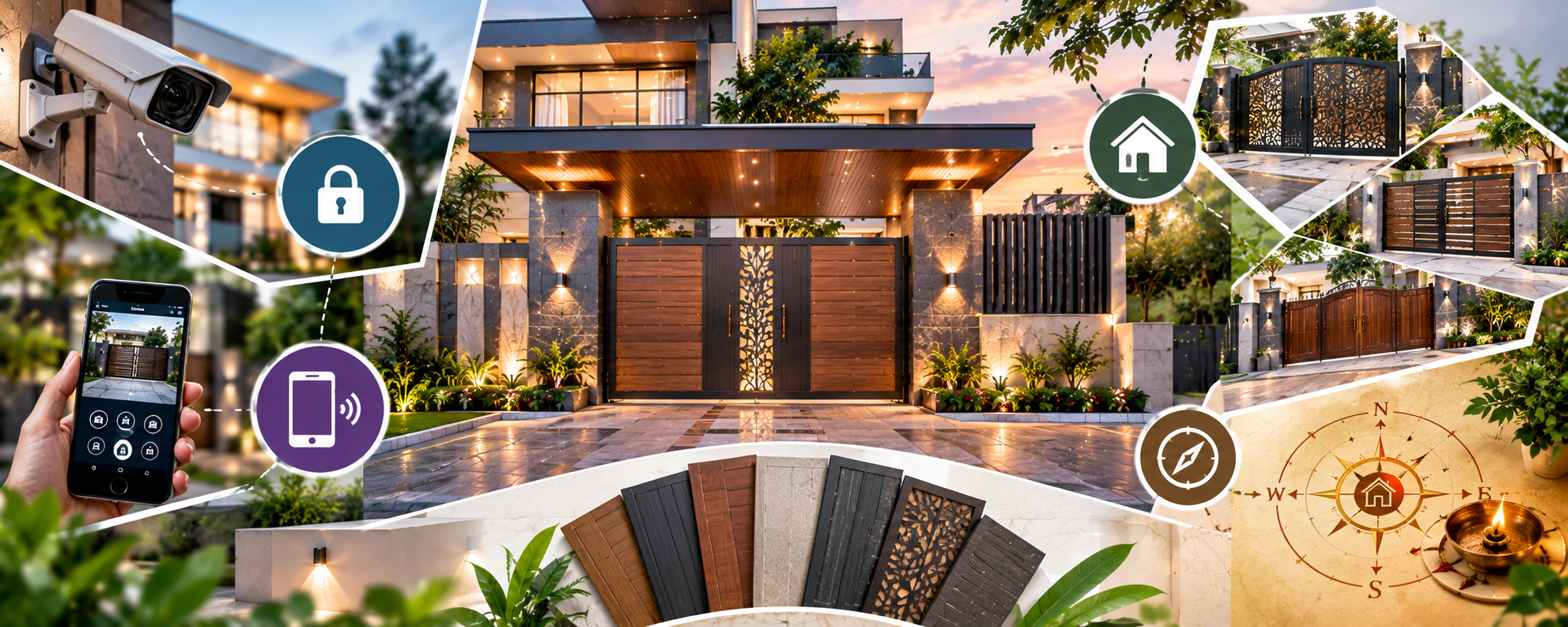

The main gate is the first feature people notice when they approach a house. It provides security, complements the exterior elevation and creates the entrance to your home. For many Indian families, choosing a gate also involves Vastu Shastra, including the direction, colour, material and opening arrangement.
A well-planned gate should balance all three priorities: security, appearance and traditional Vastu preferences. This guide explains suitable main gate designs for north-, south-, east- and west-facing homes, recommended colour combinations, how many gates can be installed on one side, and the door-placement considerations for kitchens, bedrooms, bathrooms and other rooms.
1. Main Gate Direction and Colour as per Vastu
Traditional Vastu generally favours north, east and north-east entrances, while west-facing entrances may also be suitable depending on their exact position. South-facing entrances are assessed according to their placement rather than being automatically considered unsuitable. These are traditional beliefs, and individual recommendations can differ between Vastu practitioners.
| Gate direction | Suggested Vastu colours | Suitable design combination |
|---|---|---|
| North | Green, light blue, silver or white | Dark grey frame with muted green or silver panels |
| North-East | Cream, white, pale yellow or light wood | Cream boundary wall with a white or light bronze gate |
| East | Natural wood, white, light yellow or light green | Wooden-finish panels with a charcoal frame |
| South-East | Terracotta, coral, warm brown or orange accents | Bronze-brown gate with warm beige walls |
| South | Maroon, terracotta, warm brown or coral accents | Deep brown gate with cream or sandstone pillars |
| South-West | Beige, earthy brown, ochre or mustard accents | Heavy brown gate with a beige boundary wall |
| West | White, silver, grey or blue accents | Graphite frame with silver or muted blue details |
| North-West | White, cream, silver or light grey | White gate with a light grey wall and dark hardware |
These are general traditional suggestions, not universal rules. Some Vastu sources recommend different shades for the same direction. Choose a practical, durable finish that also complements the elevation and local climate.
2. Which Main Gate Design Should You Choose?
Modern horizontal or vertical metal gate
A mild-steel gate with clean horizontal or vertical lines suits contemporary independent houses. Matte black, charcoal grey, dark brown and bronze are popular architectural finishes. Powder-coated steel can provide a neat appearance, but damaged coatings need prompt repair to prevent rust.
Laser-cut designer gate
Laser-cut gates feature geometric, floral or abstract patterns. They suit modern and premium elevations, particularly when paired with stone cladding or textured exterior paint. Choose a pattern that maintains adequate strength and does not create sharp exposed edges.
Traditional wrought-iron gate
Wrought-iron-inspired designs with decorative curves, arches or floral motifs work well with traditional Indian, colonial and classical homes. Black, antique bronze and dark brown finishes are common choices. Elaborate designs may require more cleaning, and the coating must be maintained against corrosion.
Wood-finish metal gate
A wood-finish aluminium or steel gate provides the warmth of timber with less exposure-related maintenance than many natural-wood installations. It can complement wooden entrance doors, beige walls and stone finishes. Confirm the finish’s outdoor durability before purchase.
Sliding versus swing gates
Swing gates suit properties with enough driveway space for the leaves to open safely. Sliding gates are useful when the driveway is short, but they require clear space along the boundary wall and a suitable track or cantilever mechanism. The gate should not obstruct the public road when opened. For extra convenience, an appropriately specified motorised gate can be considered.
3. How Many Gates Can a House Have on One Side?
There is no universal Vastu rule that limits every house to exactly one, two or three gates on a boundary side. The number should depend on the plot, access requirements, security and the overall site plan.
For many independent homes, one main vehicle gate and one separate pedestrian gate provide a practical arrangement. A larger property may need a wider vehicle entrance, a separate walking entrance or an additional service gate. However, adding multiple gates without a genuine purpose can reduce privacy, increase security vulnerabilities and interrupt the boundary-wall design.
If two gates are required on the same side, plan their locations together rather than placing them wherever space is available. Traditional Vastu practitioners may assess the exact position of each opening within the directional wall, sometimes using smaller directional divisions called padas. Therefore, the compass direction alone may not be enough for a detailed Vastu assessment.
Keep pedestrian access separate from vehicle movement where possible, provide secure locks and ensure that every opening can be monitored. The final arrangement should also comply with applicable local building and access requirements.
4. Main Entrance Door: Direction, Colour and Design
The compound gate and the main entrance door are different elements. The gate controls access to the plot, while the main door connects the exterior with the home.
Traditional Vastu commonly prefers a main entrance in the north, east or north-east, with suitable positions also possible in other directions. The exact location should be assessed in the context of the whole house rather than applying a single rule to every plot.
For the entrance door, natural wood, teak finishes and quality engineered-door systems are popular options. A north-facing entrance can use a natural wood finish, muted green or a suitable light shade. An east-facing door often pairs well with natural wood, warm white or pale yellow. A west-facing entrance may use grey, white or blue accents, while warmer earthy shades may suit a south-facing entrance under some Vastu traditions.
The main door should be visually prominent, proportionate to the facade, easy to operate and fitted with reliable locks. Traditional Vastu often favours an inward-opening entrance, but the final swing must never obstruct safe movement. Keep the entrance well lit and free from shoe racks, stored items and other obstacles.
5. Kitchen Door: Direction, Colour and Opening
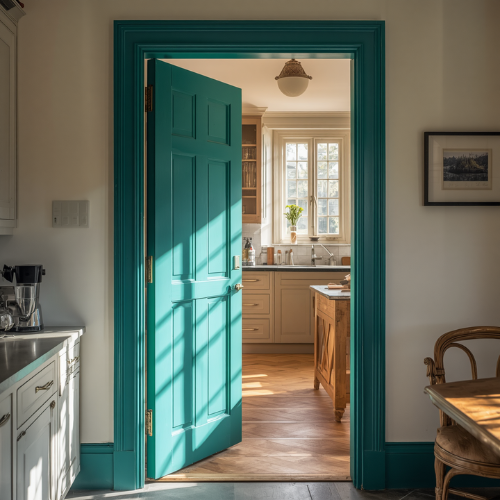
Traditional Vastu generally places the kitchen in the south-east, with the north-west sometimes considered an alternative. The kitchen’s location and the door’s location are separate decisions: the kitchen door does not need to face the same direction as the kitchen itself.
For a south-east kitchen, some Vastu approaches favour a door on the north or east wall of the kitchen. A simple wooden, off-white or light beige door can complement the space. Keep the door away from direct conflict with the cooking area, and avoid a layout in which opening the door creates a collision with someone using the hob.
An inward-opening door is a common option if it does not obstruct the work area. In compact kitchens, a sliding or pocket door can be more practical. Proper ventilation and fire safety should take priority over a rigid colour or swing-direction rule.
6. Bedroom Door: Direction, Colour and Privacy
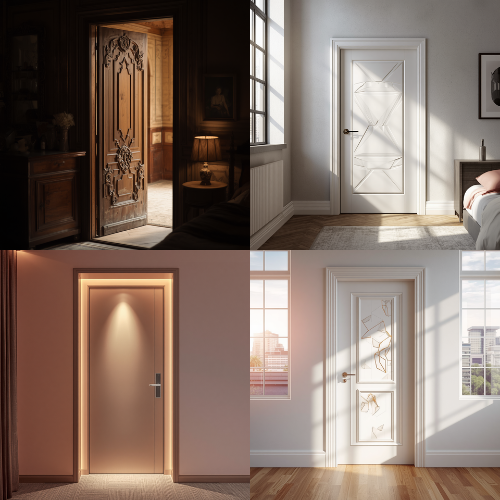
For bedrooms, traditional Vastu often recommends entrances on suitable north, east or west sections, depending on the overall layout. The door should not open directly into a position that makes the bed feel exposed or obstructs the walking route.
Natural wood, walnut, light brown, cream and muted beige finishes work with many bedroom interiors. The master bedroom may use a deeper wood finish, while children’s and guest bedrooms can use lighter shades.
A standard hinged door is suitable for most rooms. Ensure that the open leaf does not strike furniture, wardrobes or another door. Privacy, sound control and ease of access are more important in daily use than following an arbitrary colour rule.
7. Bathroom and Toilet Door: Practical Vastu Considerations
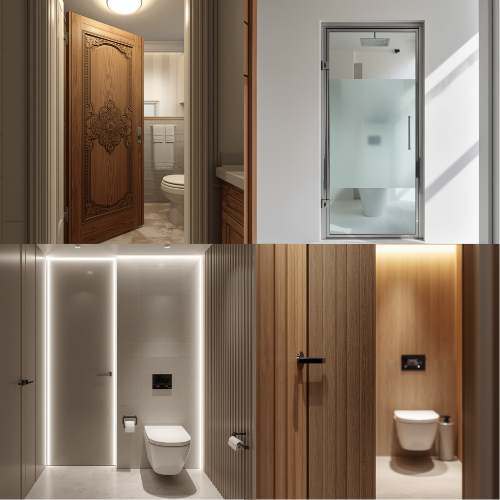
Bathrooms and toilets are commonly placed in the west or north-west in traditional Vastu layouts, although suitable positions depend on the building plan and plumbing requirements. The door should provide privacy and must not interfere with the washbasin, toilet or shower area.
Moisture-resistant finishes, such as suitable waterproof-laminated doors, WPC doors or properly finished bathroom door systems, are practical choices. White, cream, pale grey and light wood-look shades can match most bathrooms.
An inward-opening door may be suitable when there is sufficient space. In a small bathroom, a sliding door or an outward-opening door may be safer if the layout allows it and the swing does not obstruct the corridor. Avoid a design that could trap someone inside during an emergency. Good ventilation, waterproofing and safe flooring are essential.
8. Pooja Room, Living Room and Utility Doors
A pooja room is traditionally preferred in the north-east part of a house. A small wooden door, paired doors or a decorative jaali door can suit the space. Natural wood, cream and light finishes are common choices. Keep the entry accessible and avoid placing furniture where it blocks the opening.
Living-room doors should suit the home’s circulation pattern. If the living area is open-plan, a door may not be necessary at all. Where privacy or separation is needed, a sliding partition or glazed door can provide flexibility.
For utility rooms, store rooms and service areas, durability and easy maintenance should guide the choice. Ensure that these doors do not block access to electrical panels, plumbing points or essential maintenance areas.
9. Security Checklist for Main Gates and Doors
A Vastu-friendly colour cannot replace sound security planning. Before finalising the main gate, check the frame strength, hinge or track quality, locking system and mounting pillars. Choose a corrosion-resistant finish appropriate for the weather, and make sure the gate cannot easily be lifted off its hinges.
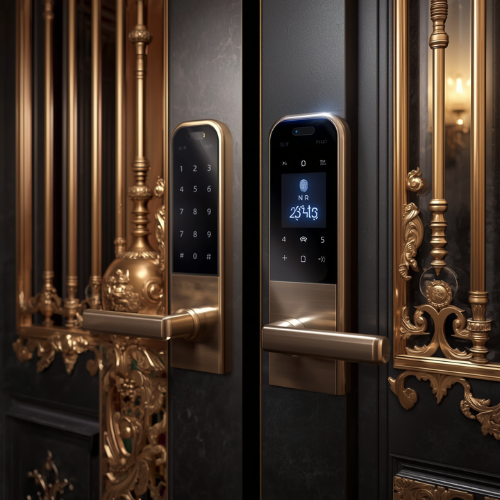
Consider a video door phone, CCTV coverage, entrance lighting and a reliable lock. For automated gates, install appropriate safety sensors and keep the manual release accessible. A separate pedestrian gate can reduce the need to open the full vehicle gate for everyday visitors.
Frequently Asked Questions
1. Which direction is best for a main gate as per Vastu?
North, east and north-east are commonly preferred in traditional Vastu. West-facing entrances may also be suitable, while south-facing entrances should be assessed by their exact position rather than judged by direction alone.
2. Which colour is best for a north-facing main gate?
Green, light blue, white and silver are common traditional suggestions. For a modern appearance, consider a charcoal frame with muted green or silver panels, provided the combination suits the house elevation.
3. Can a house have two gates on the same side?
Yes. A separate vehicle gate and pedestrian gate can improve circulation and convenience. There is no universal rule requiring every house to have a fixed number of gates per side. Their positions should be planned according to the site, security needs and any Vastu preferences.
4. Should the main gate and main door face the same direction?
They do not have to face the same direction in every layout. Their alignment should be considered alongside the driveway, entrance pathway, privacy and internal circulation. If you follow Vastu, assess the positions of both openings within the overall plan.
5. Which gate material is best for an Indian home?
Powder-coated mild steel is a widely used option because it offers design flexibility and can be economical. Aluminium can be lighter and corrosion-resistant, while stainless steel may suit premium applications. The best choice depends on the budget, gate size, exposure to rain and dust, and maintenance requirements.
6. Which direction should a bedroom door face?
Traditional recommendations vary with the room’s position and overall plan. Instead of relying on one direction alone, choose a location that provides privacy, a comfortable route around the bed and a door swing that does not collide with furniture.
7. Should bathroom doors open inward or outward?
Either arrangement may work depending on available space and safety. In a compact bathroom, a sliding or outward-opening door can prevent the leaf from colliding with fixtures or make emergency access easier. Keep the corridor clear and ensure the door operates reliably.
8. Does Vastu require all doors to be wooden?
No single material rule applies to every door. Wood and wood finishes are traditional choices, but engineered wood, WPC, metal and other suitable products can work when selected for the location. Moisture resistance, durability, security and safe installation should guide the decision.