


Cement is one of the most important materials in house construction because it acts as a binding material in concrete, mortar and other construction applications. The quality of cement can influence the strength, durability, workability and long-term performance of a building. However, choosing a good cement is not simply about selecting a famous brand. Homeowners should also check the cement type, applicable Indian Standard, manufacturing details, storage condition and physical condition of every batch before using it.
A cement bag may look perfectly normal from the outside, but improper storage or prolonged exposure to moisture can affect its quality. Similarly, using the wrong type of cement for a particular construction application can create performance problems even when the cement itself is genuine and properly manufactured.
This guide explains practical ways to check cement quality at the site, the major cement types used in India, and the advantages and limitations of four widely recognized brands.
Why Cement Quality Matters in House Construction
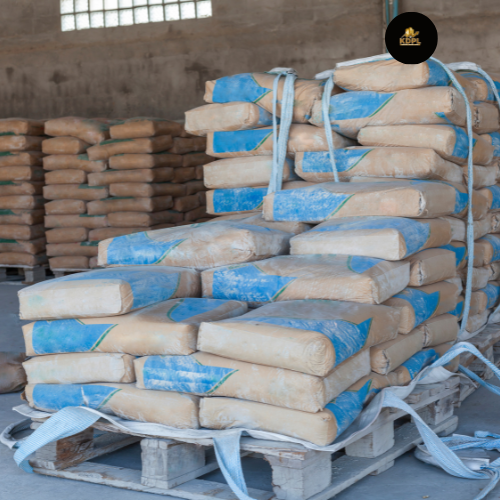
Cement is used in concrete, mortar, plastering and several other construction activities. In concrete, cement reacts with water and binds aggregates together as the mixture hardens.
Poor-quality, damaged or unsuitable cement can affect workability and strength development. However, homeowners should also remember that good cement alone does not guarantee a strong building. Correct mix design, aggregate quality, water quality, workmanship, placement and curing are equally important.
For structural work, cement selection should therefore be based on the structural engineer’s specification rather than simply choosing the strongest-sounding product.
Check the Cement Bag Before Buying
The first quality check should happen before the bag is opened. Examine the packaging carefully and make sure the bag is properly sealed and not visibly damaged.
Check the manufacturer’s name, cement type, applicable IS standard, batch or identification information, net quantity and manufacturing or packing details printed on the bag. BIS standards cover different cement categories, including OPC under IS 269, Portland Slag Cement under IS 455 and PPC under IS 1489.
Avoid bags that are badly torn, heavily damp, caked or stored in obviously poor conditions. Buying cement from a reliable authorized dealer also helps reduce the risk of receiving improperly stored material.

Check the Manufacturing Date and Storage Condition
Cement is not a material that should be purchased and stored indefinitely. Freshness matters because cement can gradually deteriorate when exposed to moisture during storage.
Look at the manufacturing or packing information and prefer reasonably fresh stock. More importantly, inspect how the bags have been stored. Cement should be protected from rain, ground moisture and humid conditions.
Bags should generally be kept in a dry, covered storage area and protected from direct contact with the floor. Poor storage can create lumps and affect the cement’s usability even if the original product was manufactured correctly.
Check the Cement Powder by Hand
A simple site-level physical check is to take a small amount of cement and feel it between your fingers. Good cement should generally feel smooth and reasonably fine rather than containing obvious hard particles.
If you find large lumps or material that feels unusually coarse, the cement deserves further inspection. A few soft lumps caused by handling are different from hard, moisture-affected lumps that do not break down easily.
This is only a preliminary check. It cannot replace laboratory testing when structural quality is in doubt.
Check the Colour and Appearance
Cement is generally expected to have a reasonably uniform grey appearance. Significant variation in appearance between bags can justify checking the product and batch information more carefully.
However, colour alone should never be treated as proof of cement quality. Different cement types and formulations can have somewhat different appearances, so homeowners should not reject or approve cement solely because of its shade.
The more reliable approach is to combine visual inspection with packaging information, storage condition and applicable quality testing.
Check for Hard Lumps

Hard lumps inside a cement bag are an important warning sign because they can indicate exposure to moisture. Cement that has partially reacted with moisture during storage may not perform as intended.
If a bag contains substantial hard lumps, it should not simply be mixed into structural concrete without evaluation. The construction team should identify the reason and follow the engineer’s or quality-control procedure.
Understand the Major Types of Cement
India has several standardized cement types, and choosing between them depends on the application. BIS currently lists 16 cement types in its cement standards compendium.
For residential construction, Ordinary Portland Cement (OPC) and Portland Pozzolana Cement (PPC) are particularly common. Portland Slag Cement (PSC) is another important blended cement, especially where its properties are suitable for the project.
Ordinary Portland Cement (OPC)
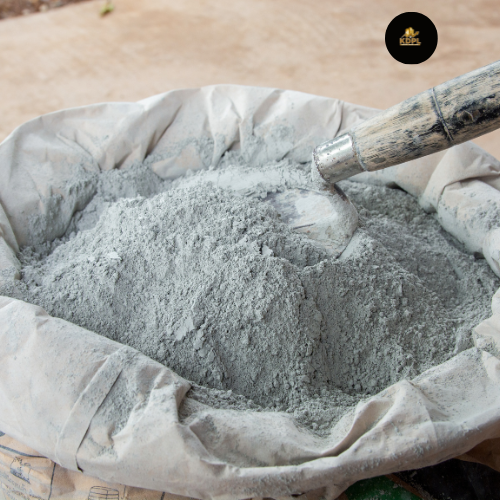
OPC is manufactured primarily from Portland cement clinker with gypsum and is specified under IS 269. It is available in grades such as 33, 43 and 53, with the grade indicating the specified compressive strength level at 28 days.
OPC is known for relatively rapid strength development and is widely used in structural concrete, masonry and other applications. Its advantage is particularly useful where early strength is important.
Its limitation is that higher heat generation and rapid strength development can require careful curing and appropriate application, especially in larger or mass concrete elements. The grade should be selected according to the structural specification rather than assuming OPC 53 is automatically appropriate for every part of a house.
Portland Pozzolana Cement (PPC)
PPC is made using Portland cement clinker and pozzolanic material. Fly-ash-based PPC is covered by IS 1489 Part 1, while calcined-clay-based PPC is covered by IS 1489 Part 2.
PPC generally develops strength more gradually than OPC but can provide good long-term durability and lower permeability when properly manufactured, proportioned and cured. UltraTech, for example, describes PPC as suitable for RCC, PCC, masonry and plastering applications.
Its limitation is that it may not be the preferred choice where very rapid early strength is specifically required. The appropriate cement should therefore be selected according to the project specification.
Portland Slag Cement (PSC)
PSC incorporates granulated blast-furnace slag and is covered by IS 455. It can be useful in applications where durability and resistance to particular aggressive environments are important.
Its performance characteristics can make it suitable for certain foundations, mass concrete and environments where reduced heat or improved resistance to aggressive exposure is required. However, availability varies by location, and the specific project requirements should determine whether PSC is appropriate.
Other Specialized Cement Types
India also has specialized cements designed for particular purposes, including sulphate-resistant cement, rapid-hardening cement, low-heat cement, high-alumina cement, masonry cement and white cement. BIS’s cement standards cover these and other categories.
These products should not be selected simply because they sound more advanced. Specialized cement is useful when the project actually requires its particular properties.
Four Popular Cement Brands in India: Pros and Cons
There is no single cement brand that is automatically best for every project. Product availability, cement type, batch quality, technical specification, price and local supply all matter. The following comparison is therefore about documented product portfolios and practical considerations rather than an overall ranking.
UltraTech Cement
UltraTech has a broad cement portfolio that includes OPC and PPC along with specialized products. Its official product information identifies OPC grades 33, 43 and 53 and describes applications ranging from RCC and masonry to precast and other construction work.
Pros: A broad product range gives homeowners and engineers several options for different construction requirements. Its large product portfolio can also make it easier to find an appropriate cement type depending on the project and local availability.
Cons: The wide range of products can make selection confusing for homeowners who are unfamiliar with cement specifications. Different variants should not be treated as interchangeable simply because they carry the same brand name.
ACC Cement
ACC offers OPC and PPC products as part of its cement portfolio and also has specialized and value-added cement products. Its 2025–26 reporting identifies both PPC and OPC within its product portfolio.
Pros: Its portfolio provides both conventional OPC and blended PPC options, allowing selection according to project requirements. ACC also reports the use of blended cement technologies and supplementary materials such as slag and fly ash.
Cons: Product availability and specific variants can differ by market. Homeowners should therefore verify the exact product, applicable standard and technical specifications rather than choosing solely on the brand name.
Ambuja Cement
Ambuja’s current portfolio includes OPC and PPC as well as specialized products such as Ambuja Plus, Ambuja Compocem and Ambuja Kawach. Its 2025–26 reporting also states that a large share of its portfolio consists of blended products.
Pros: The company offers a broad range of cement solutions, including blended and specialized products. This provides options for different construction requirements and finishing or durability considerations.
Cons: With several product variants available, homeowners need to verify the exact product specification rather than assuming that every Ambuja product has the same properties or application.
Shree Cement
Shree Cement manufactures different cement categories including OPC, PPC and PSC. Its official information describes OPC applications including foundations and high-rise construction, while PPC is described for applications such as masonry, plastering and hydraulic or demanding environments.
Pros: The availability of OPC, PPC and PSC provides flexibility for projects requiring different cement characteristics.
Cons: The suitability of each product depends on the specific construction requirement, and local availability can vary. Homeowners should follow the engineer’s specification rather than selecting a product solely because it belongs to a recognized brand.
When Should Cement Be Laboratory Tested?
Visual and physical checks are useful for identifying obvious problems, but they cannot confirm every cement property. If the project involves critical structural work or there is serious doubt about a batch, laboratory testing is the more reliable approach.
Tests can assess properties such as fineness, setting time, soundness and compressive strength according to the relevant standard and testing procedure.
For major residential projects, the construction quality-control process should determine when testing is necessary rather than relying only on a homeowner’s visual inspection.
The Most Important Rule: Follow the Structural Specification
Choosing cement should never become a simple competition between brands. The engineer should specify the appropriate cement type and grade based on structural design, exposure conditions, concrete requirements and construction methodology.
A properly specified PPC from one manufacturer can be more appropriate for a particular application than OPC from another manufacturer, while a different project may require OPC or PSC.
The brand is only one part of the decision. Cement type, applicable standard, grade, freshness, storage and actual site quality are equally important.
Frequently Asked Questions
How can I check cement quality at home?
You can perform basic checks such as examining the bag, checking manufacturing information, looking for hard lumps, observing storage conditions and feeling a small amount of powder for unusual coarseness. These are preliminary checks and cannot replace laboratory testing.
How old should cement be before using it?
Fresh cement is generally preferred. Homeowners should check the manufacturing or packing information and storage history rather than relying only on an age number. Cement exposed to moisture can deteriorate even when it is not very old.
Which cement is better, OPC or PPC?
Neither is universally better. OPC generally offers faster early strength development, while PPC can provide useful long-term durability characteristics. The appropriate choice depends on the construction activity and structural specification.
Is OPC 53 always the best cement for house construction?
No. OPC 53 has a higher specified strength class and can be appropriate for certain structural applications, but cement selection should follow the structural design and project specification. A higher grade is not automatically the correct choice for every application.