
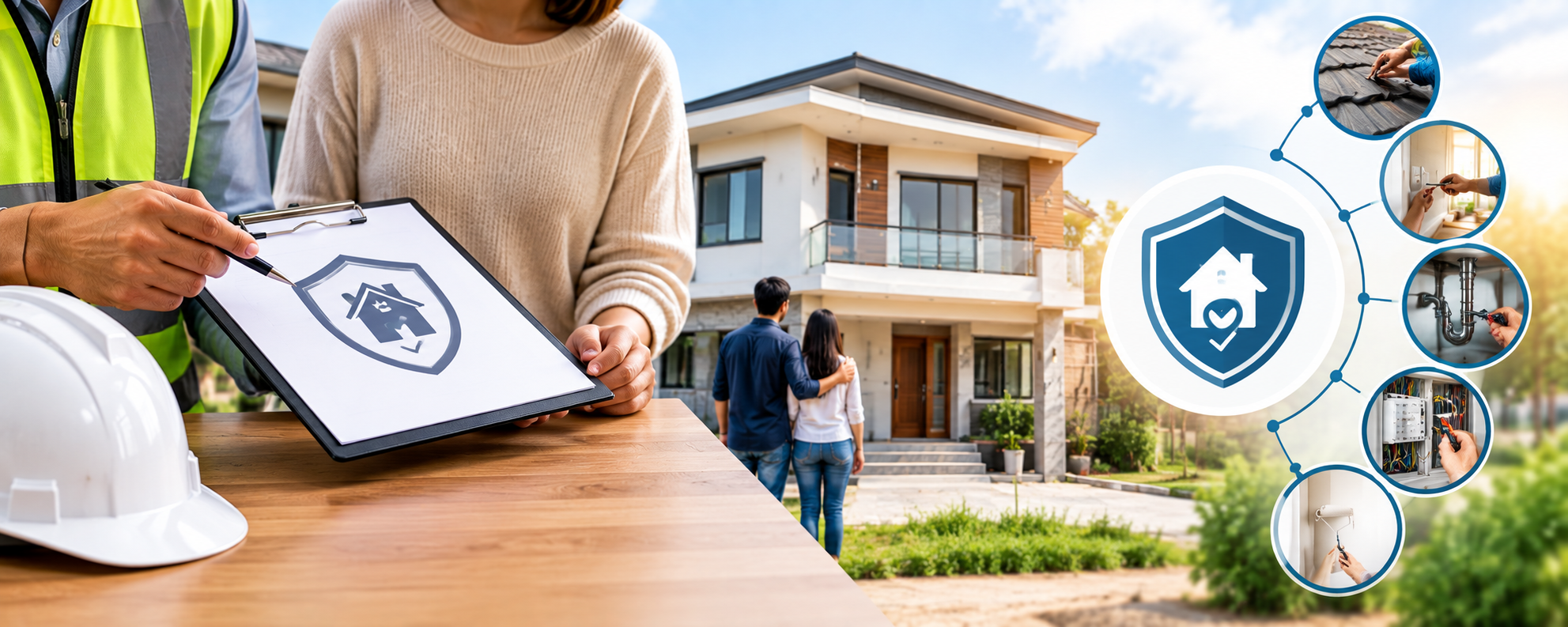

Building a home is a major investment, and completing the construction does not necessarily mean your responsibility as a homeowner ends. Even after the keys are handed over, certain construction-related problems may appear over time. Cracks, plumbing leaks, electrical issues, seepage, faulty fittings, or defects in workmanship can sometimes become visible only after the house has been occupied. This is where a construction warranty becomes important.
A construction warranty provides homeowners with a defined understanding of what happens when a defect appears after the project is completed. However, many homeowners assume that every problem will automatically be repaired free of cost. In reality, warranty coverage depends on the construction contract, the nature of the defect, the materials involved, and the specific terms agreed upon with the contractor or construction company.
Understanding these details before construction begins can help homeowners avoid confusion and make the post-construction experience much smoother.
What Is a Construction Warranty?
A construction warranty is an agreement that defines the responsibility of the contractor, builder, or construction company for certain defects or problems that develop after construction or handover. It generally focuses on defects related to workmanship, construction quality, installations, or specified materials.
The warranty period can vary depending on the project and the agreement. Some items may have relatively short coverage periods, while specific products or systems may have warranties provided separately by their manufacturers. For example, an electrical fitting, sanitary product, waterproofing system, window, appliance, or other branded material may have its own manufacturer warranty.
This means homeowners should understand the difference between the construction warranty provided by the contractor and the product warranty provided by individual manufacturers.
What Does a Construction Warranty Usually Cover?

The exact coverage should always be confirmed in the written agreement, but construction warranties commonly address defects resulting from poor workmanship or construction-related problems. For example, if a problem develops because a particular installation was not carried out correctly, the contractor may be responsible for correcting it during the applicable warranty period.
Issues involving workmanship may include certain types of defective finishing, improperly installed fixtures, construction-related leakage, or other defects specifically identified in the agreement. Structural issues may also have separate contractual or statutory provisions depending on the type of project and applicable local requirements.
The important point is that warranty coverage should not be assumed. A homeowner should read the actual warranty clause and understand what is included, what is excluded, and how claims are handled.
What Is Usually Not Covered?
A construction warranty generally does not mean that the contractor will be responsible for every problem that occurs inside the house. Normal wear and tear, accidental damage, improper maintenance, modifications made by the homeowner, misuse of fixtures, and problems caused by external factors may fall outside the warranty.
For example, if a homeowner changes a plumbing line after handover and a leak later develops because of that modification, the original contractor may not be responsible. Similarly, damage caused by negligence or improper use may not qualify as a warranty claim.
Natural movement and minor changes that occur as a building settles may also need to be evaluated carefully. Not every crack automatically indicates a construction defect. The cause, location, size, and progression of the crack should be examined before deciding whether it falls under warranty.

Why the Written Warranty Matters

One of the most important things a homeowner can do is make sure warranty terms are written clearly in the construction agreement. Verbal promises can easily lead to misunderstandings, especially months or years after construction has been completed.
The agreement should clearly identify the warranty period, covered work, exclusions, homeowner responsibilities, complaint procedure, and the process for resolving defects. If different materials have separate manufacturer warranties, their documents should also be collected and retained.
A clear written warranty protects both parties because it creates a common reference for determining responsibility when a problem occurs.
Warranty Periods Can Differ by Work and Material
Homeowners should not assume that everything in the house has the same warranty duration. Construction work, waterproofing, electrical installations, plumbing, doors and windows, sanitary fittings, appliances, and other products may all have different warranty arrangements.
For this reason, it is useful to maintain a record of the products and systems installed in the property. Keep invoices, product manuals, warranty cards, installation documents, approvals, and the final construction agreement in one place.
This documentation can become extremely useful if you need to contact the contractor or manufacturer later.
What Should Homeowners Do When a Defect Appears?

When a potential construction defect appears, homeowners should document the problem as soon as possible. Photographs, videos, dates, and a short description of the issue can create a useful record.
Instead of immediately attempting a repair yourself, contact the responsible contractor or service provider and explain the issue. If the problem involves leakage, cracks, electrical systems, or structural components, it may be particularly important to have the cause professionally assessed before making changes.
The contractor should be given an opportunity to inspect the issue if the agreement requires this. Keeping communication in writing can also make the process easier to track.
Warranty Is Different From Maintenance
A common misunderstanding is that warranty coverage replaces regular home maintenance. It does not.
A house requires ongoing maintenance even when the construction work is covered by a warranty. Plumbing systems need attention, drainage should remain clear, waterproofing areas should be monitored, electrical equipment may require servicing, and finishes naturally experience wear over time.
A homeowner who maintains the property properly can identify potential problems earlier and reduce the possibility of minor issues becoming expensive repairs.
What Should You Check Before Handover?
The best time to understand your warranty is before taking possession of the house. During the final inspection, homeowners should examine visible finishes, doors and windows, plumbing fixtures, electrical points, flooring, walls, ceilings, sanitary fittings, drainage, and other completed work.
Any incomplete work or visible defect should be documented and communicated before final handover whenever possible.
The handover documentation should also include relevant warranty information. Instead of simply receiving the keys, homeowners should understand what documents, manuals, certificates, and warranty details are being provided with the property.

How Kanakdhara Developer Private Limited Can Help
A professional construction partner should treat handover as more than simply completing the physical structure. At Kanakdhara Developer Private Limited, the construction process can be planned around the homeowner’s requirements, with attention to construction quality, coordination, finishing, and project documentation.
When warranty responsibilities and post-construction support are clearly discussed from the beginning, homeowners can have a better understanding of what to expect after the project is completed. Clear communication between the homeowner and construction team is especially important when dealing with defects, maintenance requirements, or product warranties.
A Warranty Gives Clarity, Not Unlimited Protection
A construction warranty is valuable because it creates a defined framework for dealing with certain defects after construction. However, its usefulness depends heavily on how clearly the terms are written and how responsibly both parties follow them.
Before signing a construction contract, homeowners should understand the warranty period, covered items, exclusions, claim procedure, and responsibilities for maintenance. They should also retain all relevant documentation after handover.
A well-understood warranty can provide greater clarity and reduce disputes when unexpected problems appear after a house has been completed.
Frequently Asked Questions
What is a construction warranty?
A construction warranty is an agreement that defines the contractor’s responsibility for specified defects or construction-related problems that occur during the applicable warranty period.
How long does a construction warranty last?
There is no single warranty period that applies to every construction project or every component. The duration depends on the contract, type of work, materials, manufacturer terms, and applicable legal requirements.
Does a construction warranty cover cracks?
It depends on the cause and the terms of the warranty. Some cracks may be related to workmanship or construction defects, while others can result from normal building movement, environmental conditions, or other factors. The specific problem should be professionally evaluated.
Does waterproofing come with a warranty?
Waterproofing may have a specific warranty period depending on the contractor’s agreement, waterproofing system, and materials used. Homeowners should ask for the warranty terms in writing before construction begins.