
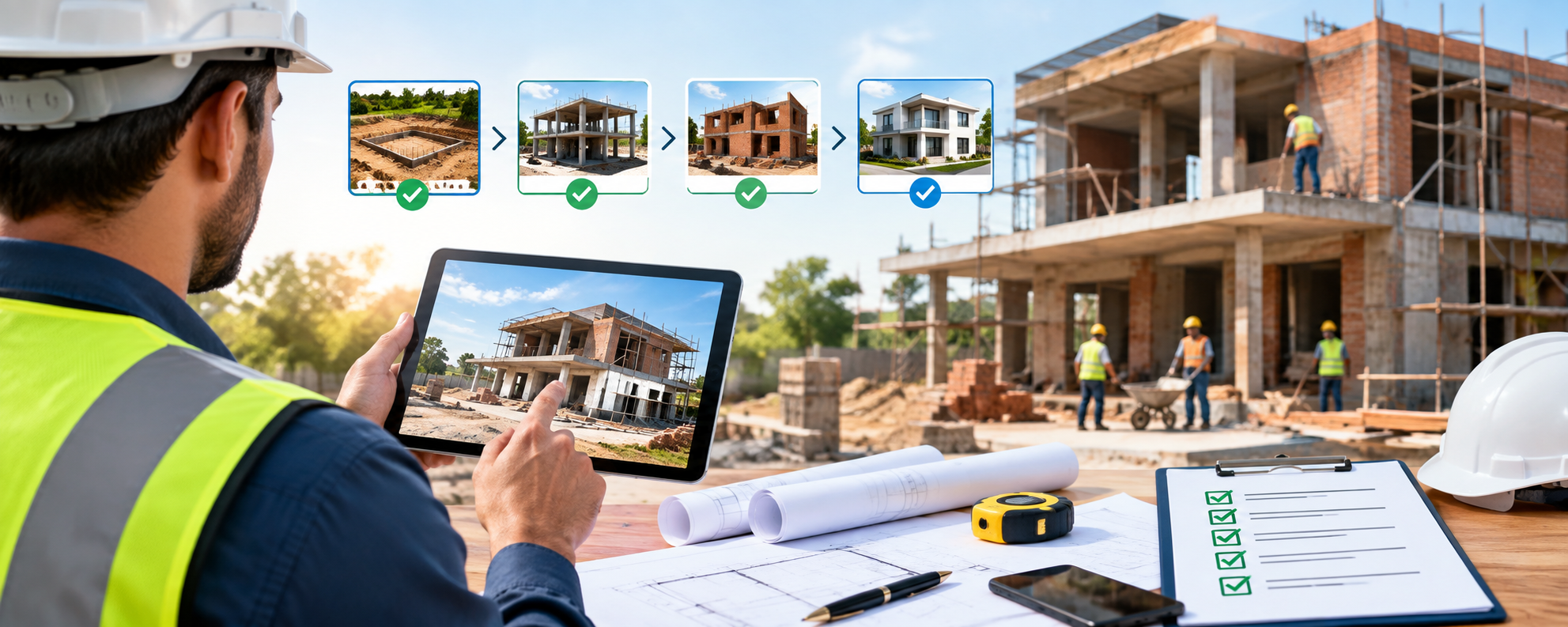

Tracking construction progress is essential for keeping a project on schedule, within budget, and up to the expected quality standards. Whether you are constructing a new home, renovating an existing property, or managing a commercial project, regular monitoring helps identify problems before they become expensive delays.
Professional construction tracking does not mean visiting the site every day without a plan. It means using a systematic approach to measure work completed, compare it with the schedule, check quality, monitor expenses, and maintain proper documentation.
1. Start With a Detailed Construction Schedule
Before construction begins, create a clear project schedule covering major stages such as site preparation, foundation, structural work, brickwork, plumbing, electrical installation, plastering, flooring, painting, and finishing.
Break larger activities into smaller milestones and assign expected completion dates. This gives you a benchmark against which actual progress can be measured.
2. Track Work Against Planned Milestones
During each site visit, compare the work completed with the planned schedule. For example, if brickwork was expected to be completed on the ground floor by a particular date, check whether the actual work matches that target.
A simple progress tracker can include:
- Planned start and completion date
- Actual start and completion date
- Percentage of work completed
- Delays or obstacles
- Next planned activity
This makes it easier to identify schedule deviations early.
3. Conduct Regular Site Inspections
Regular inspections are one of the most effective ways to track construction progress. Look at both the quantity and quality of work being performed.
Check whether materials are being used correctly, workers are following approved drawings, and completed work meets the required specifications. Photographs and videos taken during inspections can also provide useful records of progress.
4. Maintain a Daily or Weekly Site Report
Professional projects often rely on regular site reports. These reports can record the number of workers, activities completed, materials delivered, equipment used, weather conditions, and any problems encountered.
For a residential project, a weekly report may be sufficient for many homeowners. The important thing is to maintain consistency so that you can compare progress from one period to another.
5. Monitor Material Deliveries
Construction progress depends heavily on timely material availability. Track deliveries of cement, steel, bricks, tiles, electrical products, plumbing materials, paint, and other important items.
Check quantities and specifications when materials arrive. Shortages or incorrect materials can cause unnecessary delays and additional costs.
6. Keep an Eye on Construction Costs
Progress should not be measured only by physical work. Financial progress is equally important.
Maintain records of material purchases, labour payments, contractor bills, equipment costs, and approved changes. Compare actual spending with the original budget regularly. If expenses begin exceeding the planned amount, investigate the reason immediately.
7. Document Changes and Delays
Construction projects frequently experience changes because of design modifications, material availability, weather, approvals, or site conditions.
Every significant change should be documented. Record what changed, why it changed, who approved it, and how it affects cost and completion time. Proper documentation can prevent misunderstandings between homeowners, contractors, architects, and other professionals.
8. Use Photographs and Digital Tools
Taking photographs from the same locations at regular intervals makes progress easy to compare. You can maintain separate folders for foundation, structure, electrical work, plumbing, interiors, and finishing.
Digital spreadsheets, project-management applications, shared folders, and communication platforms can also help organize schedules, photographs, expenses, and reports in one place.
9. Check Quality Alongside Progress
Fast construction is not necessarily good construction. Every stage should be inspected for quality before moving to the next stage.
For example, reinforcement should be checked before concrete is poured, concealed plumbing and electrical work should be reviewed before walls are closed, and waterproofing should be inspected before protective layers are applied.
Correcting defects early is usually easier and less expensive than repairing completed finishes.
10. Review Progress With the Construction Team
Regular meetings with the contractor, architect, site engineer, or project manager can help keep everyone aligned. Discuss completed work, upcoming activities, material requirements, pending decisions, delays, and quality concerns.
A short but structured meeting can prevent many communication problems.
Conclusion
Tracking construction progress like a professional requires more than simply checking whether workers are present at the site. It involves monitoring time, work completion, quality, materials, costs, and documentation together.
A well-maintained construction schedule, regular inspections, photographic records, financial tracking, and clear communication can help homeowners identify problems early and keep the project moving efficiently. If construction is being handled by a professional contractor, systematic progress reporting also makes it easier for the client to understand exactly where the project stands and what needs to happen next.