
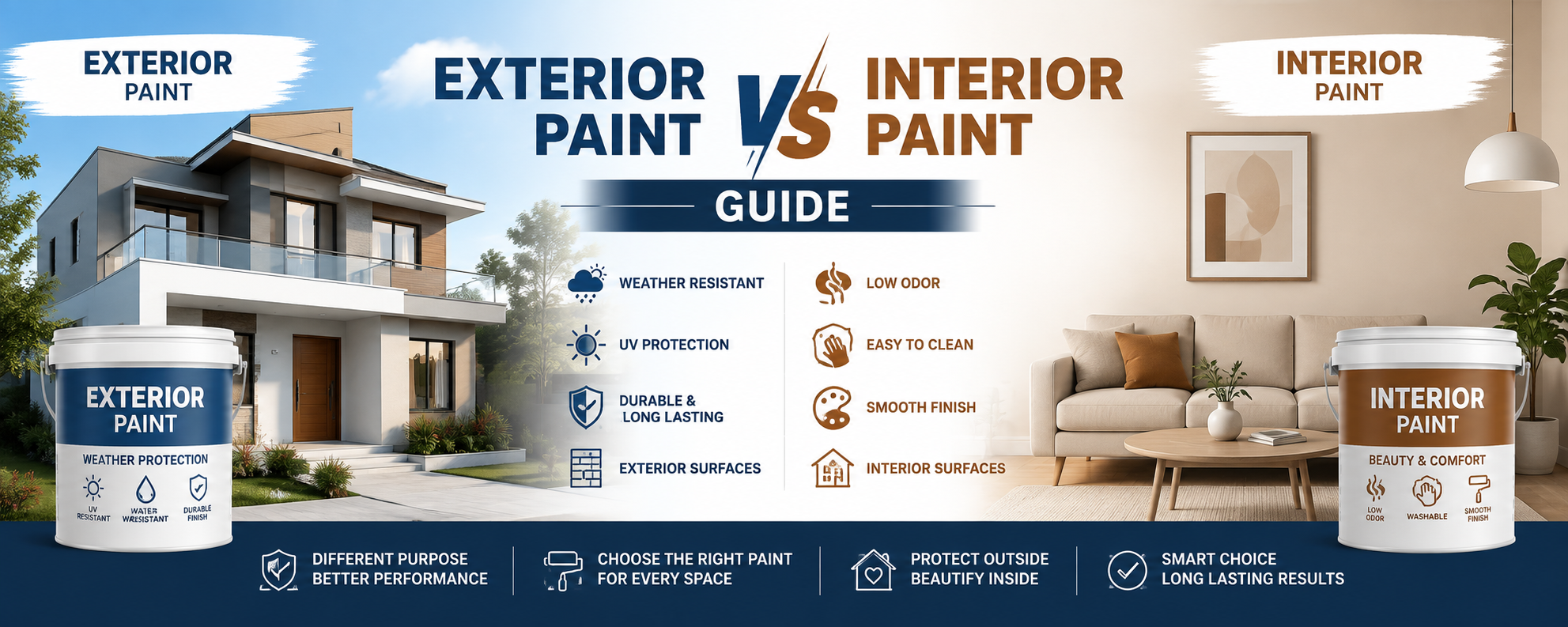

When building or renovating a home, selecting the right paint is just as important as choosing quality construction materials. Many homeowners believe that all paints are the same, but this is a common misconception. Exterior Paint vs Interior Paint is a comparison every homeowner should understand before making a purchase.
Exterior and interior paints are specially designed for different environments. While exterior paint protects your home from harsh weather conditions, interior paint is formulated to provide a beautiful finish, easy maintenance, and a healthy indoor environment.
In this guide, we’ll explain the differences between exterior and interior paint, their features, advantages, and how to choose the right one for every part of your home.
What Is Exterior Paint?
Exterior paint is specially manufactured for surfaces exposed to outdoor conditions. These surfaces face sunlight, rain, humidity, dust, pollution, and temperature fluctuations throughout the year.
Exterior paint contains weather-resistant ingredients, UV-resistant pigments, waterproofing additives, and flexible binders that help it withstand harsh environmental conditions.
Common Applications
- Exterior walls
- Boundary walls
- Building facades
- Balconies
- Exterior columns
- Outdoor structures
What Is Interior Paint?
Interior paint is designed specifically for indoor walls and ceilings. Since indoor surfaces are protected from weather, interior paint focuses more on appearance, smoothness, stain resistance, washability, and low odor.
Modern interior paints also contain low-VOC (Volatile Organic Compound) formulations, making them safer for families and improving indoor air quality.
Common Applications
- Living room
- Bedrooms
- Kitchen
- Dining room
- Children’s room
- Hallways
- Ceilings
Exterior Paint vs Interior Paint: Key Differences
Understanding the difference between these two paint types can help you avoid costly mistakes.
1. Weather Resistance
Exterior paint is designed to resist:
- Heavy rainfall
- UV rays
- Extreme heat
- Cold weather
- Dust
- Humidity
Interior paint does not require these protective properties because it is used inside the house.


2. Durability
Exterior paint contains stronger resins and protective chemicals that help it survive outdoor conditions for many years.
Interior paint prioritizes smoothness and decorative appearance rather than extreme weather protection.
3. Washability
Interior walls often get dirty from fingerprints, food stains, and dust. Therefore, interior paints are designed to be washable and easy to clean.
Many premium interior paints allow regular cleaning with a damp cloth.

4. Flexibility
Exterior walls expand and contract due to changing temperatures.
Exterior paints are more flexible, reducing the chances of cracking and peeling.
Interior paints do not require this level of flexibility.
5. Finish
Interior paints are available in multiple finishes, including:
- Matte
- Velvet
- Satin
- Silk
- Semi-gloss
- Gloss
Exterior paints generally focus more on protection than decorative finishes.
Can You Use Exterior Paint Indoors?
Technically, yes—but it is not recommended.
Exterior paints contain chemicals that help resist harsh weather conditions. These chemicals may continue releasing fumes indoors for an extended period, affecting indoor air quality.
Using exterior paint inside your home may also create unnecessary odor and maintenance issues.
Always use paint according to its intended purpose.
Can Interior Paint Be Used Outside?
No.
Interior paint cannot tolerate:
- Rainwater
- Direct sunlight
- Moisture
- Dust
- Temperature changes
If applied outdoors, it may quickly:
- Fade
- Peel
- Crack
- Bubble
- Lose adhesion
Eventually, repainting becomes necessary much sooner than expected.
Best Paint for Exterior Walls
When selecting exterior paint, look for these important features:
- Waterproof technology
- UV protection
- Anti-fungal properties
- Crack resistance
- Dust resistance
- Long-lasting color retention
- Excellent adhesion
High-quality acrylic exterior emulsions generally provide better durability than basic cement paints.
Best Paint for Interior Walls
For interior walls, consider paints that offer:
- Low VOC
- Smooth finish
- Washable surface
- Stain resistance
- Low odor
- Anti-bacterial protection
- Rich color options
Premium interior emulsions are ideal for living rooms and bedrooms, while washable paints are excellent for kitchens and children’s rooms.
Choosing the Right Finish for Different Rooms
Living Room
A soft matte or velvet finish provides an elegant and modern appearance.
Bedroom
Matte finishes create a calm and relaxing atmosphere while hiding minor wall imperfections.
Kitchen
Choose washable satin or semi-gloss paint because it resists grease and is easy to clean.
Bathroom
Use moisture-resistant paint specially designed for humid areas to prevent fungal growth.
Exterior Walls
Select weatherproof exterior emulsion with waterproof and UV-resistant properties for long-lasting protection.
Tips Before Painting Your Home
Even the best paint cannot perform well without proper surface preparation.
Always remember these steps:
- Repair wall cracks.
- Remove loose paint.
- Clean dust and dirt thoroughly.
- Apply wall putty where required.
- Use a high-quality primer.
- Allow sufficient drying time between coats.
- Follow the manufacturer’s application instructions.
Proper preparation significantly increases paint life and improves the final finish.
Common Mistakes to Avoid
Many homeowners unknowingly reduce the life of their paint by making simple mistakes.
Avoid these common errors:
- Using interior paint on exterior walls.
- Skipping primer.
- Painting on damp walls.
- Ignoring waterproofing issues before painting.
- Choosing paint based only on price.
- Applying paint during rainy or extremely humid weather.
Correct planning saves both time and money.
Which Paint Should You Choose?
The answer is simple.
- For outdoor walls, always choose high-quality exterior paint with waterproof and UV-resistant properties.
- For indoor walls, use interior paint designed for beauty, comfort, and easy maintenance.
Selecting the right paint not only improves your home’s appearance but also protects your walls for years, reducing maintenance costs and increasing property value.
Understanding the difference between Exterior Paint vs Interior Paint helps homeowners make informed decisions during construction or renovation. While both paints may appear similar, they are engineered for completely different purposes.
Exterior paint acts as a protective shield against weather, moisture, and sunlight, whereas interior paint focuses on aesthetics, cleanliness, and indoor comfort.
Investing in the right paint for the right location ensures a durable finish, healthier living spaces, and long-term savings. Before purchasing paint, always consider the surface, environmental conditions, and the performance features you need. A well-planned paint selection today can keep your home looking beautiful and protected for many years to come.