
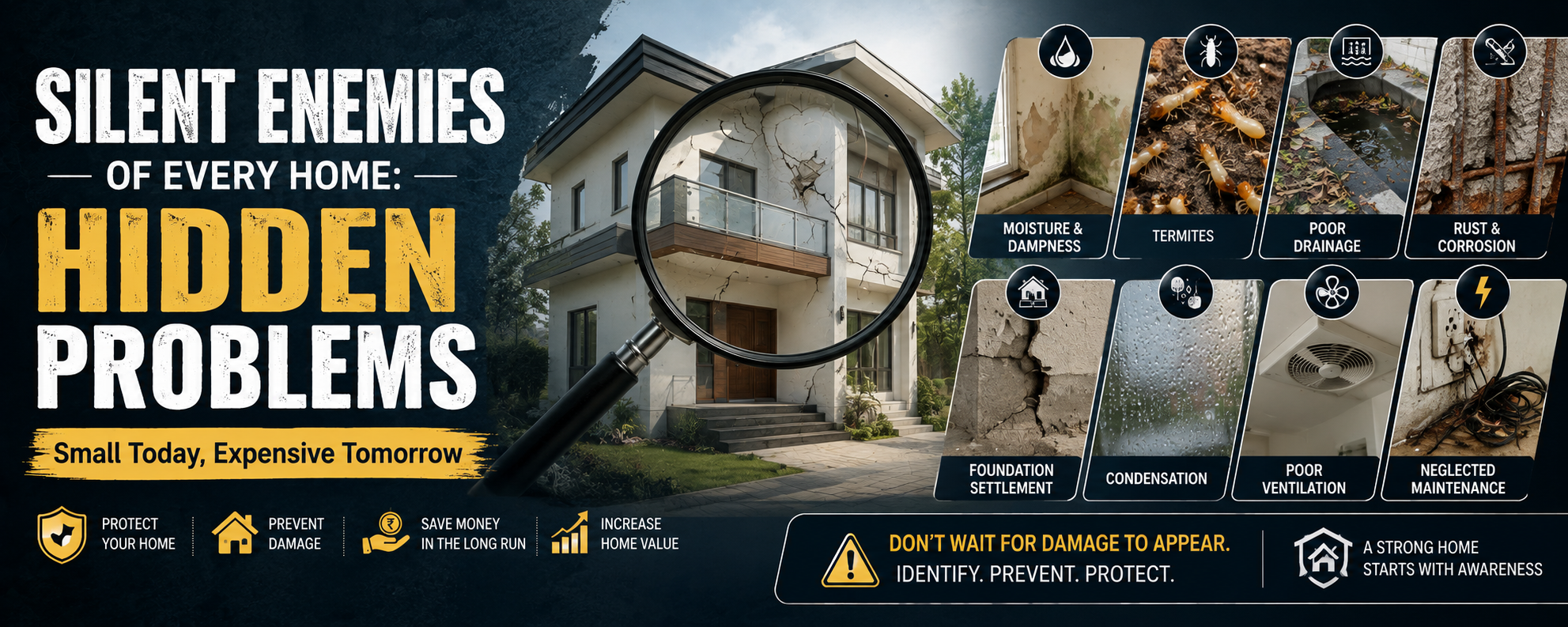

A home may look perfect from the outside, with beautiful walls, stylish interiors, premium flooring, and attractive furniture. But some of the biggest threats to a home’s safety, durability, and value remain completely invisible for years.
These hidden problems are the silent enemies of every home. They often develop slowly, without obvious warning signs, until the damage becomes expensive and difficult to repair. Moisture, termites, poor drainage, corrosion, foundation movement, and condensation are just a few examples of problems that can quietly affect a property.
Understanding these hidden threats is essential for every homeowner, especially when building a new house or purchasing an existing property.
1. Moisture: The Hidden Destroyer
Moisture is one of the most common enemies of residential buildings. Water can enter a home through leaking roofs, damaged plumbing, cracks in walls, poor waterproofing, or rising dampness.
The problem is that moisture damage often begins behind surfaces. By the time homeowners notice peeling paint, damp patches, or a musty smell, the underlying problem may already be significant.
Long-term moisture exposure can lead to:
- Mold growth
- Damaged plaster
- Peeling paint
- Wood deterioration
- Unpleasant odors
- Reduced indoor air quality
Proper waterproofing and regular inspections are essential to prevent moisture from becoming a major structural and interior problem.
2. Termites: The Invisible Wood Destroyers
Termites can cause extensive damage while remaining hidden behind walls, floors, and furniture. They are particularly dangerous because homeowners may not notice an infestation until wooden elements have already been weakened.
Doors, window frames, wardrobes, wooden flooring, and furniture can all be affected.
Preventive anti-termite treatment during construction is one of the best ways to reduce the risk. Existing homes should also be inspected regularly, particularly in areas where moisture is present.
Early detection can save homeowners from costly repairs and replacement.
3. Poor Drainage: A Problem That Starts Outside
Many homeowners focus on the interior of their property and overlook drainage. However, poor water drainage around a building can create serious problems.
Rainwater that collects near foundations can increase moisture levels in the soil and potentially contribute to dampness, erosion, or foundation-related issues.
A properly designed drainage system should ensure that water moves away from the building rather than accumulating near walls and foundations.
Good site planning, appropriate slopes, rainwater management, and properly maintained drains can significantly improve the long-term health of a home.
4. Rust and Corrosion: The Threat Inside Concrete
Reinforced concrete structures depend on steel reinforcement for strength. When moisture and other environmental factors reach the reinforcement, corrosion can occur.
As steel rusts, it expands, which can create internal pressure within the concrete. Over time, this may result in cracks, concrete deterioration, and exposed reinforcement.
This is why construction quality matters so much. Proper concrete cover, good-quality concrete, effective waterproofing, and appropriate construction practices can help protect reinforcement from environmental exposure.
What appears to be a small crack today could sometimes indicate a deeper issue that deserves professional inspection.
5. Foundation Settlement: Small Movement, Big Consequences
Every building experiences some degree of movement, but excessive or uneven foundation settlement can become a serious concern.
Possible warning signs include:
- Cracks around doors and windows
- Uneven floors
- Doors that suddenly become difficult to close
- Diagonal wall cracks
- Gaps between walls and ceilings
Not every crack indicates a structural problem, but unusual or progressively growing cracks should not be ignored.
Proper soil investigation, foundation design, drainage management, and professional construction practices are important for reducing foundation-related risks.
6. Condensation: The Moisture You Create Every Day
Condensation is often overlooked because it comes from everyday activities such as cooking, bathing, and drying clothes indoors.
When warm, humid air comes into contact with cooler surfaces, water droplets can form. Over time, this can encourage mold growth and damage paint, walls, ceilings, and furniture.
Good ventilation is one of the simplest ways to control condensation. Exhaust fans in kitchens and bathrooms, cross-ventilation, and appropriate ventilation systems can help maintain healthier indoor conditions.
7. Poor Ventilation: The Invisible Indoor Problem
A home can be beautifully designed and still feel uncomfortable if it doesn’t have adequate airflow.
Poor ventilation allows indoor pollutants, humidity, odors, and airborne contaminants to accumulate. It can also contribute to condensation and mold problems.
When designing a home, ventilation should be considered from the beginning. Window placement, room orientation, cross-ventilation, exhaust systems, and mechanical ventilation can all contribute to better indoor air quality.
A healthy home is not just visually attractive—it should also provide clean and comfortable air.
8. Neglected Maintenance: The Enemy That Grows Quietly
Perhaps the biggest silent enemy of every home is neglect.
Small problems rarely become major problems overnight. A minor roof leak can eventually damage ceilings. A blocked drain can contribute to water accumulation. A small plumbing leak can gradually damage cabinets and walls.
Regular maintenance helps homeowners identify problems before they become expensive.
A simple maintenance routine should include checking:
- Roofs and terraces
- Plumbing connections
- Drainage systems
- Waterproofing
- Electrical installations
- Cracks and damp patches
- Doors and windows
- Termite activity
Prevention is almost always less expensive than major repair.
Building a Home That Can Resist Hidden Problems
The best way to protect a home from its silent enemies is to think about prevention during the design and construction stages.
Quality waterproofing, effective drainage, proper foundation design, good ventilation, appropriate material selection, skilled workmanship, and regular construction supervision can make a significant difference.
Homeowners should also understand that construction quality is not visible only in the finished appearance. Much of the most important work is hidden behind walls, below floors, and inside foundations.
Conclusion
The silent enemies of every home rarely announce their arrival. They develop gradually, often hidden from view, until they begin affecting the building’s safety, comfort, appearance, or value.
Moisture, termites, poor drainage, corrosion, foundation movement, condensation, poor ventilation, and neglected maintenance are all problems that deserve attention.
The key is not to wait for visible damage. A well-designed home combined with quality construction and regular maintenance can prevent many problems before they become serious.
Ultimately, the strongest and most comfortable homes are not simply the ones that look beautiful on the day they are completed. They are the homes designed and maintained to remain healthy, durable, and safe for many years to come.